Apple’s Handheld TV, and All the Other Video Devices
courtesy of AppleHow big does a smartphone or tablet screen have to be before it can be considered a TV? Apple Inc. (NASDAQ: AAPL) apparently will test an iPhone with a six-inch screen, according to The Wall Street Journal. However,…

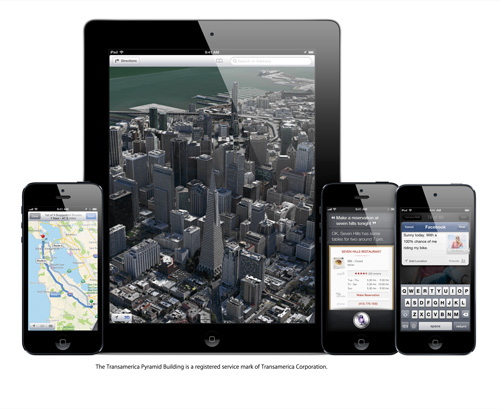 How big does a smartphone or tablet screen have to be before it can be considered a TV? Apple Inc. (NASDAQ: AAPL) apparently will test an iPhone with a six-inch screen, according to The Wall Street Journal. However, it is not a tablet, at least as far as the traditional definition of tablets goes. A small step up in size, RCA makes a 13.3 inch television screen. The breadth of screen sizes opens the question of what is a smartphone, a tablet or a TV, and what some can watch based on their deteriorating vision.
Does the screen size debate matter? Yes, to the extent of what people are willing to do with a device. It is assumed that a smartphone is portable enough to carry in a pocket, probably. And a tablet has to fit in a brief case or backpack, perhaps. A television is a free-standing device that has to go on a stand or on a wall, or be suspended by wire from a ceiling.
Another question about screen size is what people will do with a device, what will they use it for? New wearable watches may have screens too small to view anything but video clips. Tablet screens may be too small to watch some HD programs. TVs are bolted-down devices, no matter how well they display video content.
The consumer electronics industry still makes distinctions that may be false, at least as far as many consumers are concerned. That cracks open the door to whether definition matters in a world in which the utility of screen size is more a matter of what content it can play and the extent to which the display is acceptable to consumers.
It may be that the only line of demarcation left in the spectrum from video watches to televisions is price. Perhaps consumers believe that the larger the screen, the more they will need to pay. That line has been blurred, too. Philips makes a 32-inch screen that retails for $450 (used) on Amazon.com Inc. (NASDAQ: AMZN). As a matter for fact, Amazon may be the largest warehouse of video devices. It sells the tiny Samsung Rugby III handset and television screens of more than 70 inches.
The line between video viewing devices already has disappeared to the point where size matters less and less. The definition probably is based on whether consumers believe that labels mean anything as video devices grow bother larger and smaller. Perhaps the line that gets drawn is based on age. People older than 65 own televisions in greater numbers than smartphones. However, for older people, the definition may not matter either. They just cannot see small screens as their vision gets worse. Otherwise, they might want that six-inch screen iPhone just like everyone else does.
Contact [email protected] for any questions or corrections.
Douglas A. McIntyre is the co-founder, chief executive officer and editor in chief of 24/7 Wall St. and 24/7 Tempo. He has held these jobs since 2006.
McIntyre has written thousands of articles for 24/7 Wall St. He is an expert on corporate finance, the automotive industry, media companies and international finance. He has edited articles on national demographics, sports, personal income and travel.
His work has been quoted or mentioned in The New York Times, The Wall Street Journal, Los Angeles Times, The Washington Post, NBC News, Time, The New Yorker, HuffPost USA Today, Business Insider, Yahoo, AOL, MarketWatch, The Atlantic, Bloomberg, New York Post, Chicago Tribune, Forbes, The Guardian and many other major publications. McIntyre has been a guest on CNBC, the BBC and television and radio stations across the country.
A magna cum laude graduate of Harvard College, McIntyre also was president of The Harvard Advocate. Founded in 1866, the Advocate is the oldest college publication in the United States.
TheStreet.com, Comps.com and Edgar Online are some of the public companies for which McIntyre served on the board of directors. He was a Vicinity Corporation board member when the company was sold to Microsoft in 2002. He served on the audit committees of some of these companies.
McIntyre has been the CEO of FutureSource, a provider of trading terminals and news to commodities and futures traders. He was president of Switchboard, the online phone directory company. He served as chairman and CEO of On2 Technologies, the video compression company that provided video compression software for Adobe’s Flash. Google bought On2 in 2009.