Texas and Nevada Join Drought-Plagued California
ThinkstockDrought is so severe in some parts of California that scientists have observed that conditions may not significantly improve for decades. The problem’s worst effects reach across the state’s inland valleys, which are agriculture rich and therefore can least afford…

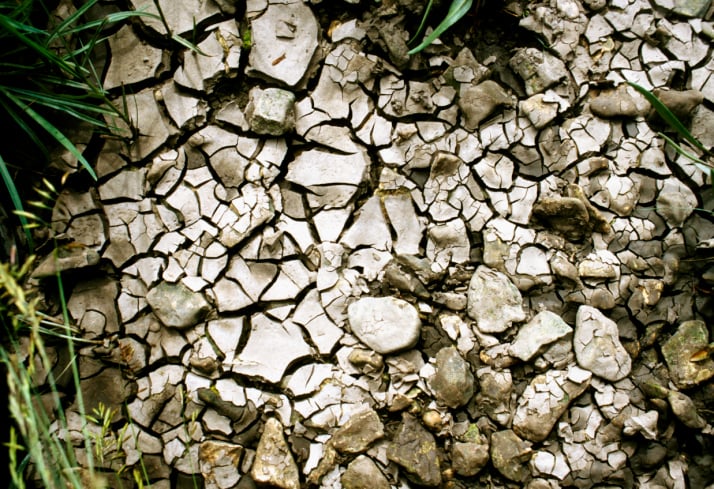 Drought is so severe in some parts of California that scientists have observed that conditions may not significantly improve for decades. The problem’s worst effects reach across the state’s inland valleys, which are agriculture rich and therefore can least afford a prolonged lack of water. Many of the cities in this area have among the highest unemployment in the United States. Anything that hurts the agriculture industry likely makes this worse. But California is not the only area of exceptional drought. Parts of Texas, Nevada and to a lesser extent Oklahoma and Colorado face exactly the same levels of exceptional drought.
“Exceptional drought” is the U.S. Drought Monitor’s designation for places where drought problems are the worst. One large area designated at this level stretches from southwest Oklahoma into the regions of Texas, and it includes the cities of Amarillo and Lubbock. The area around Lubbock includes some of the largest cotton-growing regions of the country. Cotton producers rely on local lakes for irrigation. Lubbock Online recently reported:
The impact of record-breaking heat and years of little or no rainfall can be felt long after a dry spell passes, and Texas is now struggling with the brunt of a historic yearlong drought that crippled the state’s lakes, agriculture and water supplies.
This likely has created anxiety about the region’s economic future.
The other large area of exceptional drought runs across the center of Nevada, east of Reno and north of Las Vegas. NPR recently reported on the effects of the lack of water:
Now, make no mistake — alfalfa is still their main business. It’s what northern Nevada was built on. But like other farmers in this area, “the farmers” are beginning to look at lower-water grain alternatives like and a desert grain from Ethiopia called teff — something that the local dairy cows seem to like.
However, dairy farms have not escaped the effects of the weather. NPR also notes that some farmers are selling their land and moving.
The Nevada drought problems extend as far south as Las Vegas and the huge Lake Mead reservoir. The Examiner reports:
Lake Mead is estimated to provide life-giving water to over 20 million people in Las Vegas, Nevada, as well as surrounding areas like Arizona and southern California.
While most headlines about drought have focused on California’s inland valley, the catastrophe is just as bad in other parts of the West.
Contact [email protected] for any questions or corrections.
Douglas A. McIntyre is the co-founder, chief executive officer and editor in chief of 24/7 Wall St. and 24/7 Tempo. He has held these jobs since 2006.
McIntyre has written thousands of articles for 24/7 Wall St. He is an expert on corporate finance, the automotive industry, media companies and international finance. He has edited articles on national demographics, sports, personal income and travel.
His work has been quoted or mentioned in The New York Times, The Wall Street Journal, Los Angeles Times, The Washington Post, NBC News, Time, The New Yorker, HuffPost USA Today, Business Insider, Yahoo, AOL, MarketWatch, The Atlantic, Bloomberg, New York Post, Chicago Tribune, Forbes, The Guardian and many other major publications. McIntyre has been a guest on CNBC, the BBC and television and radio stations across the country.
A magna cum laude graduate of Harvard College, McIntyre also was president of The Harvard Advocate. Founded in 1866, the Advocate is the oldest college publication in the United States.
TheStreet.com, Comps.com and Edgar Online are some of the public companies for which McIntyre served on the board of directors. He was a Vicinity Corporation board member when the company was sold to Microsoft in 2002. He served on the audit committees of some of these companies.
McIntyre has been the CEO of FutureSource, a provider of trading terminals and news to commodities and futures traders. He was president of Switchboard, the online phone directory company. He served as chairman and CEO of On2 Technologies, the video compression company that provided video compression software for Adobe’s Flash. Google bought On2 in 2009.