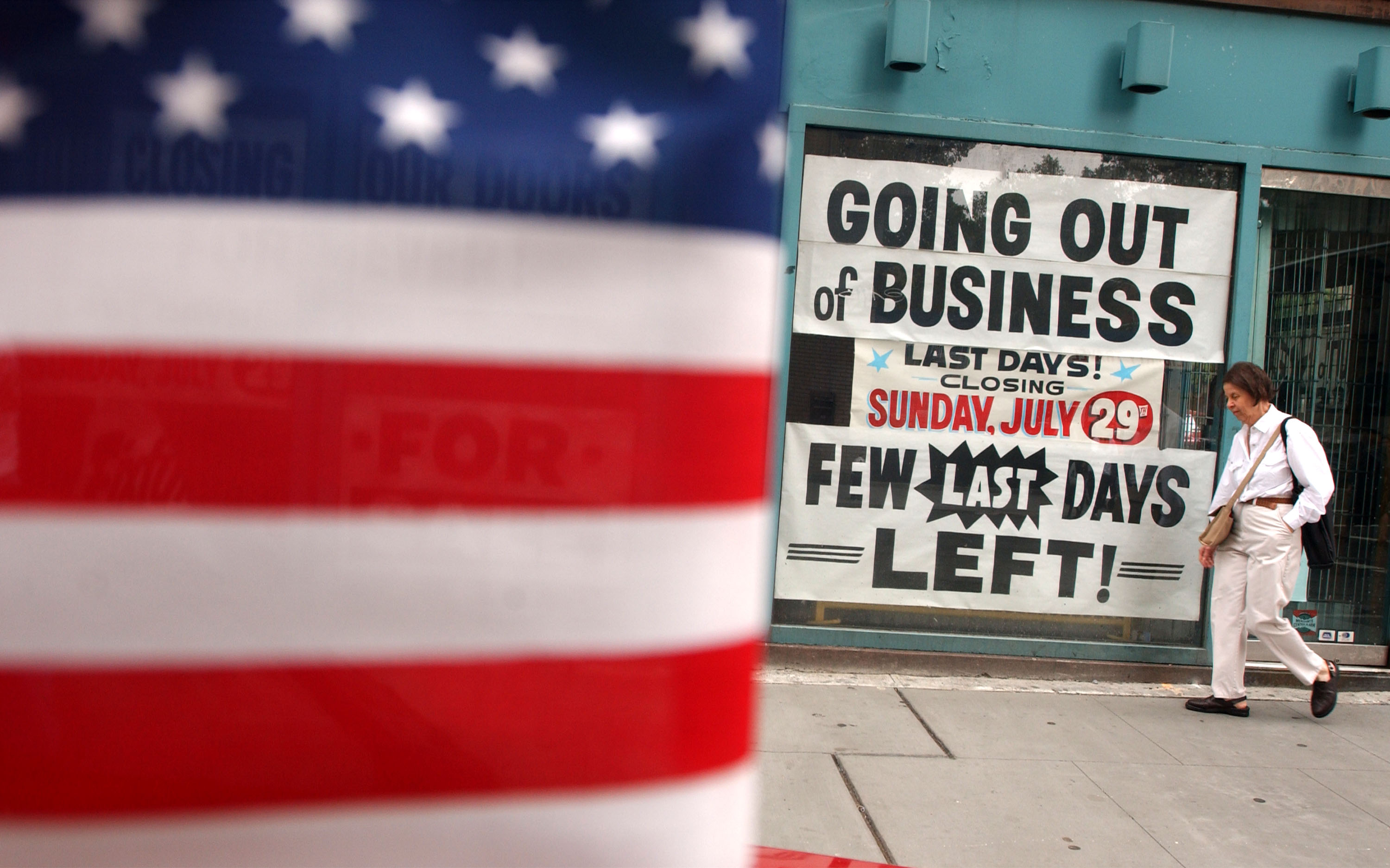
The Biggest Recession This Century
Most experts in economics and finance believe that the US will be in a recession next year. Many expect the downturn to be short and shallow. One of the world’s greatest economists disagrees. He believes this recession will be the…

This post may contain links from our sponsors and affiliates, and Flywheel Publishing may receive compensation for actions taken through them.
Most experts in economics and finance believe that the US will be in a recession next year. Many expect the downturn to be short and shallow. One of the world’s greatest economists disagrees. He believes this recession will be the worst in the century, meaning The Great Recession will have been milder.
‘
Nouriel Roubini has been a famous economist for almost 20 years. He was among those who forecasted how terrible the last recession would be. His most stunning comment recently is that WWIII began as the US stopped the sale of advanced chips to China, he told the FT. It is an odd comment, but friction with China could worsen over several other pressing and large issues led by Taiwan. The results could be cataclysmic.
Roubini does not see inflation going away, particularly because of energy costs. People won’t be able to consume at recent levels because oil and gas costs will rise sharply. Roubini believes people only need to look to Europe in the present day to see how this begins.
The rise in interest rates, Roubini argues, almost always causes a recession. The Federal Reserve will not help the economy. Rather, it will ruin it.
Among Roubini’s most harrowing comments is that AI will replace humans in many jobs. What humans have created will be part of their undoing, at least financially.
As the new year approaches, Roubini believes, based on his comment, that 2023 will be a catastrophe for much of the world.
Contact [email protected] for any questions or corrections.
Douglas A. McIntyre is the co-founder, chief executive officer and editor in chief of 24/7 Wall St. and 24/7 Tempo. He has held these jobs since 2006.
McIntyre has written thousands of articles for 24/7 Wall St. He is an expert on corporate finance, the automotive industry, media companies and international finance. He has edited articles on national demographics, sports, personal income and travel.
His work has been quoted or mentioned in The New York Times, The Wall Street Journal, Los Angeles Times, The Washington Post, NBC News, Time, The New Yorker, HuffPost USA Today, Business Insider, Yahoo, AOL, MarketWatch, The Atlantic, Bloomberg, New York Post, Chicago Tribune, Forbes, The Guardian and many other major publications. McIntyre has been a guest on CNBC, the BBC and television and radio stations across the country.
A magna cum laude graduate of Harvard College, McIntyre also was president of The Harvard Advocate. Founded in 1866, the Advocate is the oldest college publication in the United States.
TheStreet.com, Comps.com and Edgar Online are some of the public companies for which McIntyre served on the board of directors. He was a Vicinity Corporation board member when the company was sold to Microsoft in 2002. He served on the audit committees of some of these companies.
McIntyre has been the CEO of FutureSource, a provider of trading terminals and news to commodities and futures traders. He was president of Switchboard, the online phone directory company. He served as chairman and CEO of On2 Technologies, the video compression company that provided video compression software for Adobe’s Flash. Google bought On2 in 2009.