Why Anheuser-Busch Is the Only Alcohol Stock Thriving in 2025
A Sobering Trend Hits the Alcohol Industry A recent Gallup poll reveals a seismic shift in U.S. alcohol consumption, with only 54% of adults reporting they drink alcoholic beverages — the lowest level since the 1930s. This decline, driven largely…

A Sobering Trend Hits the Alcohol Industry
A recent Gallup poll reveals a seismic shift in U.S. alcohol consumption, with only 54% of adults reporting they drink alcoholic beverages — the lowest level since the 1930s. This decline, driven largely by younger adults aged 18 to 34, reflects growing concerns about alcohol’s health risks, with 66% of this demographic viewing even moderate drinking as unhealthy.
This perception is reshaping the beverage industry, as major alcoholic beverage stocks like Boston Beer (NYSE:SAM | SAM Price Prediction), Constellation Brands (NYSE:STZ), Brown-Forman (NYSE:BF-A)(NYSE:BF-B), Molson Coors (NYSE:TAP) and Diageo (NYSE:DEO) have plummeted by double-digit percentages in 2025, with declines ranging from 10% to over 30%.
In stark contrast, Anheuser-Busch InBev (NYSE:BUD) has defied the trend, boasting a nearly 24% stock gain this year. But does this resilience make BUD a compelling buy, or is it a risky bet in a declining market?
Why BUD Is Bucking the Trend
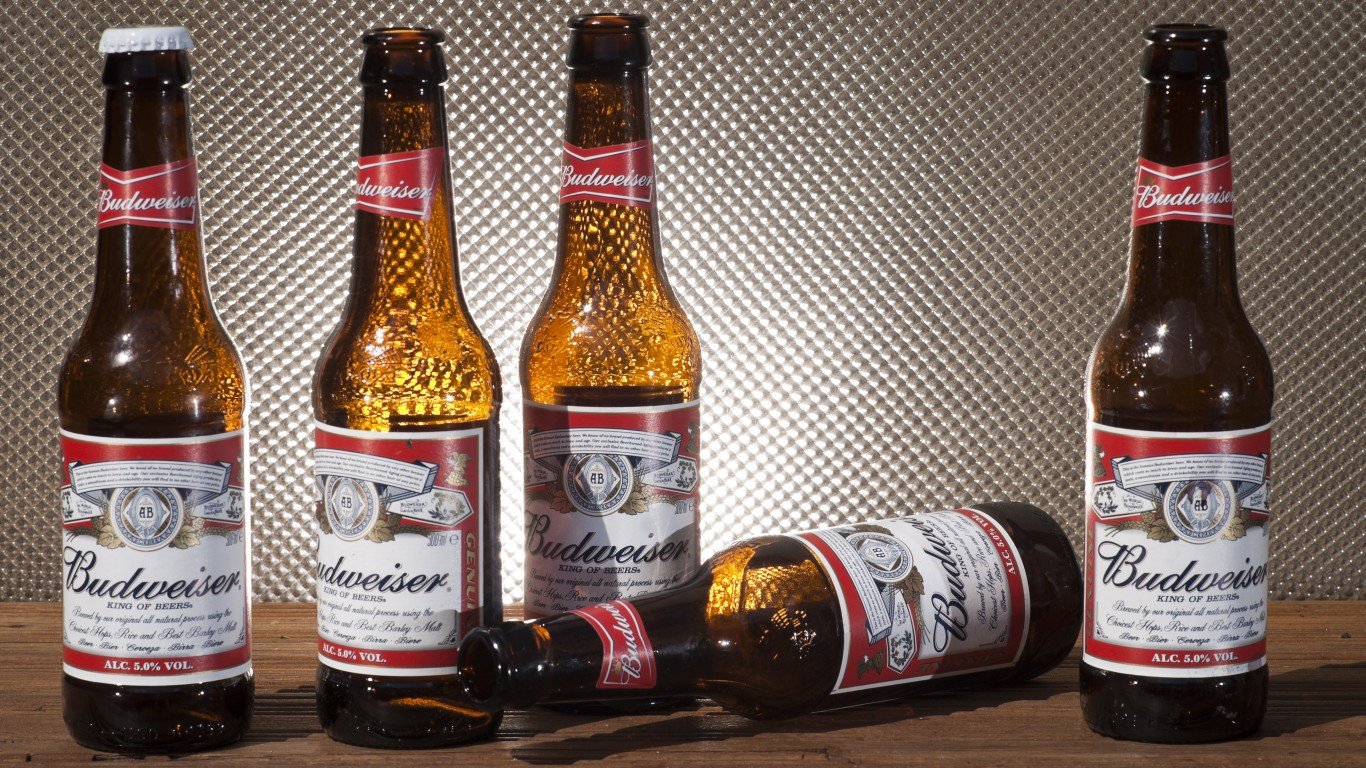
Anheuser-Busch’s stock surge in 2025 stems from its strategic adaptability and global reach. Unlike competitors heavily reliant on specific markets or categories, BUD’s diverse portfolio — including Budweiser, Corona, and Stella Artois — spans beer, seltzers, and non-alcoholic options, appealing to shifting consumer preferences.
The company has aggressively expanded its non-alcoholic and low-alcohol offerings, aligning with health-conscious trends, particularly among younger consumers. Additionally, BUD’s strong international presence, especially in emerging markets like Latin America and Asia, has bolstered revenue growth, offsetting U.S. declines. Cost-cutting measures and improved operational efficiency have also strengthened margins, boosting investor confidence.
BUD has shown an ability to navigate cultural shifts, with some analysts praising its marketing pivots away from controversies that previously dented its valuation, such as the 2023 Dylan Mulvaney campaign backlash, which saw a $5 billion market value drop.
An Earnings Hangover
Despite its year-long gains, BUD faced a sharp setback following its second-quarter earnings report. The stock dropped 13% in a single day after missing revenue expectations, driven by weaker-than-anticipated U.S. sales.
While global volumes grew, the U.S. market — BUD’s largest — saw continued softness in traditional beer sales, reflecting the broader decline in alcohol consumption. Investors reacted to concerns about BUD’s exposure to a shrinking domestic market, where health-driven abstinence is gaining traction.
However, the company’s management remains optimistic, citing robust growth in non-alcoholic beverages and international segments. The earnings miss underscores a key vulnerability: BUD’s reliance on beer in a market increasingly skeptical of alcohol’s health impacts, which could cap its upside if U.S. trends worsen.
Is BUD a Buy?
BUD’s 24% gain in 2025 is impressive, but its long-term outlook is murky. The company’s diversification into non-alcoholic beverages and global expansion are positive, but the U.S. market’s decline poses a persistent threat.
Valuation metrics suggest BUD trades at a reasonable price-to-earnings ratio compared to peers, and its dividend yield remains attractive for income-focused investors. However, the broader industry headwinds — particularly the shift in consumer sentiment — make sustained growth challenging.
Competitors like SAM and STZ, with narrower portfolios, have struggled to adapt, but BUD’s scale and innovation provide a buffer. Still, the risk of further U.S. volume declines and potential regulatory pressures, such as proposed cancer warning labels, could weigh on future performance.
For risk-tolerant investors, BUD’s resilience and global footprint make it a cautious hold, but its dependence on a declining category tempers enthusiasm for a strong buy recommendation.
Key Takeaway
Alcoholic beverage companies face a daunting challenge in overcoming the perception that alcohol is unhealthy, particularly among younger generations who are the future of the market. With 66% of 18- to 34-year-olds viewing moderate drinking as harmful, the industry’s core customer base is shrinking.
Initiatives like Dry January and the rise of mocktails reflect a cultural shift that’s hard to reverse, despite efforts to promote non-alcoholic alternatives. BUD’s current stock gains reflect its adaptability, but its exposure to traditional beer and a skeptical U.S. market makes it a difficult buy.
The industry’s future hinges on pivoting to health-conscious products, but changing deeply ingrained perceptions will be an uphill battle, casting doubt on long-term growth for even the strongest players like BUD.
Contact [email protected] for any questions or corrections.
After two decades of patrolling the dark corners of suburbia as a police officer, Rich Duprey hung up his badge and gun to begin writing full time about stocks and investing. For the past 20 years, he’s been cruising the markets looking for companies to lock up as long-term holdings in a portfolio while writing extensively on the broad sectors of consumer goods, technology, and industrials. Because his experience isn’t from the typical financial analyst track, Rich is able to break down complex topics into understandable and useful action points for the average investor. His writings have appeared on The Motley Fool, InvestorPlace, Yahoo! Finance, Money Morning, and, of course, 24/7 Wall St. He has been featured in both U.S. and international publications, including MarketWatch, Financial Times, Forbes, Fast Company, and USA Today.