Ghosts of 2023 Are Haunting Regional Banks. These 2 ETFs Can Profit From the Coming Shakeout
The specter of 2023’s regional banking crisis — when Silicon Valley Bank and First Republic crumbled — looms large again. The September bankruptcy of First Brands Group, an auto parts giant with up to $50 billion in liabilities, has exposed…

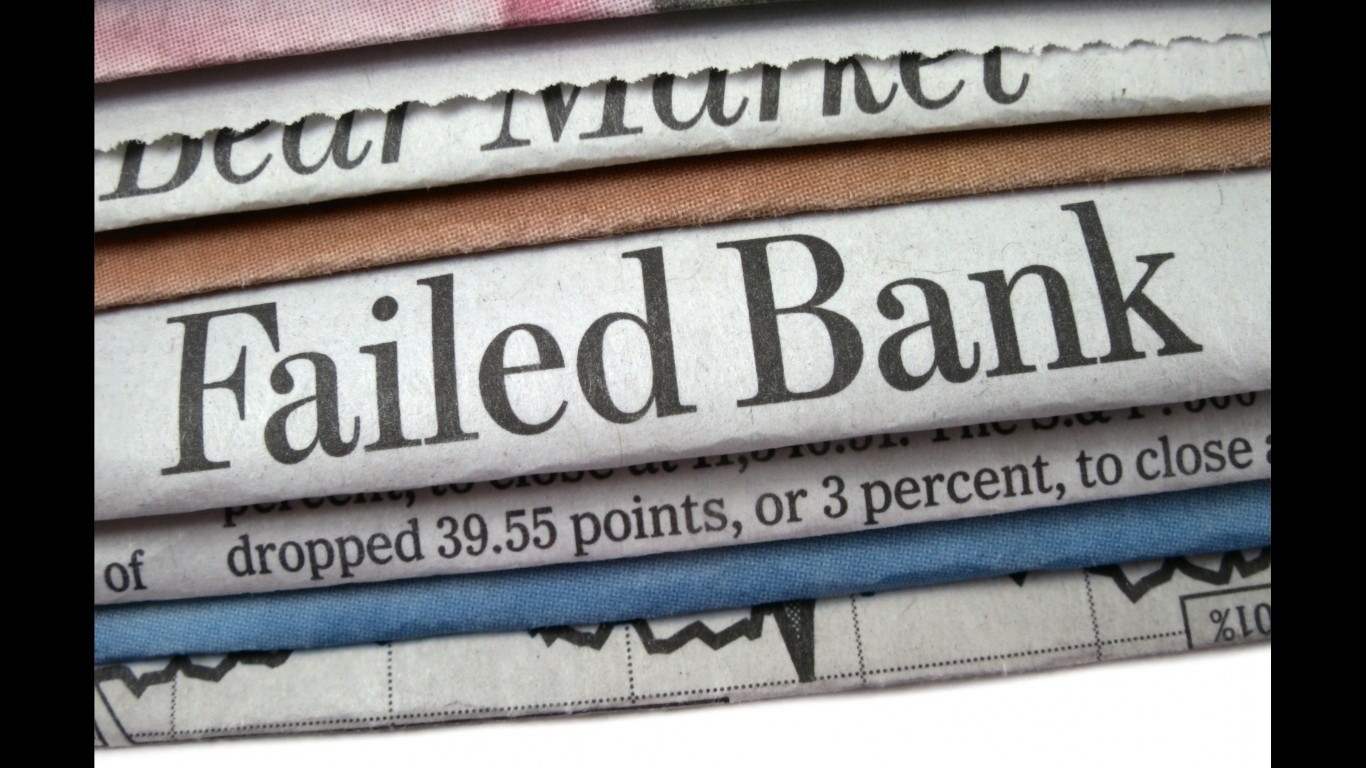
The specter of 2023’s regional banking crisis — when Silicon Valley Bank and First Republic crumbled — looms large again. The September bankruptcy of First Brands Group, an auto parts giant with up to $50 billion in liabilities, has exposed hidden cracks in private credit markets, rattling regional banks like Zions Bancorporation (NASDAQ:ZION | ZION Price Prediction) and Western Alliance (NYSE:WAL). With $1 trillion in commercial real estate loans looming and fears of more “cockroaches” (undisclosed bad loans) lurking, investors are on edge.
The SPDR Regional Banking ETF (NYSEARCA:KRE) has slid 10% in a month, and whispers of contagion are growing louder. JPMorgan Chase (NYSE:JPM) CEO Jamie Dimon said, “When you see one cockroach, there’s probably more. Everyone should be forewarned on this one.”
For risk-tolerant investors eyeing a speculative play, inverse and ultra-short exchange-traded funds (ETFs) offer a way to profit from further declines — but only in small doses. Don’t back up the truck on these.
Unlike traditional ETFs that track an index’s gains, inverse ETFs aim to deliver the opposite daily return, often amplified (e.g., -2x), making them high-risk tools for betting against a sector. Their leveraged nature causes value decay over time, so they’re unsuitable for long-term holding. Only a tiny portfolio sliver should be allocated, as sharp market rebounds can erase gains fast.
For those investors who can stomach volatility, the two ETFs below are poised to capitalize if regional banks falter, though they come with strict risk caveats.
Tuttle Capital 2X Inverse Regional Bank ETF (SKRE)
The Tuttle Capital 2X Inverse Regional Bank ETF (NASDAQ:SKRE) is a pinpoint tool for betting against regional banks, seeking -2x the daily return of the S&P Regional Banks Select Industry Index, the same benchmark as KRE. If KRE drops 1% in a day, SKRE aims to gain 2%, ideal for traders expecting a shakeout.
The First Brands bankruptcy, alongside Tricolor’s subprime auto lending collapse, exposed loan fraud, with Zions taking a $50 million charge-off and Western Alliance suing over fraudulent collateral. With commercial real estate (CRE) delinquencies elevated, specifically in office loans, climbing to 10.4% for regional lenders — near 2008 highs — and $1 trillion in CRE loans due by year-end, further defaults could crush KRE, driving SKRE higher.
On Thursday, when KRE plunged 6.3% amid panic, SKRE spiked nearly 12%, showcasing its potency in fear-driven selloffs. But when banks like Truist Financial (NYSE:TFC) and Fifth Third Bancorp (NASDAQ:FITB) posted solid earnings on Friday, KRE rebounded 1.6%, and SKRE shed gains (it lost 3.5%). This volatility highlights SKRE’s risk: its 2x leverage amplifies losses in recoveries, and daily resets cause decay in flat or choppy markets.
Upcoming earnings, like Western Alliance’s on Oct. 21, could reveal more loan issues, boosting SKRE if losses mount. Risk-tolerant traders must use tight stop-losses and short-term holds (days, not weeks), as prolonged exposure can erode profits even if banks weaken overall, especially with potential Federal Reserve interest rate cuts stabilizing markets.
ProShares UltraShort Financials ETF (SKF)
The ProShares UltraShort Financials ETF (NYSEARCA:SKF) targets -2x the daily return of the S&P Financial Select Sector Index, covering regional banks, big banks like JPMorgan, and insurers. A 1% drop in its index could yield a 2% gain for SKF, offering a broader play on financial sector stress.
First Brands’ fallout hit firms like Jefferies Financial Group (NYSE:JEF), which disclosed $715 million in exposure, driving its stock down 20% in a month. JPM itself took a $170 million hit from Tricolor. If contagion spreads — through collateralized loan obligations (CLOs), private credit defaults, or auto loan stress — SKF could rally significantly.
SKF also shot higher last Thursday as regional bank fears peaked, reflecting its sensitivity to sector panic. Yet, the next day, strong earnings from American Express (NYSE:AXP) and others lifted financials, slashing SKF’s gains. This swing underscores its danger: 2x leverage magnifies losses in rebounds, and long-term holds decay due to daily resets, especially in volatile markets.
SKF is less precise than SKRE for regional banks but captures wider financial fallout, like CLO unwinds or insurer losses tied to credit markets. With $1.5 trillion in leveraged loans outstanding, a broader credit crunch could fuel SKF. Aggressive traders should also limit their positions and exit quickly, as big banks’ stability or positive earnings could cap upside, making timing critical.
Contact [email protected] for any questions or corrections.
After two decades of patrolling the dark corners of suburbia as a police officer, Rich Duprey hung up his badge and gun to begin writing full time about stocks and investing. For the past 20 years, he’s been cruising the markets looking for companies to lock up as long-term holdings in a portfolio while writing extensively on the broad sectors of consumer goods, technology, and industrials. Because his experience isn’t from the typical financial analyst track, Rich is able to break down complex topics into understandable and useful action points for the average investor. His writings have appeared on The Motley Fool, InvestorPlace, Yahoo! Finance, Money Morning, and, of course, 24/7 Wall St. He has been featured in both U.S. and international publications, including MarketWatch, Financial Times, Forbes, Fast Company, and USA Today.