Why Did Ken Griffin Spend Nearly $1 Million on This New Crypto Treasury Company?
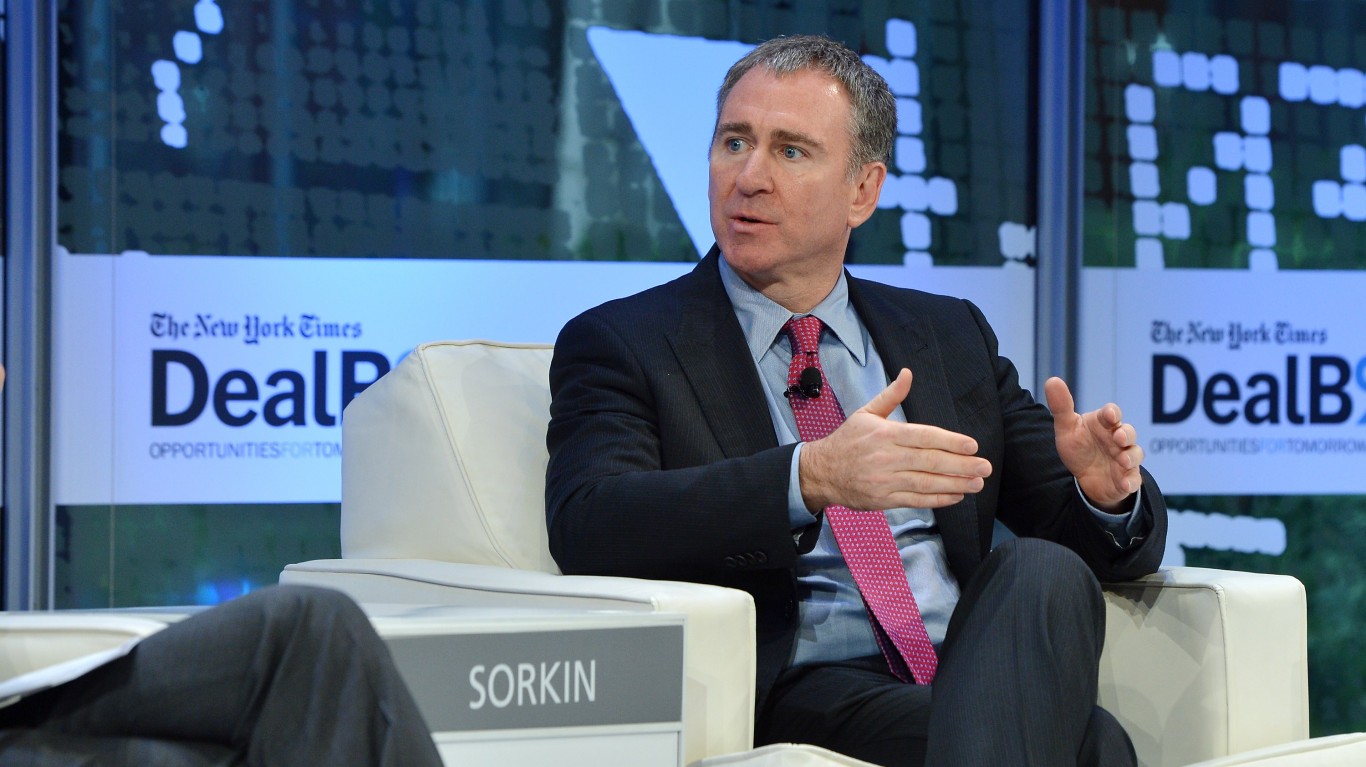
Ken Griffin is a billionaire investor and the founder of Citadel Advisors, one of the world’s largest hedge funds. He oversees operations at Citadel, managing around $115 billion in assets under management through strategies in equities, fixed income, and commodities.…

This post may contain links from our sponsors and affiliates, and Flywheel Publishing may receive compensation for actions taken through them.

Ken Griffin is a billionaire investor and the founder of Citadel Advisors, one of the world’s largest hedge funds. He oversees operations at Citadel, managing around $115 billion in assets under management through strategies in equities, fixed income, and commodities.
Griffin built Citadel into a powerhouse since 1990, known for quantitative trading and risk management. His moves often signal market trends, drawing attention from retail investors. Recently, he spent $800,000 on a novel crypto treasury company through Citadel. Should investors follow this billionaire’s lead?
The Value of Tracking Superinvestors
Following trades by superinvestors like Griffin can uncover overlooked opportunities. SEC filings reveal their positions, offering insights into undervalued assets. However, riding coattails requires caution — it’s a starting point for due diligence, not blind action. Analyze fundamentals, risks, and fit for your portfolio before buying.
Griffin’s recent purchase stands out, as the crypto treasury company has surged in popularity amid blockchain hype. These firms now represent a new asset class: public companies whose primary value driver is digital asset accumulation and yield generation. Institutional interest is also rising, with hedge funds and family offices allocating to crypto-exposed equities as a proxy for direct crypto ownership without custody complexity.
Griffin’s Bet on a Rising Crypto Play
DeFi Development (NASDAQ:DFDV), formerly Janover, went public in July 2023 via a $5.65 million IPO under ticker JNVR, focusing on AI-powered commercial real estate lending. Trading was flat and low-volume until April 2025, when a change in control occurred. Founder Blake Janover sold 51% voting control for $4 million to new owners, who pivoted to a digital asset treasury holding Solana (CRYPTO:SOL). The name changed to DeFi Development with the ticker DFDV. Shares exploded over 2,000% in 2025, driven by SOL staking yields of 7% to 8%.
The pivot was swift and capital-intensive. By June, DFDV held $97 million in digital assets, mostly SOL, including locked tokens acquired at discounts. Management operates validators on the Solana network and stakes with third parties, generating revenue from inflation rewards and transaction fees. This hybrid model — legacy SaaS plus crypto treasury — creates dual revenue streams, though crypto now dominates the valuation.
Citadel’s Entry via DFDV’s PIPE
Griffin’s Citadel entity invested in DFDV’s August $124 million private placement. This PIPE (private investment in public equity) sold 4.17 million shares at $12.50 and 5.78 million pre-funded warrants, with $31.9 million paid in locked SOL or interests in SOL-holding entities. Citadel CEMF Investments acquired a portion, marking one of the first major hedge fund entries into a SOL-focused treasury vehicle. The SEC filing last week registered these shares for resale, enabling liquidity for PIPE investors.
DFDV bills itself as the first public SOL treasury company, mirroring Strategy’s (NASDAQ:MSTR | MSTR Price Prediction) Bitcoin playbook but targeting a high-throughput Layer-1 blockchain.
The Rise of Treasury Companies
Strategy pioneered the trend in 2020, holding Bitcoin as a corporate treasury asset for inflation hedging. This sparked imitation “treasury companies” — public firms amassing crypto for yield and appreciation.
BTC treasuries multiplied, with firms like Marathon Digital (NASDAQ:MARA) and Riot Platforms (NASDAQ:RIOT) following. Ethereum (CRYPTO:ETH) versions emerged, such as BitMine Immersion Technologies (NASDAQ:BMNR), leveraging its utility in DeFi and NFTs. Now, treasuries target lesser cryptos, raising risks.
As treasuries move from BTC’s store-of-value status or ETH’s smart contract dominance, volatility spikes. Lesser cryptos lack proven resilience, facing regulatory scrutiny and market dumps. SOL treasuries like DFDV amplify this — exposure ties it to one asset’s fate. A 50% drop in SOL could impair DFDV’s balance sheet, even with staking income.
Solana’s Strengths and Challenges
SOL’s claim to fame is scalability: It processes thousands of transactions per second (TPS) at low fees, using proof-of-history and proof-of-stake for efficiency. This edges out ETH in speed, powering DeFi, NFTs, and gaming. The network supports over 65,000 TPS in tests and hosts major protocols like Jupiter and Raydium.
However, Solana experienced several outages in 2022 and one major outage in February 2023, and validator concentration continues to raise reliability concerns.. Despite improvements, SOL remains riskier than BTC or ETH.
Key Takeaway
Griffin’s DFDV buy highlights SOL’s potential in a maturing blockchain ecosystem, but it’s speculative. The model works if SOL appreciates and staking sustains yields — DFDV targets long-term holding with operational income.
Yet crypto winters have crushed similar plays. MSTR survived 2022’s crash, but lesser treasuries may not. An investment could be worthwhile for high-risk portfolios seeking 10x upside via crypto beta, but too risky for core holdings. Instead, use Griffin’s move as a signal, not a mandate.
I wouldn’t necessarily follow the billionaire investor into DFDV. Griffin has billions of dollars at his disposal to take a flyer on this relatively new investment vehicle and he was given early access to shares unavailable to retail investors. Also, DFDV is not a large position: just 0.01% of his portfolio’s total.
If you want to take a similarly small position in your own portfolio to have some skin in the game it might be worthwhile, just don’t back up the truck on an investment.
Contact [email protected] for any questions or corrections.
After two decades of patrolling the dark corners of suburbia as a police officer, Rich Duprey hung up his badge and gun to begin writing full time about stocks and investing. For the past 20 years, he’s been cruising the markets looking for companies to lock up as long-term holdings in a portfolio while writing extensively on the broad sectors of consumer goods, technology, and industrials. Because his experience isn’t from the typical financial analyst track, Rich is able to break down complex topics into understandable and useful action points for the average investor. His writings have appeared on The Motley Fool, InvestorPlace, Yahoo! Finance, Money Morning, and, of course, 24/7 Wall St. He has been featured in both U.S. and international publications, including MarketWatch, Financial Times, Forbes, Fast Company, and USA Today.