This New Spinoff Is Helping to Fuel Data Center Chip Growth
You likely haven’t heard of Qnity Electronics (NYSE:Q) before, but you will undoubtedly hear a lot more about it as the artificial intelligence (AI) boom continues ramping higher. Spun off from specialty chemicals giant DuPont (NYSE:DD | DD Price Prediction),…

This post may contain links from our sponsors and affiliates, and Flywheel Publishing may receive compensation for actions taken through them.

You likely haven’t heard of Qnity Electronics (NYSE:Q) before, but you will undoubtedly hear a lot more about it as the artificial intelligence (AI) boom continues ramping higher. Spun off from specialty chemicals giant DuPont (NYSE:DD | DD Price Prediction), Qnity began trading on the NYSE on Nov. 3 and was immediately added to the S&P 500 due to its scale.
Now operating as a standalone business, the high-tech electronics firm can focus its investments in growing the data center chip and edge device expertise it honed when it was part of DuPont’s conglomerate.
In fact, that was part of the reason behind the spinoff: to eliminate the “conglomerate discount,” or the market’s tendency to undervalue diversified firms by averaging disparate business performances. By splitting, DuPont can sharpen its attention on stable industrial segments, like water and protection solutions, while freeing Qnity to chase aggressive growth in semiconductors and electronics.
Because it was hidden within the specialty chemical maker’s shadow, Qnity has remained largely hidden from investor view despite having quietly helped to prime the pump of the AI revolution. Is this stock one that deserves to be in your portfolio?
The Quiet Backbone of AI Innovation
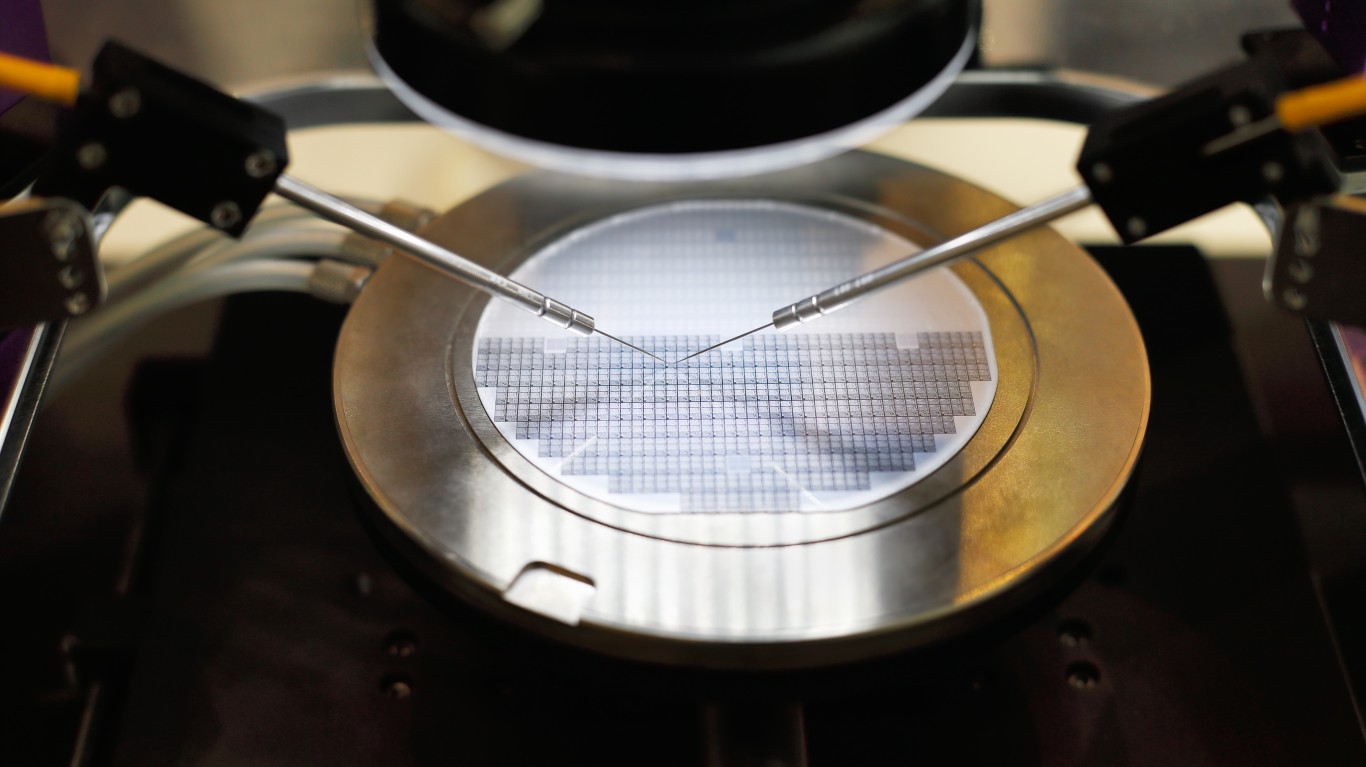
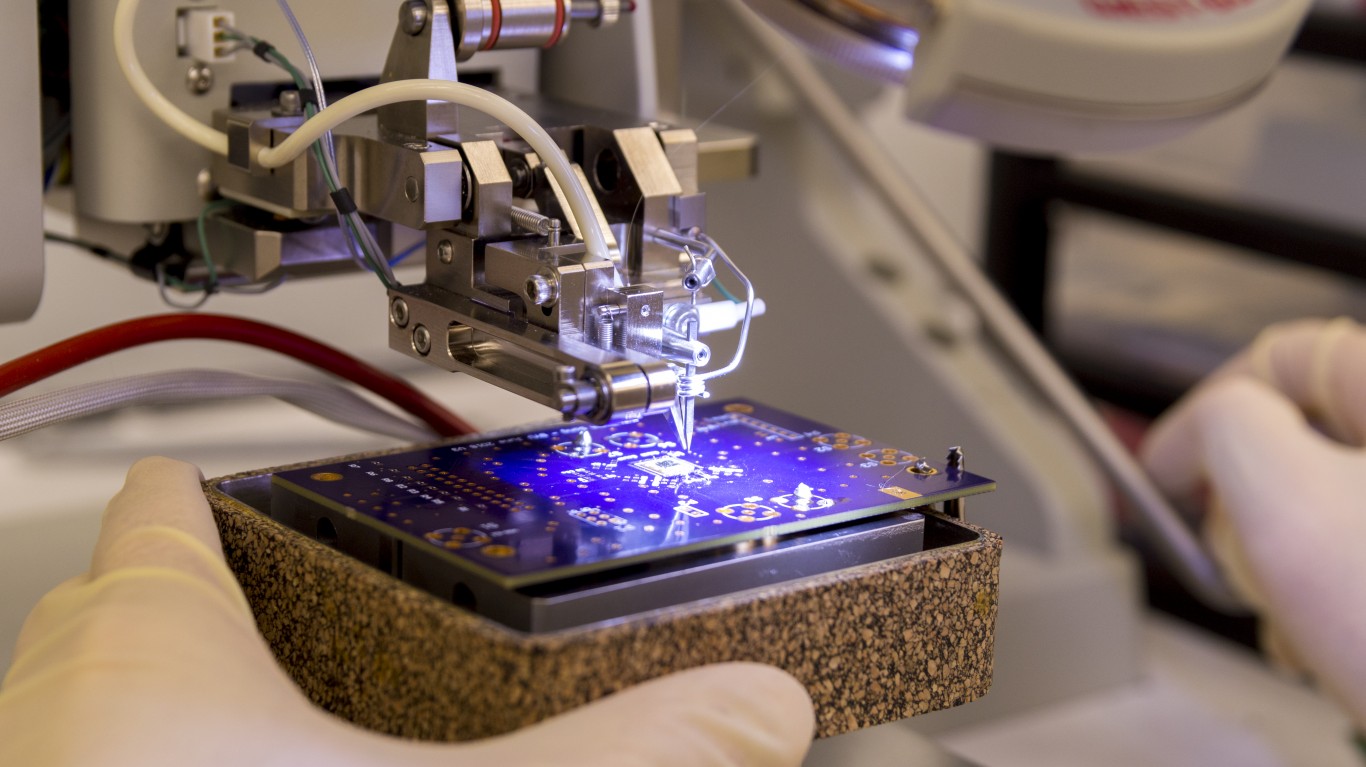
Qnity’s portfolio powers the semiconductors at the heart of AI systems, from data center chips to edge devices. Two-thirds of its revenue ties directly to this sector, supplying critical materials like chemical mechanical planarization (CMP) pads for precise wafer polishing, Kapton polyimide films for interconnects, and thermal management solutions to dissipate heat in power-hungry GPUs.
These aren’t flashy products like ASML‘s (NASDAQ:ASML) extreme ultraviolet (EUV) lithography machines that are critical for producing advanced AI chips, but essential enablers: without them, advanced nodes below 5 nanometer — key for AI’s low-latency demands — couldn’t scale efficiently. As AI workloads explode, chipmakers like Taiwan Semiconductor Manufacturing (NYSE:TSM) and Intel (NASDAQ:INTC) ramp production, pulling Qnity along.
In the third quarter, Qnity posted 11% net sales growth to $1.3 billion and raised full-year guidance to $4.7 billion, crediting AI tailwinds in packaging and thermal tech. Management eyes 6% to 7% compounded annual growth through 2028, outpacing the broader chemicals market, in a $30 billion addressable space projected to hit $147 billion by 2034.
Wall Street’s Early Bet
Analysts wasted no time spotlighting Qnity’s potential. Wolfe Research kicked off coverage with an Outperform rating and $110 per share price target (it began trading at $90 and goes for $95 per share), praising its strong balance sheet for M&A in adjacent areas like advanced packaging. The firm highlighted Qnity’s exposure to Asian and U.S. chip giants, positioning it to ride semiconductor upcycles.
Mizuho echoed this with its own Outperform and $110 per share target, implying 12% upside from debut levels. They noted Qnity’s rare pure-play status in electronic chemicals under MSCI’s semiconductor classification alongside peer Entegris (NASDAQ:ENTG). The analyst also flagged rising 2026 capex forecasts, up to 11%, fueling chip output.
Both investment firms see new investor demand offsetting any DuPont shareholder sales, with Qnity’s EBITDA margin of approximately 29% in Q2 2025 providing firepower for innovation.’
Navigating a Competitive Arena
Qnity isn’t alone in this niche, but its specialized focus gives it a competitive edge. As a mid-cap pure-play with $4.7 billion in projected 2025 revenue and around 10,000 employees, it’s larger than most specialists but dwarfed by diversified giants like Shin-Etsu Chemical or Merck KGaA. Direct rivals include Entegris for filtration and CMP, Fujifilm for photoresists, and Resonac for slurries.
Competition intensifies around tech leaps, like EUV lithography advances, with pricing pressures in downturns. Yet high barriers — Qnity has 6,900 patents, 35-year customer ties, and one- to three-year qualification cycles — create moats.
Geopolitical risks, including U.S.-China tensions that affect its 79% Asia revenue, loom, but Qnity’s end-to-end solutions and R&D spend ($300 million to $400 million annually) let it target AI-driven sub-segments where it leads.
At a P/E of 24, it offers an attractive value on the $1 trillion semiconductor surge expected by the end of the decade.
Key Takeaway
Qnity Electronics stands out as a potential growth stock for investors eyeing AI without the volatility of pure chipmakers. Its spin-off sharpens execution on megatrends, backed by solid margins, bullish analyst consensus, and a defensible niche.
While cyclical risks persist, the secular AI boom — driving 15% of its business now, with room to expand — offers durable upside. With new Wall Street price targets suggesting upside potential and its recent addition to the S&P 500, Qnity merits consideration for portfolios seeking indirect AI exposure through resilient materials companies.
Contact [email protected] for any questions or corrections.
After two decades of patrolling the dark corners of suburbia as a police officer, Rich Duprey hung up his badge and gun to begin writing full time about stocks and investing. For the past 20 years, he’s been cruising the markets looking for companies to lock up as long-term holdings in a portfolio while writing extensively on the broad sectors of consumer goods, technology, and industrials. Because his experience isn’t from the typical financial analyst track, Rich is able to break down complex topics into understandable and useful action points for the average investor. His writings have appeared on The Motley Fool, InvestorPlace, Yahoo! Finance, Money Morning, and, of course, 24/7 Wall St. He has been featured in both U.S. and international publications, including MarketWatch, Financial Times, Forbes, Fast Company, and USA Today.