Home Depot vs. Lowe’s: Only 1 of These Home Improvement Stocks Is a Buy for 2026
The home improvement sector has endured a tough 2025, as elevated interest rates and a sluggish housing market suppressed consumer spending on renovations and DIY projects. The Home Depot (NYSE:HD | HD Price Prediction) stock has declined 11% year-to-date, while…


The home improvement sector has endured a tough 2025, as elevated interest rates and a sluggish housing market suppressed consumer spending on renovations and DIY projects. The Home Depot (NYSE:HD | HD Price Prediction) stock has declined 11% year-to-date, while Lowe’s (NYSE:LOW) is down 2.6%.
Although the Federal Reserve has begun cutting rates, mortgage rates remain high, existing-home sales are anemic, and housing inventory stays tight. With 2026 just over the horizon, analysts expect only modest improvement in affordability and turnover. In this environment, only one of these two dominant home improvement retailers stands out as a compelling buy for the coming year.
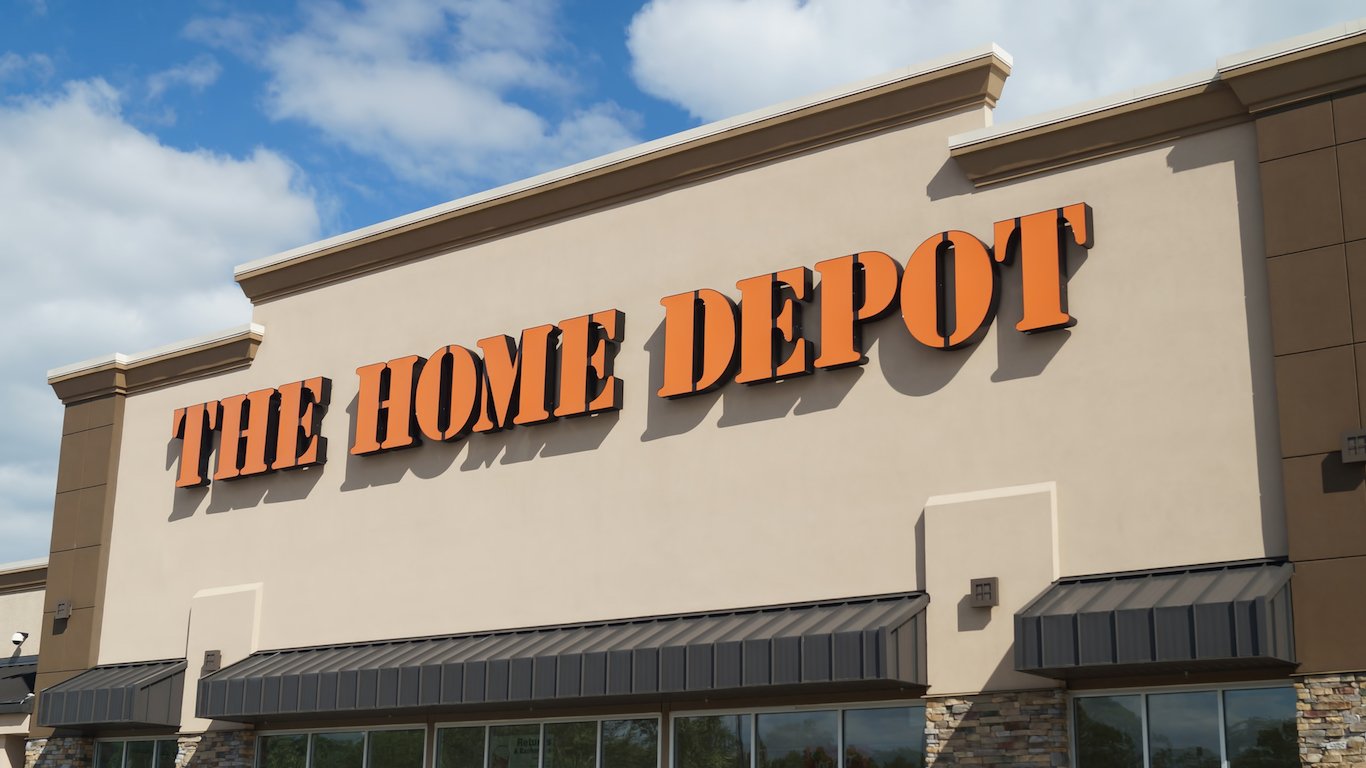
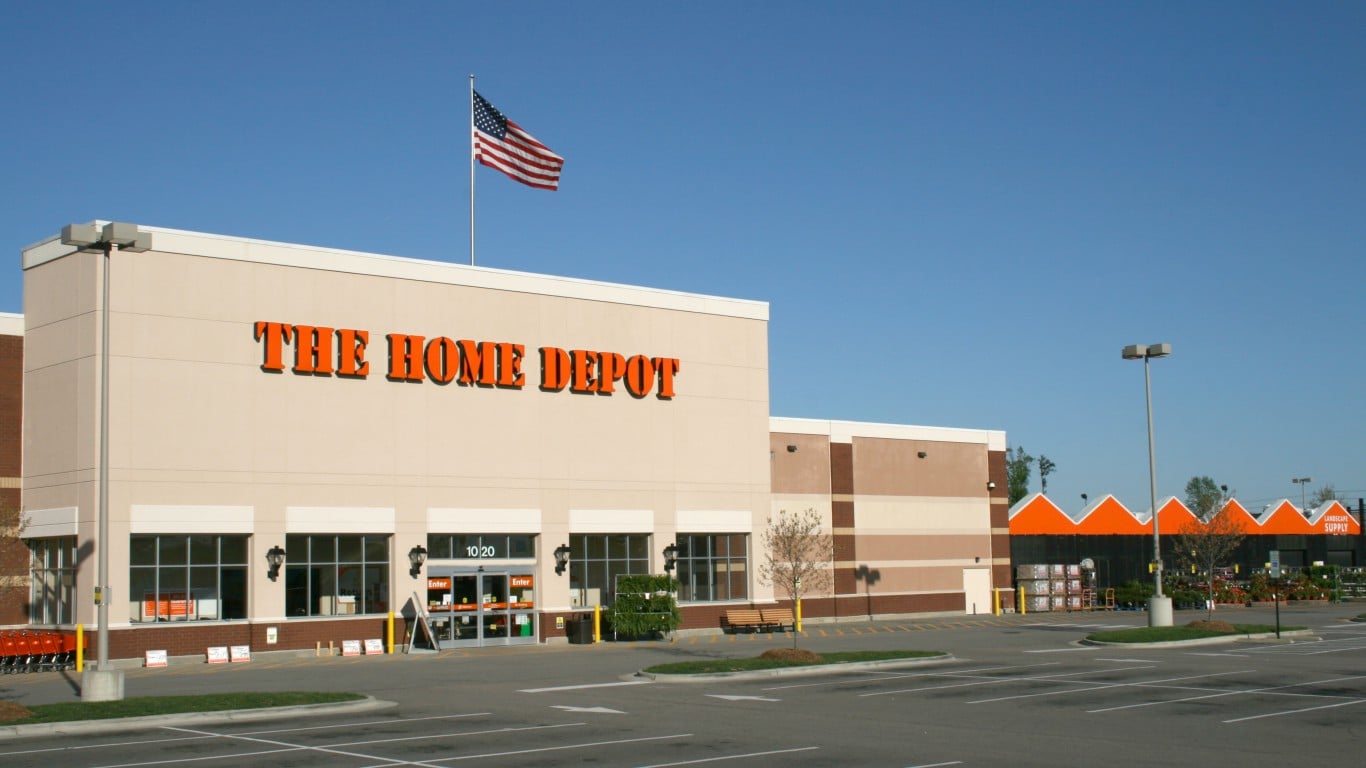
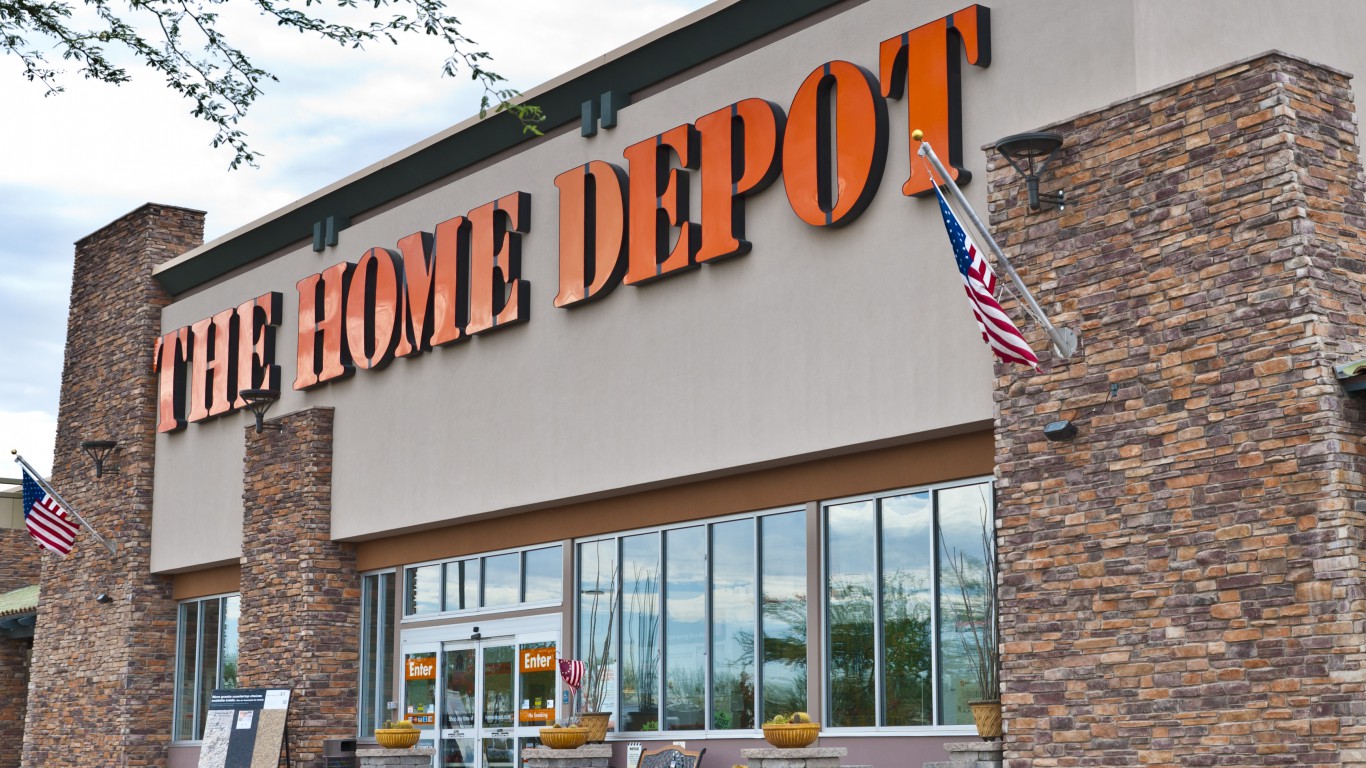
Home Depot (HD)
Home Depot is the industry leader with roughly 2,300 stores and a heavy emphasis on professional contractors. It has struggled to generate meaningful growth this year. Third-quarter comparable sales growth inched up only 0.2%, with U.S. comps just 0.1% higher — a trend seen throughout the year as cautious consumers weren’t in an extravagant mood given ongoing economic uncertainty.
The retailer has faced higher operating costs and some tariff-related pressure, though it only resulted in minor revisions to most full-year guidance. However, for fiscal 2025, Home Depot now expects adjusted earnings per share to decline approximately 5% from the prior year compared to the 3% drop forecast at the beginning of the year.
The stock trades at a forward price-to-earnings ratio of about 23 times, reflecting its premium positioning but also limiting near-term upside. Analysts are only expecting 2.4% long-term earnings expansion.
Looking ahead, Home Depot benefits from its unmatched scale, strong pro-contractor business, and recent acquisitions such as SRS Distribution, which bolster its position in the professional market. It has chosen to focus on the pro segment to offset some of the weakness in the residential market, while prioritizing U.S. sourcing to minimize any tariff impacts.
Analysts remain generally positive, assigning a consensus “Buy” rating and have assigned an average price target of $402 per share, implying roughly 15% upside from its current price. The company also offers a reliable dividend yield of approximately 2.7%, having raised the payout for each of the last 16 years.
While a gradual recovery in housing and lower interest rates could support 2026 performance, the stock’s elevated valuation and recent earnings pressure temper enthusiasm.
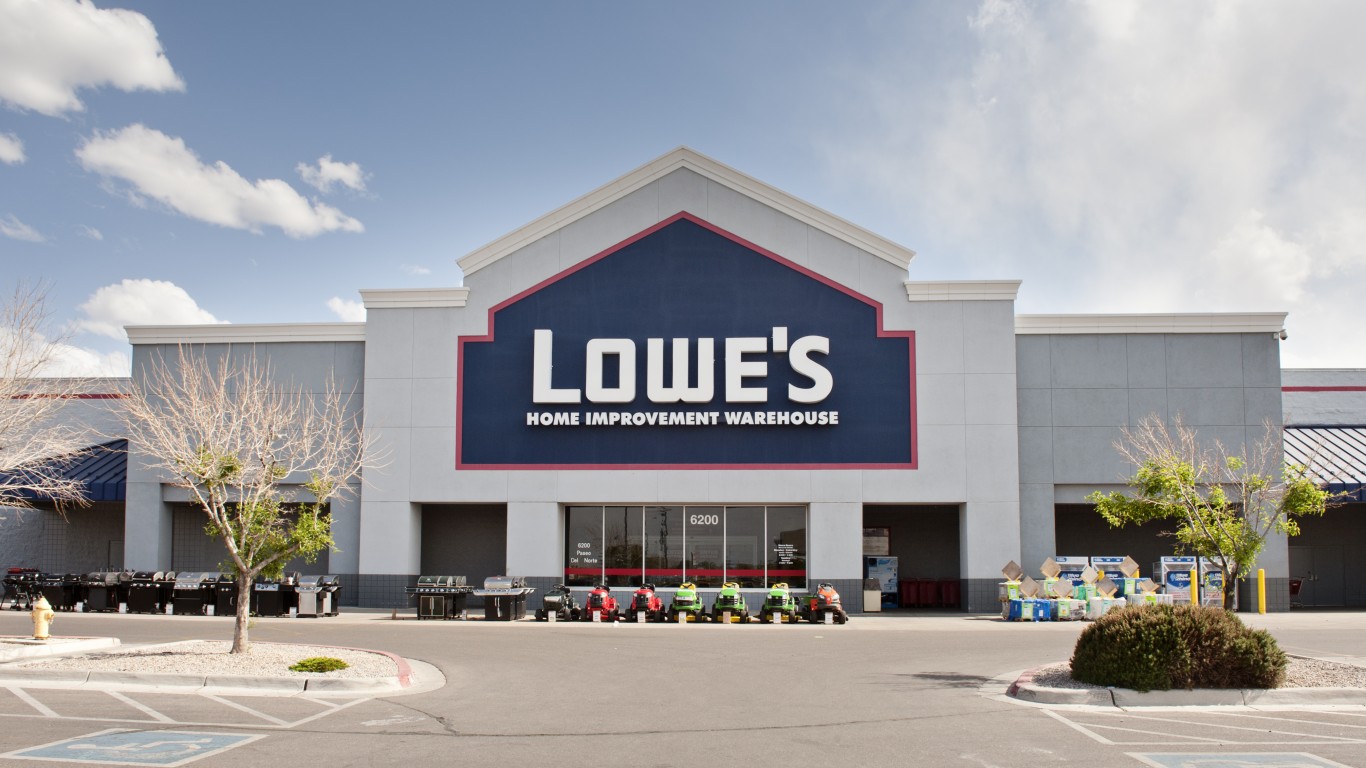
Lowe’s (LOW)
Lowe’s has shown greater relative strength in 2025 despite operating in the same challenging environment. The company reported modest comparable sales growth in recent quarters, driven by strength in its growing professional segment and targeted initiatives such as the Artisan Design Group acquisition.
The home improvement warehouse has consistently beaten earnings expectations over the last four quarters and maintained guidance for flat to slightly positive comps for the year. Its operating margin improvements and disciplined cost management have helped protect profitability. With a forward P/E ratio below 19 times — significantly below Home Depot’s — it offers investors a more attractive valuation.
Analysts also rate Lowe’s as a “Buy,” with an average price target of approximately $277 per share, suggesting 14% upside potential. The dividend yield is around 1.9%, but with steady increases over 63 consecutive years — making it a Dividend King — Lowe’s offers a solid track record of payouts.
The retailer’s smaller store footprint, focus on technology upgrades, and ability to gain market share in a stabilizing housing market position it to benefit disproportionately from any improvement in consumer confidence and affordability in 2026. Lower mortgage rates and a potential pickup in existing-home sales could drive incremental demand for appliances, flooring, and other big-ticket items.
Key Takeaway
Both Home Depot and Lowe’s are well-run companies with strong competitive positions, but Lowe’s offers better value at current prices. Its lower valuation, recent relative outperformance, and equivalent upside potential make it the stronger buy for 2026.
Home Depot remains a solid long-term holding, but its premium multiple and slower growth trajectory limit near-term appeal in a still-uncertain housing market. Lowe’s remains the home improvement retailer you should be buying.
Contact [email protected] for any questions or corrections.
After two decades of patrolling the dark corners of suburbia as a police officer, Rich Duprey hung up his badge and gun to begin writing full time about stocks and investing. For the past 20 years, he’s been cruising the markets looking for companies to lock up as long-term holdings in a portfolio while writing extensively on the broad sectors of consumer goods, technology, and industrials. Because his experience isn’t from the typical financial analyst track, Rich is able to break down complex topics into understandable and useful action points for the average investor. His writings have appeared on The Motley Fool, InvestorPlace, Yahoo! Finance, Money Morning, and, of course, 24/7 Wall St. He has been featured in both U.S. and international publications, including MarketWatch, Financial Times, Forbes, Fast Company, and USA Today.