Is This Warren Buffett’s Final Warning About the S&P 500?
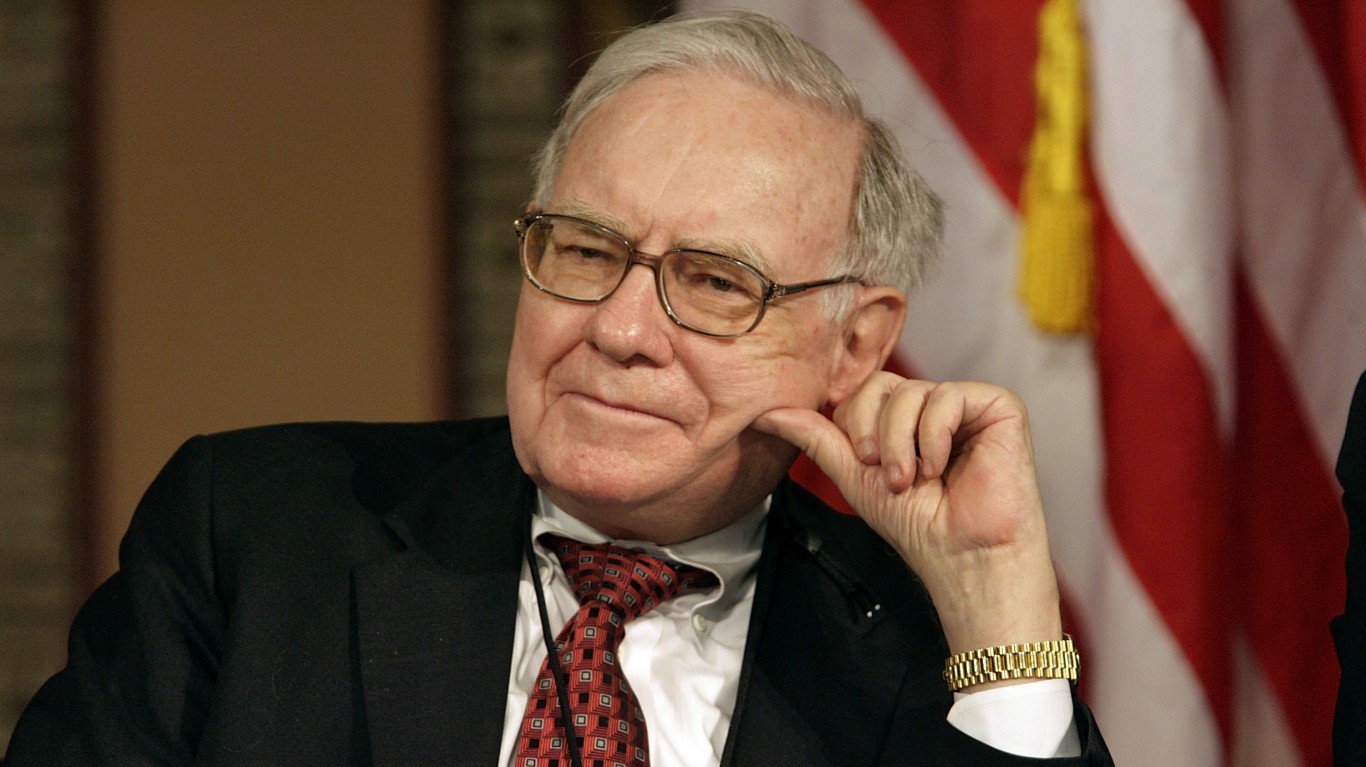
Tomorrow marks Warren Buffett’s final day as CEO of Berkshire Hathaway (NYSE:BRK-A | BRK-A Price Prediction)(NYSE:BRK-B), ending a tenure spanning six decades that turned a struggling textile company into a $1 trillion conglomerate. At age 95, Buffett will step down,…


Tomorrow marks Warren Buffett’s final day as CEO of Berkshire Hathaway (NYSE:BRK-A | BRK-A Price Prediction)(NYSE:BRK-B), ending a tenure spanning six decades that turned a struggling textile company into a $1 trillion conglomerate. At age 95, Buffett will step down, with Greg Abel taking over as CEO on Jan. 1, while Buffett remains chairman.
As he exits daily investment decisions, Buffett leaves behind a record cash pile of approximately $382 billion, mostly in short-term U.S. Treasury bills. This unprecedented hoard comes during an S&P 500 bull market pushing the index to historic highs.
While debate about the meaning of it varies, the buildup coincides with elevated market valuations, suggesting Buffett views many stocks as overpriced in the current environment. For investors willing to listen, the Oracle of Omaha may be sending his final warning before his departure.
Why the Massive Cash Buildup?
Berkshire Hathaway has been a net seller of stocks for 12 consecutive quarters, including significant reductions in its Apple (NASDAQ:AAPL) stake — once its largest holding at around 50% of the portfolio, but today it accounts for just over one-fifth of the total. He has also trimmed or sold off other holdings as well. These sales have driven Berkshire’s cash reserve to new highs, as Buffett has not even been buying back his own stock in 2025 despite the company’s strong operating earnings.
One explanation is the appeal of risk-free returns. Much of Buffett’s cash is invested in short-term Treasury bills yielding around 3.6% to 4%, providing reliable income without equity risk. Analysts note that Buffett prefers these safe yields over deploying capital into stocks at current elevated valuations, where expected returns may not exceed this risk-free rate after adjusting for inflation and volatility.
Other theories include preparation for large acquisitions or opportunistic buybacks if prices fall, maintaining flexibility in a concentrated portfolio, and managing concentration risk after years of gains in top holdings like Apple. Succession planning may also play a role, as incoming CEO Greg Abel prepares to take on capital allocation responsibilities. However, the consistent net selling and avoidance of major capital deployments point primarily to a lack of attractive opportunities in an overextended market.
The Valuation Warning Sign Buffett May Be Heeding
A key factor that may be influencing Buffett’s caution is a widely referenced valuation chart from J.P. Morgan Asset Management’s Guide to the Markets. This scatter plot shows the S&P 500’s starting forward P/E ratio compared to subsequent 10-year annualized returns.

Historical data indicates that when the forward P/E exceeds 23x, subsequent 10-year annualized returns have been negative every single time. This pattern held during prior high-valuation periods, contributing to subdued returns.
The S&P 500’s trailing P/E ratio today stands at approximately 31.2x, while forward estimates range from 22.5x to 27.9x depending on sources. These levels are well above historical averages and exceed the 23x threshold highlighted in the analysis. Notably, in December 1999 — near the dot-com peak — the forward P/E approached similar elevated territory around 29x, preceding the “lost decade” of the 2000s when S&P 500 returns were flat to negative over the next 10 years.
Current conditions echo that era, raising the prospect of another period of muted or lost returns if valuations do not normalize through earnings growth or price adjustments.
Key Takeaway
Buffett has long emphasized that he does not attempt to time the market but waits for attractive prices before committing capital. As he famously avoids overpaying, the current environment — characterized by high valuations and limited bargains — offers few compelling options for large-scale cash deployment.
With stocks trading at premiums far removed from bargain levels, Buffett’s record cash position as he transitions away from daily decision-making may be his clearest warning yet to investors willing to listen: buyer beware.
Contact [email protected] for any questions or corrections.
After two decades of patrolling the dark corners of suburbia as a police officer, Rich Duprey hung up his badge and gun to begin writing full time about stocks and investing. For the past 20 years, he’s been cruising the markets looking for companies to lock up as long-term holdings in a portfolio while writing extensively on the broad sectors of consumer goods, technology, and industrials. Because his experience isn’t from the typical financial analyst track, Rich is able to break down complex topics into understandable and useful action points for the average investor. His writings have appeared on The Motley Fool, InvestorPlace, Yahoo! Finance, Money Morning, and, of course, 24/7 Wall St. He has been featured in both U.S. and international publications, including MarketWatch, Financial Times, Forbes, Fast Company, and USA Today.