This Blown Out Natural Gas ETF Could Rip Higher In 2026 | BOIL
When a leveraged natural gas ETF drops 53% in a year, most investors flee. But that brutal decline in ProShares Trust II (NYSEARCA:BOIL) might set up a compelling contrarian play for 2026. This ETF delivers twice the daily performance of…

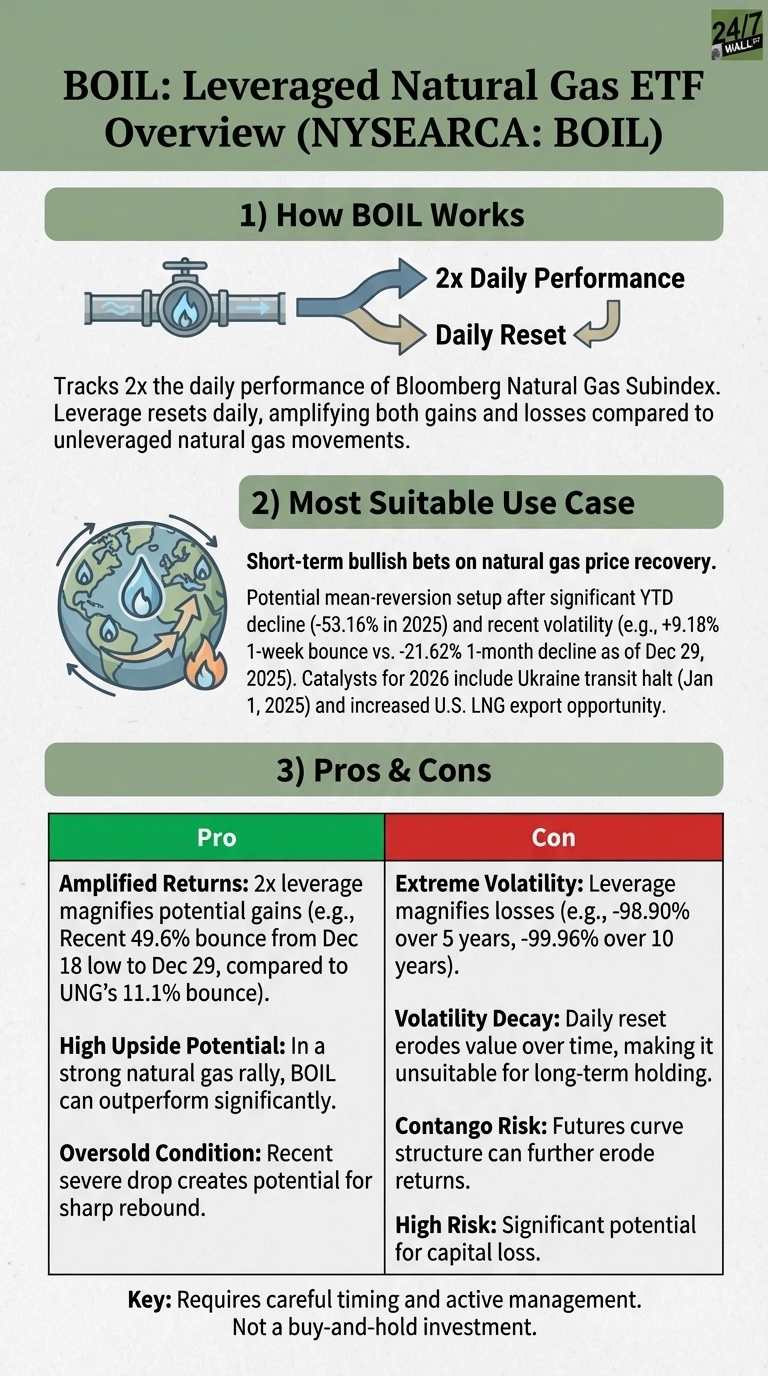
When a leveraged natural gas ETF drops 53% in a year, most investors flee. But that brutal decline in ProShares Trust II (NYSEARCA:BOIL) might set up a compelling contrarian play for 2026. This ETF delivers twice the daily performance of the Bloomberg Natural Gas Subindex, amplifying both pain and pleasure. After natural gas collapsed from over $5 per MMBtu in early December to around $3.66 by mid-month, BOIL was crushed. But the same leverage that destroyed it on the way down could launch it higher when fundamentals flip.
The LNG Export Wave That Could Change Everything
The biggest catalyst for natural gas in 2026 is the massive wave of liquefied natural gas export capacity coming online that will transform U.S. natural gas from a regional commodity into a global one. Golden Pass LNG is targeting full capacity in 2026, while Venture Global’s Plaquemines facility is ramping toward commercial operations. The International Energy Agency forecasts global LNG supply will surge 7% in 2026, the largest increase since 2019.
That supply increase won’t flood the market and crash prices. The IEA forecasts it will unlock massive price-sensitive demand in India and Southeast Asia that has been sidelined. After a soft 2025 where high spot prices deterred Asian buyers, lower international LNG prices in 2026 could create a higher floor for U.S. Henry Hub prices as export terminals pull more domestic gas toward international markets. Ukraine’s confirmed halt of Russian gas transit on January 1, 2025 only tightens European supply further, positioning U.S. exports as the gap-filler.
Watch the monthly EIA Natural Gas Monthly report and the IEA’s quarterly Gas Market Report for updates on export terminal ramp-ups and global demand patterns.
The Leverage Mechanics You Need to Understand
BOIL’s 2x daily leverage structure is both its greatest asset and its Achilles heel. The ETF has lost over 99% of its value over the past decade because daily rebalancing and volatility decay erode returns over time. When natural gas dropped 27.6% from early December’s peak to the December 22 low, BOIL fell 38%. But when natural gas bounced 11% from those lows, BOIL surged nearly 50% in just days.
The micro factor to watch is the contango structure of natural gas futures. BOIL holds futures contracts that must be rolled monthly. When the futures curve is in contango (later-dated contracts cost more), that roll creates a drag on returns. Conversely, backwardation (spot prices higher than future prices) provides a tailwind. Check ProShares’ monthly fact sheets and the CME’s natural gas futures curve to monitor this structure. In tight supply environments, backwardation tends to emerge, which would benefit BOIL significantly.
Consider the Steadier Alternative
If BOIL’s volatility feels excessive, United States Natural Gas Fund (NYSEARCA:UNG) offers 1x unleveraged exposure to the same underlying commodity. With $540 million in assets and a 1.24% expense ratio, UNG provides similar upside potential without the daily reset risk that makes BOIL unsuitable for long-term holding. UNG is down roughly 22% year-to-date compared to BOIL’s 53% decline.
The Bottom Line
The most important macro factor for BOIL in 2026 is whether the LNG export surge creates sustained demand for U.S. natural gas, while the critical micro signal is whether futures markets shift into backwardation as supply tightens, both of which would amplify gains through BOIL’s 2x leverage structure.
Contact [email protected] for any questions or corrections.
I am a long time investor and student of business, and believe finding good companies that can become great investments is the best game on earth. After 20 years of writing and researching the public markets it is clear that individuals have never had more tools and information to take control of their financial lives. From ETFs and $0 commissions to cryptos and prediction markets there has never been a greater democratization of access to investing.
I write to help people understand the investments available to them so they can make the best choice for their portfolio, whether they're starting out or looking for income in retirement.