BOIL Is the Most Dangerous ETF in Energy Right Now and That Is Exactly Why Traders Love It
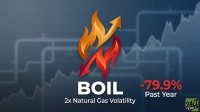
ProShares Ultra Bloomberg Natural Gas (NYSEARCA:BOIL) lost nearly 80% of its value over the past year, and traders keep coming back for more. Threads in communities like r/wallstreetbets regularly feature posts from traders who have ridden BOIL down and returned…


ProShares Ultra Bloomberg Natural Gas (NYSEARCA:BOIL) lost nearly 80% of its value over the past year, and traders keep coming back for more. Threads in communities like r/wallstreetbets regularly feature posts from traders who have ridden BOIL down and returned for another attempt, with one user writing, “I know it’s a widow maker but the volatility is the point.” That tells you everything about what this fund actually is: a short-term instrument built for volatility, not a position you hold through a winter.
Natural gas delivered exactly the kind of chaos BOIL traders live for in January 2026. Henry Hub spot prices spiked to $30.72 per MMBtu on January 23 before collapsing to roughly $3.13 by late February. That is a 90%+ decline in under five weeks. BOIL, applying 2x daily leverage to that move, turned an already extreme commodity swing into something even more violent. The fund fell nearly 46% in a single month.
The Macro Factor: Winter Weather and Structural Demand
The biggest driver of BOIL’s performance is the supply-demand balance in the U.S. natural gas market, which hinges on weather and, increasingly, power demand from AI infrastructure. Cold snaps drive heating demand and create the price spikes January 2026 demonstrated. The buildout of power-hungry data centers is adding a structural floor to natural gas consumption that did not exist five years ago. Watch the EIA Weekly Natural Gas Storage Report, published every Thursday, for storage surplus or deficit readings relative to the five-year average. A storage deficit heading into next winter would be the clearest early signal of another potential spike environment for BOIL.
The Micro Factor That Quietly Destroys Long-Term Holders
BOIL’s most underappreciated risk is not volatility. It is the structural decay built into how the fund operates. Because BOIL resets its 2x leverage daily using natural gas futures, it is constantly exposed to contango, the condition where near-term futures are cheaper than longer-dated contracts. Rolling from an expiring contract into a more expensive one creates a persistent drag on returns even when prices are flat or rising slowly. This is why BOIL has lost 99.97% of its value over the past decade despite natural gas remaining a widely traded commodity. Monitor the futures curve on the CME Group’s Henry Hub Natural Gas page to gauge how steep contango is at any given time.
What to Watch Over the Next 12 Months
If next winter’s storage data points to a supply deficit by October 2026, BOIL could see another sharp spike window, but contango drag will continue eroding value in every calm week between now and then, making timing the only thing that separates a profitable trade from a costly one.
Contact [email protected] for any questions or corrections.
I am a long time investor and student of business, and believe finding good companies that can become great investments is the best game on earth. After 20 years of writing and researching the public markets it is clear that individuals have never had more tools and information to take control of their financial lives. From ETFs and $0 commissions to cryptos and prediction markets there has never been a greater democratization of access to investing.
I write to help people understand the investments available to them so they can make the best choice for their portfolio, whether they're starting out or looking for income in retirement.