Why Utilities Stocks Are Your Best Friend in 2026
For as long as most people can remember, utility stocks have been the investing equivalent of eating your vegetables. Are they good for you? Yes. Are they boring stocks? Also yes. These stocks feel like the kind of thing you…


For as long as most people can remember, utility stocks have been the investing equivalent of eating your vegetables. Are they good for you? Yes. Are they boring stocks? Also yes. These stocks feel like the kind of thing you would find in your parents’ investment portfolio, but not your own. The good news is that this narrative is breaking down as we move into 2026.
Utility stocks are no longer just the safe, defensive dividend plays of old, collecting dust in retirement accounts. Instead, these stocks are becoming growth stories backed by structural demand shifts that most investors have been sleeping on.
The combination of falling interest rates and massive infrastructure spending, along with demand from AI data centers, is creating a scenario where utility stocks are poised to deliver both income and capital appreciation.
What’s Different About Utilities in 2026
Rest assured that the utility sector isn’t what it was five years ago, and the changes that are accelerating into 2026 are creating investment opportunities that go beyond the traditional dividend collector. First to know is that the regulatory environment has turned supportive as states are approving rate increases at levels that haven’t been seen in over a decade. Utilities that were stuck in low-growth cycles are now getting the green light for capital spending programs that are likely to directly translate into higher earnings.
Of course, you also have to consider that the demand for power is shifting as electricity consumption is growing in a meaningful way for the first time in years. Whether it’s because of electrification trends, manufacturing reshoring, or most notably, AI data center expansion, this is really happening. Unsurprisingly, AI computing requires a massive amount of power, and utility names serving tech-heavy regions are seeing demand forecasts revised in ways that haven’t been seen since the early 2000s.
The rate environment is also working in favor of utility stocks, as borrowing costs are coming down and capital-intensive businesses like power generation are becoming more attractive. Lower rates also make utility dividends more competitive compared to bonds, which tends to support future valuations.
The AI Power Demand Story That’s Reshaping the Sector
It’s important to remember that the surge in AI development isn’t just a tech story, but also something of a power story, and it’s creating a demand for electricity the likes of which haven’t been seen in decades. Data centers that are powering AI models are consuming extraordinary amounts of energy, and a single large-scale AI training facility can use as much power as a small city. As a result, the biggest names in tech are looking to build out AI infrastructure to support customer demand, and to do so, they are entering into long-term power agreements with utilities, which effectively lock in decades of predictable revenue.
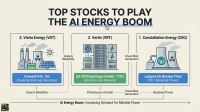
Constellation Energy (NYSE:CEG | CEG Price Prediction), despite having a modest 0.46% yield and $1.55 annual dividend, has become a market favorite because of its nuclear generation capacity. Nuclear provides the kind of baseload, carbon-free electricity that data centers thrive on. The stock’s 10.01% dividend growth reflects the company’s confidence that its earnings trajectory is accelerating.
The same can be said for Vistra Corp (NYSE:VST), another name benefiting from growing demand. This isn’t a traditional income play with a $0.91 annual dividend, but Vistra operates a mix of natural gas and nuclear plants in both Texas and the mid-Atlantic region, two locations poised to see significant data center construction. As a result, the company’s growth is being tied to capacity expansion and power sales more than dividend increases.
The takeaway is that utilities serving regions with a high concentration of data centers and tech infrastructure are no longer slow-growth businesses. Instead, they are entering a period of demand growth that is likely to last for years, if not decades.
Why Utility Stocks Offer the Best Growth and Income Balance in 2026
It’s true that not all utility companies will be on equal footing as we move deeper into 2026, so the best opportunities are the names that can deliver on both reliable income and meaningful growth.
American Electric Power
American Electric Power (NASDAQ:AEP) is a solid starting point for investors who want a traditional utility with improving growth prospects. The company yields 3.35% with a $3.80 annual dividend and operates across 11 states with a regulated rate base that is steadily growing.
American Electric Power is investing heavily in transmission infrastructure, which tends to receive favorable regulatory treatment and supports long-term earnings growth. The stock has gained approximately 25.50% over the past year, reflecting the market’s understanding that this isn’t just a dividend play, but a growth story as well.
Entergy Corporation
Entergy Corporation (NYSE:ETR) combines a reasonable 2.80% yield with exposure around the Gulf Coast region, where industrial and petrochemical demand for power remains strong. The company’s $2.56 annual dividend is supported by a diversified mix of traditional energy demand drivers and newer opportunities like offshore wind development. For investors seeking a blend of income and capital appreciation, Entergy is a compelling investment.
Constellation Energy
For investors looking for the growth-oriented choice in the utility space, Constellation Energy is it. Its yield won’t appeal to traditional income investors, but its position in the nuclear space makes it ideal for those who believe AI-driven power demand is on a multi-year trend. Constellation operates the largest fleet of nuclear plants in the United States, giving it a big advantage as data centers look for carbon-free, baseload power supplies.
All of this said, for a diversified approach, combining all three utility names into a portfolio is the best way to go. American Electric Power provides stability and traditional income, while Entergy adds regional diversification and moderate growth. Constellation brings exposure to AI power and higher growth potential, and together, these three names create a portfolio that isn’t just playing defense but is all over capturing structural changes that are reshaping the sector in 2026.
Contact [email protected] for any questions or corrections.
David Beren has been a Flywheel Publishing contributor since 2022. Writing for 24/7 Wall St. since 2023, David loves to write about topics of all shapes and sizes. As a technology expert, David focuses heavily on consumer electronics brands, automobiles, and general technology. He has previously written for LifeWire, formerly About.com. As a part-time freelance writer, David’s “day job” has been working on and leading social media for multiple Fortune 100 brands. David loves the flexibility of this field and its ability to reach customers exactly where they like to spend their time. Additionally, David previously published his own blog, TmoNews.com, which reached 3 million readers in its first year. In addition to freelance and social media work, David loves to spend time with his family and children and relive the glory days of video game consoles by playing any retro game console he can get his hands on.