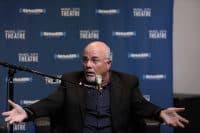
Dave Ramsey Warns Over 1/3 of Americans Will Learn the Hard Way About Social Security
When you retire, the last thing you want is to face unpleasant financial surprises. Unfortunately, many Americans are in for a shock about their Social Security benefits. In fact, financial expert Dave Ramsey has warned that far too many Americans…


When you retire, the last thing you want is to face unpleasant financial surprises. Unfortunately, a large share of Americans are heading toward a shock about their Social Security benefits.
Financial expert Dave Ramsey has warned that far too many Americans will face a harsh reality when their retirement checks arrive, and that reality could derail the financial security they worked decades to build.
The good news: this is a preventable problem. Here is what you need to know before it is too late.
Dave Ramsey Has a Dire Warning About Social Security
The Ramsey Solutions blog identifies the core problem clearly: most people believe their monthly retirement benefit will be much larger than what they will actually receive.
Ramsey says the misconception is especially prevalent among current retirees, though younger workers are not immune. He points to a telling split in the data: 62% of today’s retirees report Social Security as a “major source of income,” yet only 35% of current workers expect to rely on it that heavily by the time they stop working. While Ramsey treats the lower worker confidence as encouraging, 35% still represents a substantial number of Americans carrying unrealistic expectations into retirement.
“These 35% of folks are going to learn the hard way that what they don’t know can and definitely will hurt them when they retire. Don’t let that be you,” the blog reads.
Why Ramsey’s Warning Deserves Serious Attention

Ramsey is correct that 35% of workers planning to lean on Social Security as a primary income source is a serious problem. Even under ideal circumstances, Social Security is designed to replace only a portion of what you earned while working. The Social Security Administration itself states that benefits replace roughly 40% of pre-retirement earnings on average, and that figure falls even lower for high earners, whose benefits are calculated on a progressive formula that delivers proportionally less.
Claiming early makes the situation worse. Full retirement age is 67 for anyone born in 1960 or later, yet most Americans file before reaching it, permanently locking in a reduced monthly check. Someone who claims at 62 receives only about 70% of their full benefit for the rest of their life.
The structural funding challenge facing Social Security adds another layer of urgency. The 2026 Social Security Trustees Report, released in June 2026, projects that the Old-Age and Survivors Insurance (OASI) Trust Fund will be depleted in late 2032. If that happens without congressional action, the program would be able to pay only about 78% of scheduled benefits, an automatic 22% cut affecting every retiree who depends on those checks. The passage of the “One Big Beautiful Bill Act” in July 2025, which reduced federal income-tax revenue tied to Social Security benefits, was a contributing factor in moving that depletion date closer. If the OASI fund were combined with the Disability Insurance fund, full benefits could be paid through the third quarter of 2034, after which roughly 83% of scheduled benefits would be payable. Combining the two funds would require an act of Congress, however, so it is not guaranteed.
With average monthly retirement benefits running near $2,081 as of April 2026, Social Security alone cannot sustain most households in retirement even before any future cuts are applied. A 22% reduction on top of that would leave retirees who depend heavily on the program in a genuinely difficult position.
Ramsey puts the responsibility squarely on workers: “Your financial security in retirement shouldn’t come from Social Security. It should come from what you’ve saved over your working lifetime. You are the CEO of your retirement.”
The most reliable path forward is consistent, long-term saving through a 401(k), Roth IRA, or other tax-advantaged accounts. A financial advisor can help you map out how much to set aside each year, and what mix of accounts makes the most sense for your situation. The goal is to treat any eventual Social Security benefit as a supplement to a retirement plan you built yourself, not as its foundation.
Editor’s note: This article has been updated to reflect the June 2026 Social Security Trustees Report, which moved the projected OASI trust fund depletion date to late 2032 (from 2033) and revised the post-depletion benefit payable percentage to 78% for the OASI fund alone and 83% for the combined OASI and DI funds. Context on the “One Big Beautiful Bill Act” and its effect on the trust fund timeline has also been added, along with the current average monthly retirement benefit of approximately $2,081.
Contact [email protected] for any questions or corrections.
Christy Bieber has been a personal finance and legal writer since 2008. She has a JD from UCLA School of Law and a BA in English, Media and Communications with a certification in business from the University of Rochester.
Christy has been published by a wide variety of sites, including WSJ Buy Side, Forbes, Kiplinger, Fox Business, Credit Karma, Insurify, and Annuity.org. In addition to writing for the web, she has also ghostwritten textbooks on business and law and served as a subject matter expert for course design.