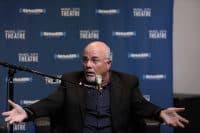
Dave Ramsey Warns That A Third of Americans Will Learn The Hard Way About Social Security
A third of Americans will learn the hard way about Social Security. That’s according to finance personality Dave Ramsey, who warns that Social Security alone is insufficient and recommends maxing out 401(k) and IRA savings. The 2026 Social Security Trustees…


A third of Americans will learn the hard way about Social Security. That is the blunt warning from personal finance personality Dave Ramsey, who argues that Social Security alone cannot support a comfortable retirement and urges workers to prioritize tax-advantaged savings instead.
The concern is grounded in a specific number. Ramsey points to survey data showing that 35% of today’s workers still expect Social Security to be a major source of retirement income. That figure, he says, is far too high given what the program was designed to do. By contrast, 62% of current retirees already report that Social Security serves as a major income source, which shows how many people arrive at retirement without adequate personal savings to supplement it.
“These 35% of folks are going to learn the hard way that what they don’t know can and definitely will hurt them when they retire. Don’t let that be you,” Ramsey has written on his blog.
The program’s finances add urgency to that warning. The Social Security Administration’s own publications note that benefits were never intended to fully replace wages, with the average benefit replacing only about 40% of a worker’s pre-retirement earnings. The financial trajectory is worsening: the 2026 Social Security Trustees Report, released on June 9, 2026, projects that the Old-Age and Survivors Insurance (OASI) Trust Fund will be depleted in the fourth quarter of 2032. At that point, ongoing payroll tax revenue would cover only 78% of scheduled benefits, meaning retirees, survivors, and dependents could face an across-the-board cut of roughly 22%. For context, the average retired worker collected about $2,084 per month in mid-2026; a 22% reduction would trim that to roughly $1,626.
A significant new pressure on the program is the One Big Beautiful Bill Act, signed into law on July 4, 2025. The Social Security Administration’s chief actuary, Karen Glenn, estimated that the legislation will add $168.6 billion to Social Security’s costs over the decade through 2034, because it reduces federal income taxes that many beneficiaries pay on their Social Security income. That revenue normally flows directly back into the trust funds. The practical result: the OASI depletion date shifted one quarter earlier than previously projected.
“Depending on what Congress does (or doesn’t do), future retirees might need to prepare for the possibility of reduced benefits, and workers might see a hike in Social Security taxes,” Ramsey has said.
If the OASI and Disability Insurance (DI) trust funds were treated as one combined pool, reserves would last until the third quarter of 2034, at which point 83% of scheduled benefits would be payable. That combined figure is useful for policy analysis, but it is not an automatic backstop under current law, since the two funds are legally separate.
The bottom line in Ramsey’s framework: workers cannot count on the government to fund their retirement. If benefits materialize in full, that is a welcome bonus. Treating Social Security as the primary income plan, however, is in his view a recipe for financial difficulty once the paycheck stops.
More than 11,000 People Turn 65 Every Day
The demographic strain on Social Security is not abstract. In 2025, a record 4.18 million Americans turned 65, averaging roughly 11,400 people per day. That figure marks the peak of what researchers call “Peak 65,” a four-year window from 2024 through 2027 in which the tail end of the baby boomer generation reaches traditional retirement age in the largest numbers ever recorded. The surge will keep daily retirement-age arrivals above 11,000 through 2027 before gradually easing. The math is straightforward: the more people entering the system at once, the wider the gap between what Social Security collects and what it pays out, pulling the depletion date closer.
That reality sharpens Ramsey’s core message. The more people who reach retirement without adequate personal savings, the more pressure they place on a program already running annual deficits. Social Security’s costs have exceeded its non-interest income every year since 2010, and the 2026 Trustees Report confirms that gap will persist throughout the 75-year projection window.
Consider This: Dave Ramsey: “You Make $140K. Stay Out of Restaurants, Don’t Go on Vacation, And Get Rid of the Ferrari Bike”
One, max out contributions to retirement accounts
The first step Ramsey recommends is maximizing contributions to tax-advantaged retirement accounts. For 2026, the IRS raised the 401(k) employee contribution limit to $24,500, up from $23,500 in 2025. Workers 50 and older can add a catch-up contribution of $8,000, bringing their total to $32,500. Workers between ages 60 and 63 qualify for an even larger “super catch-up” of $11,250 instead of the standard $8,000, pushing their potential annual total to $35,750. On the IRA side, the annual limit increased to $7,500, with a $1,100 catch-up allowed for those 50 and older, for a combined total of $8,600. Whether through a traditional 401(k), a Roth IRA, or a health savings account, these vehicles reduce taxable income today or lock in tax-free growth for later.
If an employer offers a matching contribution, Ramsey treats capturing the full match as a non-negotiable first move. It is additional compensation that workers forfeit when they contribute below the match threshold. To use a concrete example: on a $100,000 salary with a 50% match on contributions up to 5% of pay, a worker who puts in $5,000 receives a free $2,500 from the employer, bringing the total annual retirement contribution to $7,500 before a single dollar of investment growth.
Two, put extra money into retirement at any chance
Beyond capturing the match, Ramsey recommends targeting 15% of gross household income for retirement. He directs that savings into tax-advantaged accounts such as 401(k)s and Roth IRAs, but only after an emergency fund is established and high-interest debt is under control.
The power of that 15% target becomes clear with simple arithmetic. Someone earning $80,000 annually who invests $1,000 per month in growth-oriented mutual funds could accumulate more than $1.5 million by age 65, according to an example from Ramsey Solutions. Waiting just five more years to retire pushes that projection to approximately $2.8 million, a vivid illustration of how compounding rewards patience.
Ramsey also makes clear that 15% is a floor, not a ceiling. Workers who began saving late, carry significant debt, or plan to retire early will typically need to push that rate higher to close the gap.
Three, get out of debt
Debt is the enemy of retirement savings. Every dollar going toward interest payments is a dollar not compounding in a retirement account. Ramsey’s approach is the debt snowball: rank all debts from smallest balance to largest, make minimum payments on everything except the smallest, and direct every spare dollar at that smallest debt until it is gone.
Once the smallest balance is eliminated, roll its former payment into the next smallest debt, as described by Ramsey Solutions. Each payoff frees up more cash to attack the next balance, building speed as the list shrinks. The early wins matter psychologically: quick results help people stay motivated through a process that can take years.
Two alternative approaches suit those who prefer a different structure. Targeting the highest-interest balance first minimizes total interest paid, even if it takes longer to eliminate the first debt. Debt consolidation replaces multiple balances with a single loan, simplifying monthly payments and sometimes reducing the blended interest rate. Both paths serve the same purpose: freeing up monthly cash flow that can then be redirected to retirement savings.
Editor’s note: The benefit payable at OASI depletion was corrected from 83% to 78%, consistent with the SSA’s 2026 Trustees Report. The article also adds the SSA chief actuary’s estimate that the One Big Beautiful Bill Act will cost Social Security $168.6 billion through 2034, and incorporates the average monthly benefit figure of approximately $2,084 to illustrate what a 22% cut would mean in dollar terms. The super catch-up provision for workers ages 60 to 63 ($11,250, for a total of $35,750) was added to the 401(k) contribution section.
Contact [email protected] for any questions or corrections.
Ian Cooper is a veteran market analyst and investment strategist with more than 20 years of experience covering stocks, commodities, and macro trends. Since 1999, he has helped investors identify market opportunities using a blend of technical analysis, fundamental research, and market sentiment.
He is the creator of the ADD News Flow Strategy, which focuses on trading market reactions to major news events and investor psychology. Cooper was also among the analysts who warned about the 2008 financial crisis and major financial institution collapses ahead of the broader market.
Before joining 247 Wall St., Cooper wrote extensively for InvestorPlace and other financial publications, covering market trends, trading strategies, and investment opportunities.