




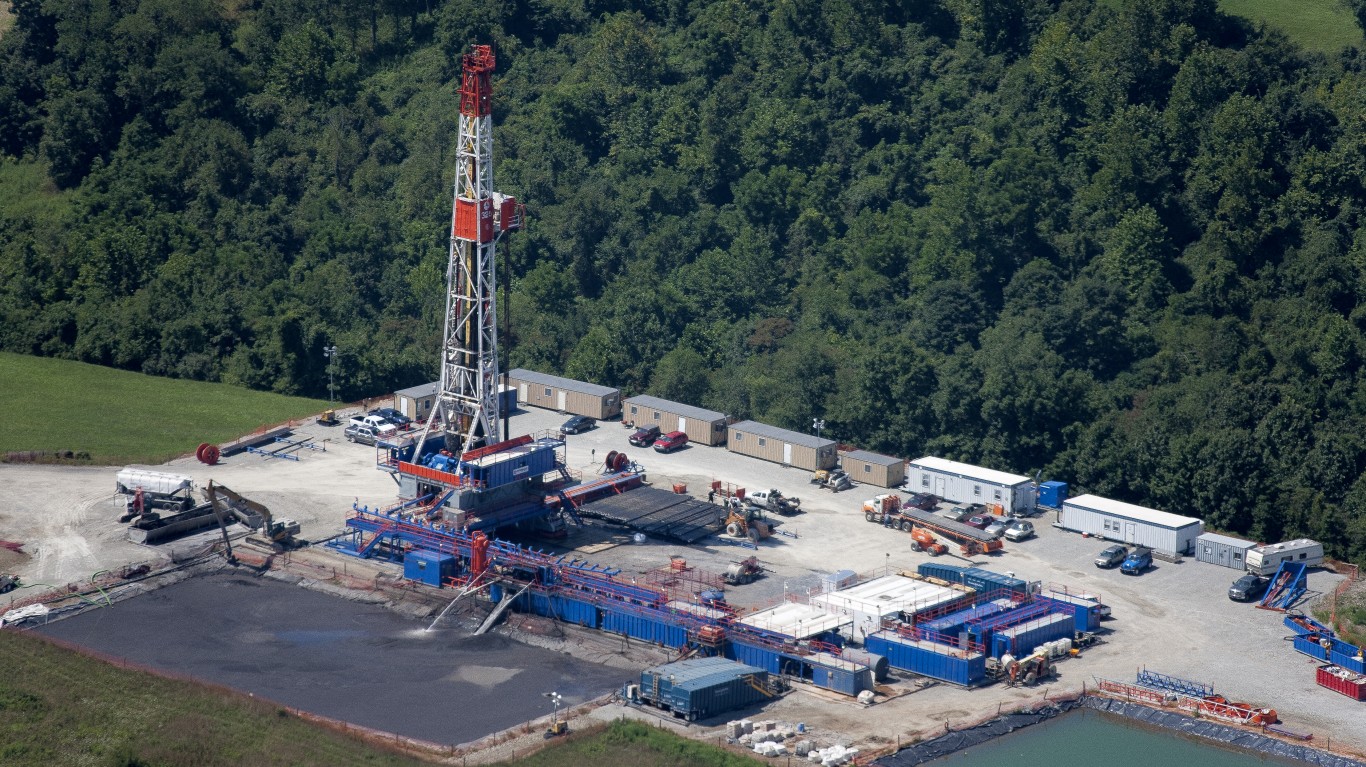
The US shale oil industry is one of the primary keys to US energy independence, a foundational block of the Trump administration’s policies for rebuilding US industry and reducing inflation and costs for US citizens. That’s why there are thousands who are eagerly awaiting word on the developments between merger talks between Devon Energy (NYSE: DVN) and Coterra Energy (NYSE: CTRA),
Mergers That Can Impact An Entire Industry

If it clears antitrust scrutiny and an April shareholder vote, the Netflix and Warner Bros. merger will change the entertainment industry, with many of the latter’s top franchises, like Batman, becoming the property of Netflix.
Industry altering mergers are always of interest to investors. Not only are the ones who may hold shares in the companies in question, but those shareholders in rival companies can all be impacted if the deals are large enough to impact the industry as a whole. For example, the recent Netflix (NASDAQ: NFLX) and Warner Bros. Discovery (NASDAQ: WBD) merger announcement will likely make big changes in the entertainment world, pending anti-trust scrutiny, a competing bid from Skydance, and an April 2026 shareholder vote. The merger could potentially impact not only film and tv media (franchises like Batman, Harry Potter, Game of Thrones, Dune), but also areas where Netflix has no current foothold, such as in news (CNN), theme parks, printed media (books, magazines and comics), and other sectors.
Other industry shaking mergers in defense and aerospace (United Technologies and Raytheon) and financial (JP Morgan Chase acquiring Bear Stearns, Washington Mutual and Wachovia in the wake of the 2008 banking meltdown) mergers are still being felt today.
Upstart Indies

A significant portion of Eagle Ford shale oil is in Devon Energy’s acreage.
Devon Energy and Coterra Energy are both large independent shale oil producers in the Permian Basin region. At the time of this writing:
- Cotera has a $21.4 billion market cap and a 3.14% yield.
- Devon has a $25 billion market cap and a 2.4% yield.
- Devon produced 853,000 barrels of oil equivalent per day (boe/d) in Q3 2025, with 390,000 bpd of oil.
- Coterra produced 785,000 barrels of oil equivalent per day (boe/d) in Q3 2025, with 166,800 bpd of oil.
- Coterra was formed in 2021 through the merger of Cabot Oil and Gas and Cimarex Energy but has struggled ever since.
- Although discussions with Devon have advanced to a near completion, Coterra may have other suitors in the wings, just like Skydance is still also interested in Warner Bros. Discovery.
Why An Indie Merger Is a Big Deal
The drastic reduction of costs for drilling and other operations would greatly expand margins for the combined Devon and Coterra Energy entity post-merger.
Although both Devon and Coterra are dwarfed by large multinational rivals like ExxonMobile, Diamondback Energy, and Occidental Petroleum, they hold several advantages in the Permian Basin region:
- The deal could combine Devon’s extensive Permian (Delaware Basin) 400,000 acreage with Coterra’s 346,000 acres of strong assets in the Permian, Marcellus Shale, and Anadarko Basin.
- Diamondback Energy’s $26 billion acquisition of Endeavor Energy is the largest shale oil industry deal to date; A Devon and Coterra merger would wind up between $57-$60 billion, thus the largest ever in the industry.
- Greater economies of scale and cost cutting measures have grown to paramount importance in the oil industry as prices have fallen below $75 per barrel and are now approaching $60 per barrel. The merger of DVN’s and CTRA’s adjacent properties would considerably reduce drilling, pipeline, and other operations much cheaper.
- The merger would put the consolidated company in a much stronger position to challenge its multinational rivals in the shale oil industry.
The glut of oil now in the market, thanks to the US control of Venezuelan oil after the arrest of Dictator Nicholas Maduro, is putting pressure on shale oil producers to continue output, despite prices falling. A Devon and Coterra merger will allow both companies to continue to bear the brunt of oil price volatility in the interim.













 Top Gaining Stocks
 Top Losing Stocks
