Pay Attention: QQQE’s Dividend Dropped By A Third While QQQ Paid 5 Times More
The Direxion NASDAQ-100 Equal Weighted Index Shares (NASDAQ:QQQE) doesn’t generate income the way traditional dividend ETFs do. With just $1.2 billion in assets and a 0.35% expense ratio, this fund tracks the NASDAQ-100 using equal weighting rather than market cap…

This post may contain links from our sponsors and affiliates, and Flywheel Publishing may receive compensation for actions taken through them.

The Direxion NASDAQ-100 Equal Weighted Index Shares (NASDAQ:QQQE) doesn’t generate income the way traditional dividend ETFs do. With just $1.2 billion in assets and a 0.35% expense ratio, this fund tracks the NASDAQ-100 using equal weighting rather than market cap weighting. That structural difference means each of the 100 holdings gets roughly 1% of the portfolio instead of letting mega-caps dominate. The result is a growth-focused ETF where dividends are secondary.
QQQE’s dividend payments dropped 31% from the prior year, revealing a fundamental problem with the fund’s income profile. Because the ETF passively holds 100 equally-weighted tech companies, it has no control over dividend policy. When these growth-focused companies cut or reduce payouts, QQQE investors feel the impact directly.
The semiconductor sector creates particular dividend risk for QQQE. Companies like Micron Technology and Western Digital prioritize capital investment over dividends, while Texas Instruments (NASDAQ:TXN | TXN Price Prediction) pays out 99.3% of earnings with almost no safety cushion. This concentration in capital-intensive businesses explains the quarter-to-quarter income volatility.
A few holdings offer better sustainability metrics. Qualcomm (NASDAQ:QCOM)’s 70% payout ratio provides more dividend safety than the semiconductor names, while Costco (NASDAQ:COST)’s defensive business model supports consistent payments. But equal weighting means each represents just 1% of the portfolio, so no single company’s dividend discipline can stabilize the fund’s overall income stream.
The cap-weighted Invesco QQQ Trust (NASDAQ:QQQ) paid $2.79 per share in 2025 versus QQQE’s $0.53. That 5x difference stems from QQQ’s concentration in dividend-paying mega-caps like Apple and Microsoft, which contribute substantial income despite tech’s growth focus.
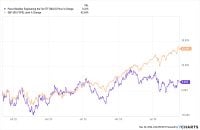
QQQE delivered a 15.5% total return over the past year, but that came from price appreciation, not income. Investors seeking reliable dividend income should look elsewhere. This ETF works for those wanting diversified NASDAQ-100 exposure without mega-cap concentration, but its dividend is an afterthought, not a feature.
Contact [email protected] for any questions or corrections.
I am a long time investor and student of business, and believe finding good companies that can become great investments is the best game on earth. After 20 years of writing and researching the public markets it is clear that individuals have never had more tools and information to take control of their financial lives. From ETFs and $0 commissions to cryptos and prediction markets there has never been a greater democratization of access to investing.
I write to help people understand the investments available to them so they can make the best choice for their portfolio, whether they're starting out or looking for income in retirement.