How Apple’s Lazy AI Strategy Could Crush the Competition
Apple (NASDAQ:AAPL | AAPL Price Prediction) has trailed in the artificial intelligence (AI) race since its early stages. From the start, the company lagged behind rivals in developing large language models and AI infrastructure. Its current initiatives, such as Apple…


Apple (NASDAQ:AAPL | AAPL Price Prediction) has trailed in the artificial intelligence (AI) race since its early stages. From the start, the company lagged behind rivals in developing large language models and AI infrastructure. Its current initiatives, such as Apple Intelligence and updates to Siri, have progressed slowly, with key features delayed until 2026.
This pace raises concerns that Apple will lose more ground as competitors accelerate. Amazon (NASDAQ:AMZN), Microsoft (NASDAQ:MSFT), Meta Platforms (NASDAQ:META), and Alphabet (NASDAQ:GOOG)(NASDAQ:GOOGL) are projected to spend around $700 billion combined on capital expenditures in 2026, much of it on AI data centers and hardware — Apple plans just $14 billion.
This disparity has pressured Apple’s stock, now trading about 8% below its all-time high reached in late-December. But is Apple’s restrained approach actually strategic, outsmarting its rivals who risk overinvesting?
Outsourcing the Heavy Lifting
Apple’s AI strategy emphasizes partnerships over building its own AI infrastructure from scratch. Instead of committing billions to proprietary data centers and custom chips for training massive models, the company integrates third-party technologies into its devices.
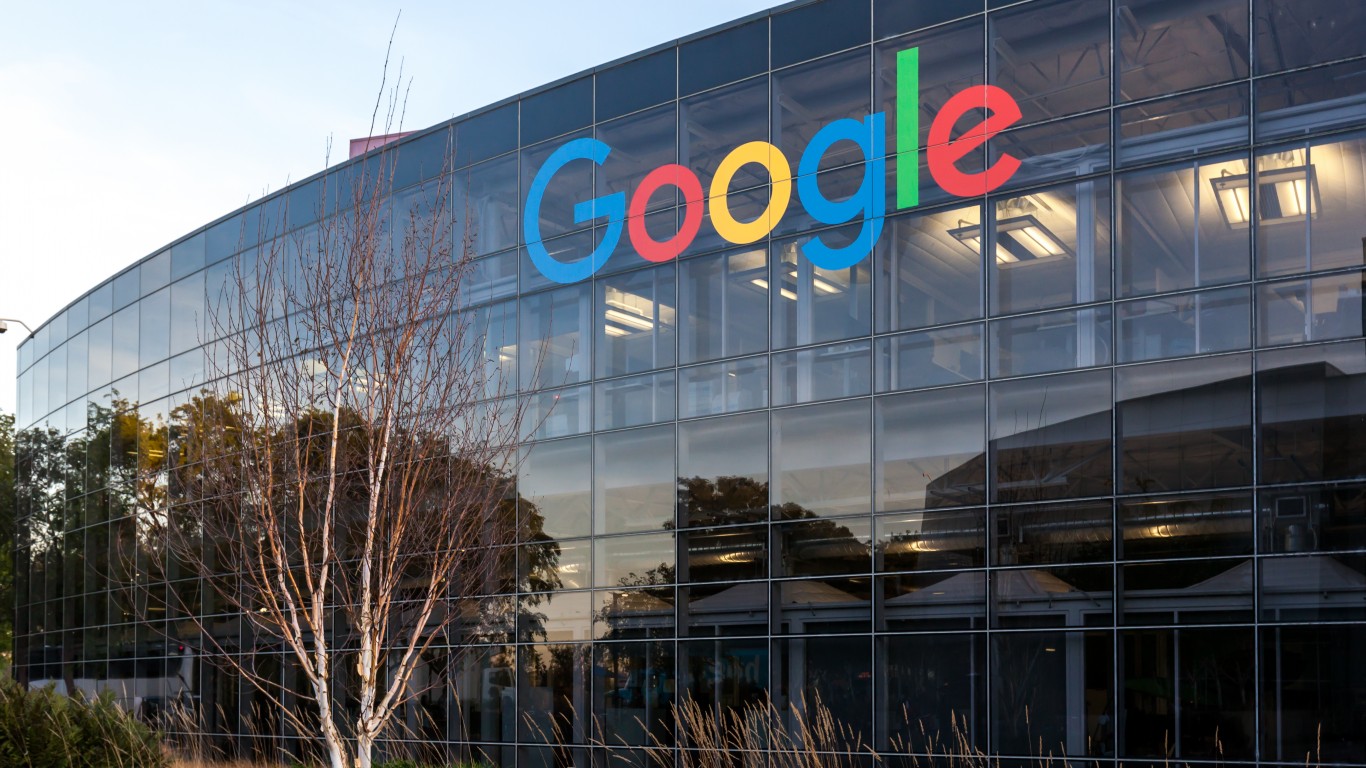
For instance, Apple initially partnered with OpenAI in 2024 to enhance Siri, then shifted to Alphabet’s Gemini model for better performance and alignment with its privacy standards. This flexibility allows Apple to switch providers as AI advances, avoiding any lock-in to potentially outdated systems.
Rivals, meanwhile, face escalating costs from maintaining vast server farms that depreciate rapidly — GPUs can lose half their value in 18 months. By treating foundational AI as a commodity, Apple focuses its resources on user experience, such as seamless integration across iPhones, Macs, and services, rather than the underlying compute power.
Preserving Cash for Strategic Moves
With over $130 billion in cash reserves, Apple keeps significant financial options open without any obligation to spend during the AI boom. Its competitors’ aggressive capital outlays — projected at over $700 billion for hyperscalers in 2026, up from $500 billion in 2025 — could strain their balance sheets if AI revenues fail to materialize quickly.
Amazon plans $200 billion in 2026 capex, Alphabet between $175 billion to $185 billion, Meta between $115 billion to $135 billion, and Microsoft around $145 billion, totaling nearly $700 billion when combined. These investments aim to dominate AI compute, but history shows infrastructure-heavy firms often underperform during spending supercycles.
Studies of past booms, like railroads and the internet, indicate asset-light companies generate better returns by avoiding massive fixed costs. Apple — by renting cloud capacity and using its M-series chips for on-device processing — keeps expenses as operating costs and scalable without long-term commitments.
Avoiding the Depreciation Trap
Heavy AI infrastructure investments carry hidden risks, including rapid obsolescence. Competitors must replace hardware frequently to keep pace with model improvements, creating a cycle of depreciation that erodes profitability. This is what fuels Nvidia‘s (NASDAQ:NVDA) constant investment in new next-gen AI chips.
Apple’s hybrid model — running privacy-focused AI on-device through its own silicon and offloading complex tasks to partners — sidesteps this. The company’s fiscal 2025 capex was $12.7 billion, less than 10% of Alphabet’s 2026 projection. This restraint has enabled Apple to return $106.1 billion to shareholders in the last fiscal year while reducing its share count by nearly a third over the past decade.
The key bet in Apple’s strategy is that AI models will become interchangeable commodities, not proprietary moats. If foundational AI standardizes, owning infrastructure offers little edge — much like how cloud services commoditized servers. Apple’s curation of external models, wrapped in its privacy and design layers, could yield higher margins.
Key Takeaway
Apple’s tortoise-and-the-hare approach to the AI buildout may have investors worried, given the stock’s dip from recent highs and its rivals’ massive investments. However, by staying asset-light, partnering strategically, and preserving cash, it could emerge more profitable.
If AI infrastructure proves commoditized and overbuilt, Apple’s restrained strategy — avoiding the capex arms race — might indeed be the true winner, turning apparent laziness into calculated foresight.
Contact [email protected] for any questions or corrections.
After two decades of patrolling the dark corners of suburbia as a police officer, Rich Duprey hung up his badge and gun to begin writing full time about stocks and investing. For the past 20 years he’s been cruising the markets looking for companies to lock up as long-term holdings in a portfolio while writing extensively on the broad sectors of consumer goods, technology, and industrials. Because his experience isn’t from the typical financial analyst track, Rich is able to break down complex topics into understandable and useful action points for the average investor. His writings have appeared on The Motley Fool, InvestorPlace, Yahoo! Finance, and Money Morning. He has been featured in both U.S. and international publications, including MarketWatch, Financial Times, Forbes, Fast Company, and USA Today.