Constellation Energy Is the Only Nuclear Utility That Looks Like a Tech Stock Right Now
Constellation Energy trades at a 40x trailing P/E with a beta of 1.1. That is not how utilities are supposed to behave. It is how high-growth tech infrastructure companies behave, and that gap between perception and pricing is the story…


Constellation Energy trades at a 40x trailing P/E with a beta of 1.1. That is not how utilities are supposed to behave. It is how high-growth tech infrastructure companies behave, and that gap between perception and pricing is the story worth understanding right now.
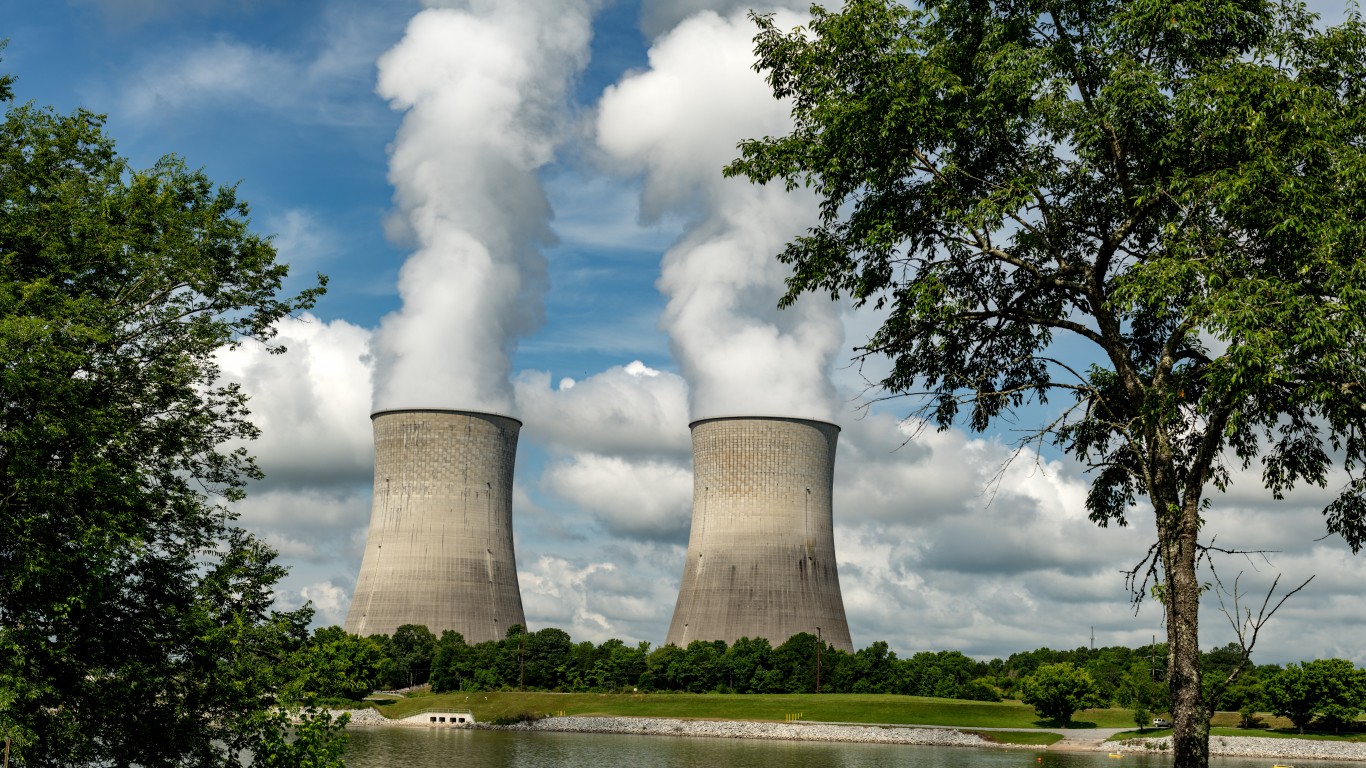
Constellation Energy (NASDAQ:CEG | CEG Price Prediction) is the nation’s largest nuclear fleet operator, and after closing the Calpine acquisition on January 7, 2026, it became the largest private-sector power producer in the country with 55 gigawatts of combined capacity. That is a utility. But what it is selling, and to whom, is something else entirely.
The company has locked in long-term power purchase agreements with Microsoft, Meta, and CyrusOne. Microsoft gets a 20-year PPA tied to the Crane Clean Energy Center nuclear restart, backed by a $1 billion DOE loan guarantee. Meta gets the full output of the Clinton Clean Energy Center. CyrusOne signed a 380 MW agreement at Freestone Energy Center in Texas, with an exclusive option for another 380 MW in Phase 2. These are not commodity electricity contracts. These are infrastructure deals with the companies building the AI economy.
CEO Joe Dominguez on the Q4 2025 earnings call:
“We’re at a pivotal moment for American competitiveness, and Constellation is ready to meet it.”
The financial profile backs that confidence. Management is guiding to 13%+ adjusted operating earnings growth through 2030. The Calpine deal is expected to be more than 20% accretive to adjusted EPS in 2026 and adds more than $2 billion in annual free cash flow before growth investment. Dividends are growing at 10% annually, with another 10% increase expected in 2026. That combination of yield growth and earnings compounding is rare in any sector.
The nuclear fleet runs at a 94.7% capacity factor for full year 2025, touching 96.8% in Q3 2025. Most gas peaker plants run well below 50%. Nuclear at this scale is closer to a software subscription than a commodity business: predictable output, high margins, long contract durations.
Analyst targets reflect the growth premium. TD Cowen sits at $454, citing anticipated acceleration in contracting activity and positive PJM market developments. The consensus target is $393.93 with 14 buy ratings and zero sells. We touched on energy infrastructure plays and market volatility in today’s Daily Profit newsletter, and Constellation’s positioning adds another dimension to that conversation. The stock currently trades at $301.08, down roughly 14.5% year to date from its December 2025 close of $352.80, even as the one-year return sits at 40.7%.
The pullback creates tension. Insiders are net buying with 68 recent insider transactions skewing positive. The forward P/E compresses to around 27x on 2026 estimates, a very different conversation than the trailing multiple suggests.
Whether the AI buildout sustains demand for always-on, carbon-free power at scale remains a key question for the sector. Constellation has positioned itself through long-term contracts, fleet expansion, and a balance sheet capable of funding both — a profile that analysts and market participants are increasingly comparing to high-growth infrastructure companies rather than traditional utilities.
Contact [email protected] for any questions or corrections.
I've been writing about stocks and personal finance for 20+ years. I believe all great companies are tech companies in the long run, and I invest accordingly.