JP Morgan’s Dividend Leaders ETF Sounds Good, But The Yield Underwhelms
JPMorgan Dividend Leaders ETF (NYSEARCA:JDIV) launched in September 2024 with an appealing premise: a curated portfolio of global dividend leaders. The name implies income. The reality is a 1.59% yield at a time when the 10-year Treasury sits at 4.20%.…


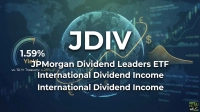
JPMorgan Dividend Leaders ETF (NYSEARCA:JDIV) launched in September 2024 with an appealing premise: a curated portfolio of global dividend leaders. The name implies income. The reality is a 1.59% yield at a time when the 10-year Treasury sits at 4.20%. That gap is hard to ignore for income-focused investors.
| Metric | Value |
|---|---|
| Dividend Yield | 1.59% |
| Net Expense Ratio | 0.47% |
| Net Assets | $9.9 million |
| Inception Date | September 25, 2024 |
| 10-Year Treasury Yield | 4.20% |
| Fed Funds Rate | 3.75% |
A 1.59% Yield Is Not What “Dividend Leaders” Should Mean
The yield gap is striking. The 10-year Treasury currently yields 4.20%, meaning investors accept significantly less yield to own this ETF. Even the Fed Funds Rate at 3.75% dwarfs what JDIV pays. For an income-oriented product, that is a meaningful hurdle to clear on total return alone.
The distribution history shows real inconsistency. JDIV paid $0.35988 per share in June 2025, dropped to $0.16771 in September, and $0.11728 in March 2025. Those swings make income planning difficult for investors who rely on predictable cash flows.
The Holdings Tell a Different Story Than the Name
The top three positions are Taiwan Semiconductor (6.26%), Microsoft (4.37%), and Broadcom (3.49%). These are excellent companies, but growth-oriented technology names, not high-yield dividend stalwarts. Meta Platforms, which only recently initiated a dividend and yields well under 1%, also sits in the top 15 at 1.96% of the portfolio.
Classic dividend payers like Johnson & Johnson, AbbVie, and McDonald’s are present but represent smaller slices. The portfolio leans into dividend growth rather than current income, a legitimate strategy that conflicts with what the name implies.
The Cost Structure Does Not Help the Case
JDIV charges 0.47% annually. Compare that to Schwab U.S. Dividend Equity ETF (NYSEARCA:SCHD), which charges just 0.06% and yields 3.39%. The fee and yield differences between the two funds are notable for investors comparing dividend ETF options. SCHD also carries $85.9 billion in assets versus JDIV’s $9.9 million.
| Metric | JDIV | SCHD |
|---|---|---|
| Dividend Yield | 1.59% | 3.39% |
| Expense Ratio | 0.47% | 0.06% |
| Net Assets | $9.9M | $85.9B |
| 1-Year Price Return | +12.79% | +13.81% |
The Total Return Argument Only Goes So Far
JDIV is up 12.79% over the past year, which is respectable. But SCHD matched that with a 13.81% one-year gain while paying more than twice the yield and charging a fraction of the fee. The yield shortfall relative to total return is a consideration for income-focused investors.
JDIV is not a bad ETF. Its global diversification and dividend growth approach may appeal to long-horizon investors. Income investors should know what they are getting: a dividend growth fund with a modest current yield, not a high-income vehicle.
Contact [email protected] for any questions or corrections.
Austin Smith is a financial publisher with over two decades of experience as an investor, analyst, and advisor. He covers stocks, ETFs, Artificial intelligence and personal finance for 24/7 Wall St. Previously, he spent over a decade at The Motley Fool as a senior editor for Fool.com, portfolio advisor for Millionacres, and launched The Ascent to help reader take control of their personal finances.
His work has been featured on Fool.com, NPR, CNBC, USA Today, Yahoo Finance, MSN, AOL, Marketwatch, and many other publications. He is as an advisor to private companies, and co-hosts The AI Investor Podcast with Eric Bleeker.
When not looking for investment opportunities, he can be found skiing, running, or playing soccer with his children. Learn more about Austin's investment approach here.