




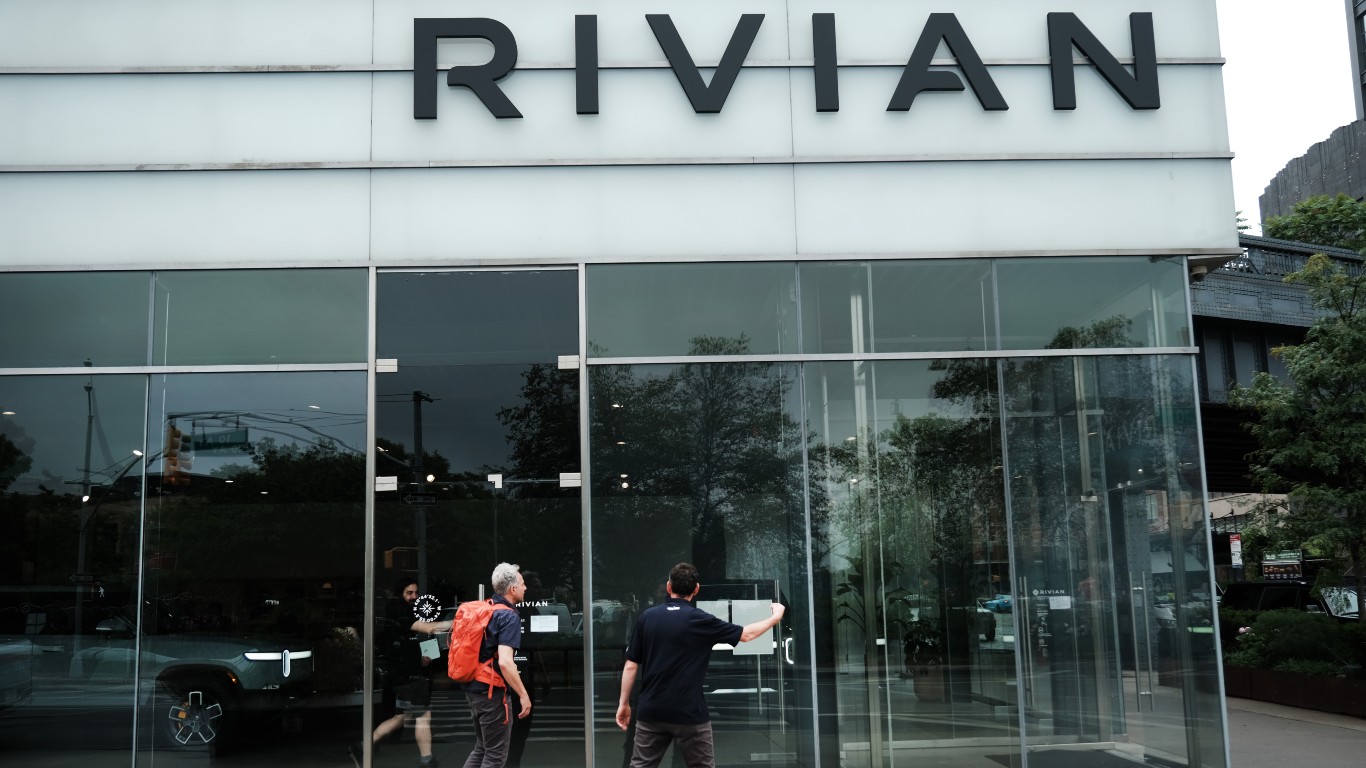
Rivian Automotive (NASDAQ:RIVN | RIVN Price Prediction) stock is down 7% in Friday trading, sliding to the $15 area despite announcing a major robotaxi partnership with Uber Technologies (NYSE:UBER). Meanwhile, Nio (NYSE:NIO) stock is sliding 7% to $5.50, falling more than six times harder than the Consumer Cyclical sector, which is off only 1.04% today.
Both moves tell a story the EV market keeps repeating. Good news, big partnerships, and milestone earnings reports continue to hit the wire, and investors keep selling anyway. Evidently, the market’s patience for unprofitable growth stories is running thin.
Rivian: A $1.25 Billion Deal That Didn’t Move the Needle
Rivian Automotive secured a partnership with Uber Technologies that includes a $1.25 billion investment to deploy up to 50,000 robotaxis by 2031. Uber’s commitment starts with an initial $300 million payment, with the remainder tied to performance milestones. Initial deployments are planned for 2028 in cities including San Francisco and Miami.
On paper, this is exactly the kind of strategic validation a pre-profitable EV company needs. A household-name partner putting real capital behind your technology is a signal. The market, however, is not reading it that way. For a deeper look at why the deal may not be enough to change Rivian’s trajectory, Uber Can’t Save Rivian breaks down the structural concerns the partnership doesn’t address.
The skepticism has context. Rivian is down 18.21% year to date, reflecting persistent investor doubt about the company’s path to profitability. That doubt is not irrational: RIVN stock has been in a prolonged decline as the company struggles to demonstrate it can scale without burning through cash.
The financials reinforce that concern. Rivian’s Q4 2025 revenue of $1.286 billion came in 25.84% year over year below the prior year, and the company burned through $1.144 billion in free cash flow in a single quarter. Moreover, a net loss of $804 million in Q4 2025 underscores that the Uber deal, while strategically meaningful, does nothing to change Rivian’s near-term cash reality.
The R2 SUV, which Rivian Automotive CEO RJ Scaringe has positioned as a “make-or-break product” competing with the Tesla (NASDAQ:TSLA) Model Y, launched at $57,990 despite an advertised entry price near $45,000. The more affordable base version won’t arrive until late 2027. That delay pushed RIVN stock down 6.4% when it was announced earlier this month, and today’s robotaxi news isn’t enough to reverse the damage to sentiment.
Prediction markets on Polymarket currently put the probability of Rivian announcing bankruptcy before the end of 2026 at 34.5%. That’s not a consensus call, but it reflects the genuine uncertainty investors are pricing in around the company’s runway.
Nio: A Profit Milestone That Already Got Priced In
Nio’s situation is almost the inverse. The company reported its first-ever quarterly GAAP operating profit on March 10, posting net income of $40.4 million with record deliveries of 124,807 vehicles, up 71.7% year over year. HSBC upgraded NIO stock to Buy and raised its price target by 42%. The stock climbed nearly 20% in the days that followed.
Today, that rally is giving back ground. Nio’s profit milestone was real, but the stock had already priced in the optimism. What’s left are the concerns that one good quarter doesn’t erase.
Additionally, Nio’s cash and equivalents fell to $1.61 billion, and current liabilities exceed current assets on the balance sheet. The company operates in one of the most competitive EV markets on earth, where Tesla and others are fighting for the same buyers Nio is targeting. Nio’s sub-brands Firefly and Onvo are gaining traction slowly, with Firefly posting only 2,657 deliveries in February.
Despite today’s drop, long-term holders have little to celebrate. NIO stock is still up 12% over the past month, but the stock has fallen more than 80% from its highs — a reminder that periodic rallies have not reversed the sustained decline the stock has experienced since its peak.
R2 Deliveries and Q1 Guidance Are the Next Real Tests
For Rivian, the next real catalyst is R2 deliveries, with first units expected in Q2 2026. Execution there will matter far more to the stock than any partnership announcement.
As for Nio, the company’s Q1 2026 guidance calls for 80,000 to 83,000 deliveries and revenue of $3.5 billion to $3.6 billion, which would represent meaningful year-over-year growth if achieved. In the meantime, keep an eye on the $15 level for RIVN stock and the $5.50 level for NIO stock.










 Top Gaining Stocks

 Top Losing Stocks