Melius analyst: Microsoft’s Copilot reorganization is a ‘red flag’
Microsoft (NASDAQ:MSFT | MSFT Price Prediction) is down more than 20% year-to-date, making it the worst-performing stock in the Mag-7 by a wide margin. And according to Ben Wright of Melius Research, who recently cut his price target on the…


Microsoft (NASDAQ:MSFT | MSFT Price Prediction) is down more than 20% year-to-date, making it the worst-performing stock in the Mag-7 by a wide margin. And according to Ben Wright of Melius Research, who recently cut his price target on the stock, the core problem has a name: Copilot.
Wright’s red flag isn’t just about weak adoption numbers. It’s about what Microsoft did in response to them. When a company quietly reshuffles the executive running its most important growth initiative and moves him to work on models instead, that’s not a routine org chart update.
“They reordered the division for Copilot, and now they have the guy that was running it working on models. That’s a red flag,” Wright said, referring to Mustafa Suleyman, who had been leading the Copilot effort. His reasoning: “you rarely reorganize anything into strength.”
The adoption numbers back up his skepticism. In February, Microsoft revealed it had sold 15 million Copilot seats out of a base of 450 million users — a figure Wright described as “paltry.” To put that in context, Microsoft has spent billions building and marketing Copilot as the AI layer across its entire product stack, from Word and Excel to Teams and Azure. Penetrating roughly 3% of its own user base after all that investment is not a success story.
Wright also noted that Copilot has become something of a “punch line,” with widespread discussion of frustrating or funny Copilot experiences across his network. That’s a product-market fit problem, not a marketing problem.
The Financial Ripple Effect
Here’s where this gets uncomfortable for investors. With Mustafa now focused on building models, Wright argues Microsoft will need to spend more building its own models because “sharing IP with OpenAI is not working out too well.” That means higher R&D, on top of capital expenditures that have already nearly doubled — CapEx hit $29.88 billion in Q2 FY2026, up 89% year-over-year.
More spending flows directly into depreciation, which hits free cash flow. FY2025 free cash flow already declined 3.32% year-over-year despite strong revenue growth, precisely because of the infrastructure build. If the Copilot reorganization signals even heavier model investment ahead, that pressure intensifies.
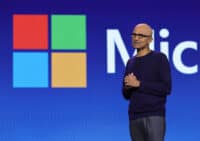
Satya Nadella has framed the AI opportunity expansively: “We are only at the beginning phases of AI diffusion and already Microsoft has built an AI business that is larger than some of our biggest franchises.” Azure’s 39% year-over-year growth validates the cloud infrastructure thesis. But Copilot was supposed to be the monetization layer that justified the valuation premium, and right now, the reorg suggests even Microsoft isn’t satisfied with where that’s headed.
Contact [email protected] for any questions or corrections.
I've been writing about stocks and personal finance for 20+ years. I believe all great companies are tech companies in the long run, and I invest accordingly.