Oil at $100 a Barrel, Here’s the ETF You Should Buy for the Coming Economic Shocks
Oil crossed $100 a barrel multiple times last week, and the question for defensive investors is not whether that hurts the economy — it does — but which part of the market absorbs the blow best. Consumer Staples Select Sector…

This post may contain links from our sponsors and affiliates, and Flywheel Publishing may receive compensation for actions taken through them.

Oil crossed $100 a barrel multiple times last week, and the question for defensive investors is not whether that hurts the economy — it does — but which part of the market absorbs the blow best. Consumer Staples Select Sector SPDR Fund (NYSEARCA:XLP) has spent 27 years being the answer to exactly that question.
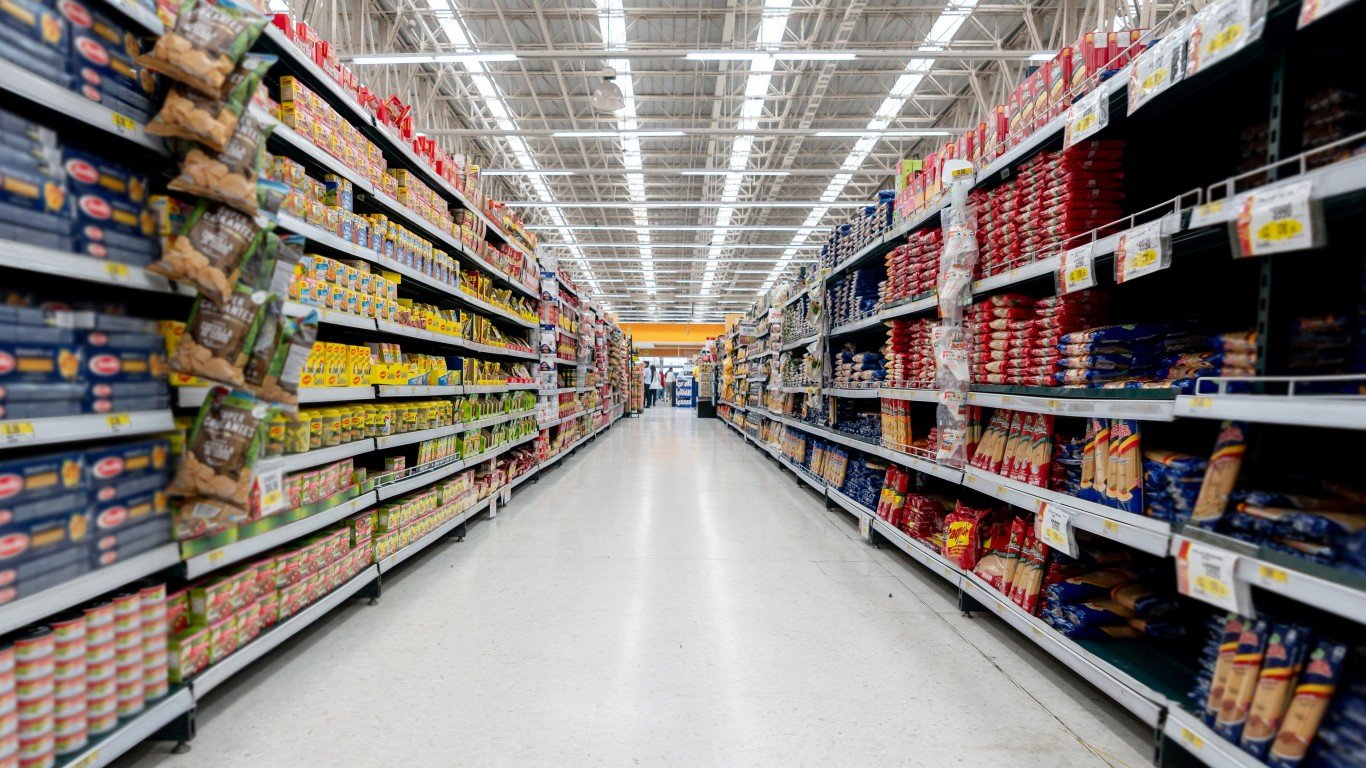
The fund holds 36 positions across the consumer staples sector, with 99.4% of its portfolio in essentials like groceries, household products, beverages, and personal care. Its expense ratio of 0.08% makes it one of the cheapest ways to own the sector, and its $15.8 billion in net assets means liquidity is never a concern.
XLP is up almost 5% year-to-date, while the broader S&P 500 is down 5% over the same period. That gap reflects the defensive rotation in action. XLP is down 7% over the past month, reflecting broader market pressure, but the fund has still held up far better than the index.
The Macro Signal That Matters Most: Oil’s Reach Into Consumer Wallets
West Texas Intermediate (WTI) crude climbed from $71 per barrel on March 2 to $98.09 today, driven by escalating geopolitical tensions that have briefly disrupted Middle East supply routes. Geopolitical oil spikes work through the economy in two ways that directly affect XLP’s holdings.
First, they raise input costs. Plastic packaging, synthetic fibers, transportation fuel, and agricultural chemicals are all petroleum-dependent. Companies like Procter & Gamble (NYSE:PG), Colgate-Palmolive (NYSE:CL), and Kimberly-Clark (NYSE:KMB) absorb those costs immediately. Second, they squeeze consumer spending power. Consumer sentiment already sits at 55.5 — down from 56.4 last month — firmly in pessimistic territory, and oil above $90 a barrel adds pressure at the gas pump that crowds out discretionary spending before it crowds out staples.
That second effect is what makes XLP resilient here. Consumers cut restaurant meals, vacations, and clothing before they cut toothpaste and cereal. Retail sales rose slightly to $734.7 billion in February, even as sentiment deteriorated, reflecting that staples demand stays sticky when budgets tighten.
The FRED WTI daily price series is updated each trading day and tracks where oil is heading. The EIA publishes its weekly petroleum status report every Wednesday morning, the most reliable early indicator of whether the current supply crunch is stabilizing.
The ETF Mechanic That Could Move the Needle: Top-Heavy Concentration
XLP’s structure creates an asymmetry most investors overlook. Walmart (NYSE:WMT) alone represents 11.8% of the fund, Costco (NASDAQ:COST) 9.6%, and Procter & Gamble 7.5%. Those three names together represent the fund’s largest concentration of assets, accounting for nearly 29% of every dollar invested. Walmart and Costco are large-format retailers with extraordinary pricing power. They can absorb or pass through cost increases in ways smaller packaged goods companies cannot.
The mid-tier holdings are more exposed. Names like Archer-Daniels-Midland (NYSE:ADM | ADM Price Prediction) at 2.1%, Tyson Foods (NYSE:TSN) at 1.1%, and Conagra Brands (NYSE:CAG) at 0.5% face direct commodity input cost pressure with less pricing flexibility. Their combined weight is small, but in a sustained oil shock, earnings misses from these names drag on sentiment across the whole sector.
Monitor the fund’s State Street issuer fact sheet, updated monthly, for rebalancing shifts in weighting. The fund’s 2.76% dividend yield also depends heavily on the payout health of its top names. If oil holds above $95 through May, expect margin compression to weigh on guidance. If prices retreat below $80, the margin pressure eases and the defensive premium in XLP may fade.
With the VIX at 26.78 and oil sitting just below $100, the macro environment for a defensive staples fund reflects conditions not seen since the 2022 energy shock. Whether that translates into sustained outperformance depends on whether oil holds its elevated range and whether the fund’s heavyweight retailers can keep absorbing cost pressure.
Contact [email protected] for any questions or corrections.
After two decades of patrolling the dark corners of suburbia as a police officer, Rich Duprey hung up his badge and gun to begin writing full time about stocks and investing. For the past 20 years, he’s been cruising the markets looking for companies to lock up as long-term holdings in a portfolio while writing extensively on the broad sectors of consumer goods, technology, and industrials. Because his experience isn’t from the typical financial analyst track, Rich is able to break down complex topics into understandable and useful action points for the average investor. His writings have appeared on The Motley Fool, InvestorPlace, Yahoo! Finance, Money Morning, and, of course, 24/7 Wall St. He has been featured in both U.S. and international publications, including MarketWatch, Financial Times, Forbes, Fast Company, and USA Today.