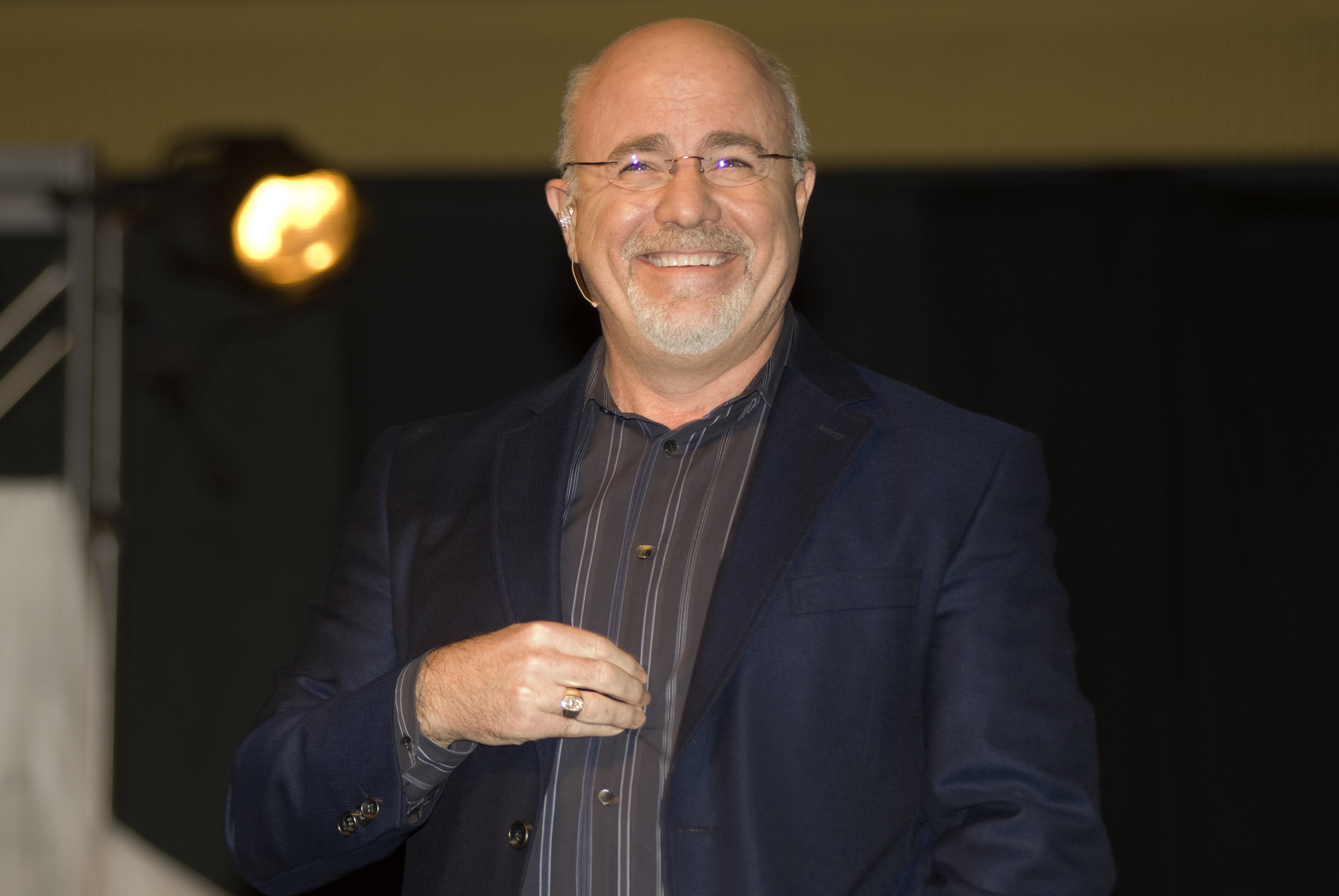
Dave Ramsey Says Real Wealth Takes 10 Years, Not 40. Here Are the Five Habits That Get You There.
It does not take a lifetime to build wealth. That's the claim Dave Ramsey has staked his career on. And the millions of Baby Steps graduates who've paid off houses, credit cards, and car notes tend to agree with him.…

This post may contain links from our sponsors and affiliates, and Flywheel Publishing may receive compensation for actions taken through them.
It does not take a lifetime to build wealth.
That’s the claim Dave Ramsey has staked his career on. And the millions of Baby Steps graduates who’ve paid off houses, credit cards, and car notes tend to agree with him.
Ramsey’s argument is simple: most people don’t have a money problem. They have a habit problem. Fix the habits, and a decade is enough.
Here’s what’s worth paying attention to before you read another word:
- The one debt-payoff move that ignores the math (and works anyway). Ramsey’s method does the opposite of what every finance textbook teaches, and the finish line arrives faster than most people expect.
- Why Ramsey’s fifth habit has nothing to do with money. It sounds out of place on a wealth-building list. Leave it off, Ramsey warns, and the other four rarely stick.
This post was updated on October 11, 2026.
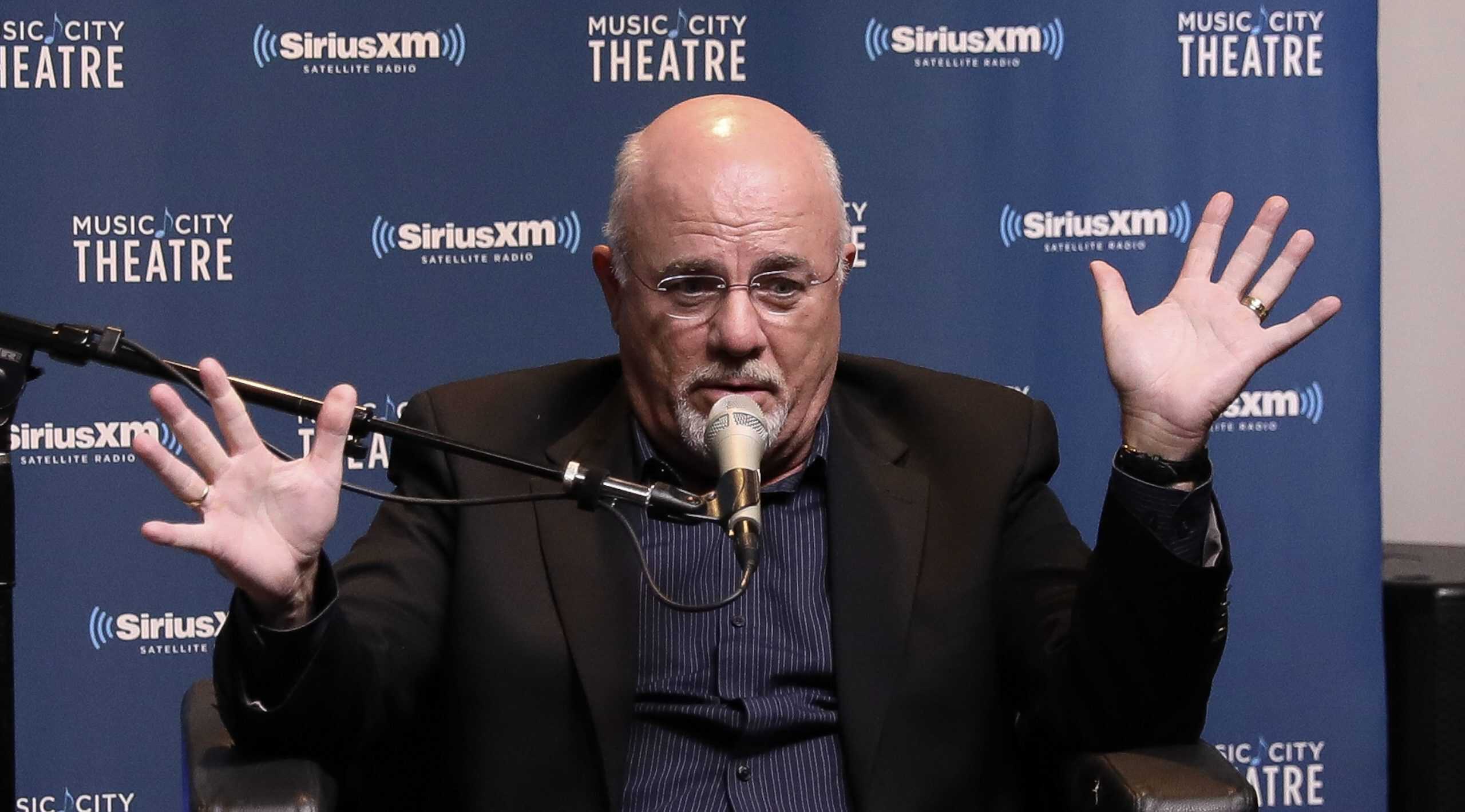
Start with the plan. Written down.
A plan that lives in your head is not a plan. It’s a hope. Ramsey’s first move is to get income and expenses down on paper: current salary, Social Security, pensions, investments, retirement accounts, and every foreseeable expense ahead. No exceptions.
That means rent or mortgage, healthcare, groceries, medication, transportation, the pet, the travel budget, and the college help for the kids. If money is leaving the account for it, it belongs on the page.
Once those numbers are visible, something shifts that never happens when figures stay in your head. You see the gaps. The gaps are exactly where the real plan begins.
Then get out of debt, the Ramsey way.
Americans closed out 2025 owing a record $1.28 trillion on their credit cards, according to the Federal Reserve Bank of New York. Credit card balances dipped briefly to $1.25 trillion in Q1 2026 before climbing back to $1.26 trillion in Q2, close to that all-time high. Through Q1 2026, aggregate delinquency across all household debt held at 4.8%, and it remained near that level through Q2. Meanwhile, the New York Fed found that roughly 60% of Americans who carry a credit card also carry revolving debt from month to month, meaning a large share of the population pays interest every single month without making a dent in the principal. That backdrop makes Ramsey’s debt-elimination framework more urgent than ever, even if it runs counter to conventional finance advice.
His “debt snowball” tells you to ignore the interest rate entirely. List your debts from smallest to largest, pay minimums on everything, and throw every extra dollar at the smallest balance until it’s gone. When it disappears, roll that payment into the next debt and repeat.
The psychological case for starting small has solid research behind it. A 2016 Harvard Business Review study found that focusing on the smallest balance has the most powerful effect on people’s sense of progress, sustaining motivation across an entire debt-elimination plan. Ramsey put the same idea plainly: “Personal finance is 80% behavior and only 20% head knowledge.” The win matters. The momentum is the point.
Ramsey Solutions describes the mechanics this way: “Make minimum payments on all debts except the smallest, throwing as much money as you can at that one. Once that debt is gone, take its payment and apply it to the next smallest debt.” Repeat until the snowball flattens everything in its path.
Live on less than you make. Every month. No exceptions.
This sounds obvious. It isn’t. Ramsey puts it in a single line: “If you have to borrow money to pay for it, you can’t afford it.”
He’s talking about the cultural habit of financing furniture, vacations, weddings, and holiday spending on plastic. Four things have to happen at once for this to work: budget every dollar, track every expense, put needs before wants, and keep paying down the balance. Miss any one of them, and the other three eventually collapse.
Save and invest, with the right account for your situation.
Cash sitting in a checking account quietly loses ground to inflation every year. Ramsey’s fix is to move savings into the right retirement vehicle for your tax situation.
A Traditional IRA lets you deduct contributions now and pay tax on withdrawals later. A Roth IRA does the opposite: you pay tax now, and everything inside grows tax-free for the rest of your life. A Solo 401(k) does for the self-employed what a workplace 401(k) does for everyone else.
Ramsey recommends investing 15% of household income in retirement accounts, and that target is worth taking seriously. According to Fidelity’s Q1 2026 retirement analysis, the average employee 401(k) contribution rate hit a record 9.6%, while the total savings rate including employer contributions reached a record 14.4%. Fidelity’s own suggested combined savings rate is also 15%, meaning American workers are remarkably close to hitting both benchmarks simultaneously. IRA participation is surging alongside 401(k) contributions: Fidelity reported that IRA contributions rose 29% year over year in Q1 2026, with Roth accounts capturing 67% of those flows as savers increasingly favor tax-free growth. Ramsey’s suggested order of operations is to first contribute enough to a workplace 401(k) to capture the full employer match, then fully fund a Roth IRA, and finally top up the 401(k) until the household reaches 15%. Which account fits best depends on your current tax bracket and whether you work for yourself, so a fee-only financial advisor is worth consulting before you commit.
The account you open in year one compounds for all ten.
And the habit most wealth-building articles forget: be outrageously generous.
This is where most wealth-building lists stop. Ramsey keeps going.
His argument is that the people who stay wealthy and stay sane while doing it share one habit: giving something away. Money, if they have it. Time, if they don’t. Food, clothes, attention.
The tax benefit is real for people who itemize deductions, but most taxpayers claim the standard deduction and collect no write-off at all. The benefit is a footnote, not the reason. The reason, Ramsey says, is what generosity does to your relationship with money. It stops owning you.
Dave Ramsey launched his Nashville-based radio program in 1992. The Ramsey Show now reaches over 18 million combined weekly listeners, according to Ramsey Solutions. The message hasn’t shifted in more than three decades: ten years is not a long time. It’s ten Thanksgivings, ten tax seasons, ten annual reviews. The only question Ramsey poses is whether the ten you’re about to spend will look like the ten you just spent.
Start with the plan. The rest follows.
Editor’s note: This pass corrected the Q2 2026 aggregate delinquency rate to the New York Fed’s confirmed Q1 2026 figure of 4.8% (the prior version cited an unverifiable 4.7%), specified the Harvard Business Review debt-snowball study as a 2016 publication, and confirmed the 60% revolving-debt figure against the New York Fed’s Q2 2026 Household Debt and Credit report.
Contact [email protected] for any questions or corrections.
Ian Cooper is a veteran market analyst and investment strategist with more than 20 years of experience covering stocks, commodities, and macro trends. Since 1999, he has helped investors identify market opportunities using a blend of technical analysis, fundamental research, and market sentiment.
He is the creator of the ADD News Flow Strategy, which focuses on trading market reactions to major news events and investor psychology. Cooper was also among the analysts who warned about the 2008 financial crisis and major financial institution collapses ahead of the broader market.
Before joining 247 Wall St., Cooper wrote extensively for InvestorPlace and other financial publications, covering market trends, trading strategies, and investment opportunities.