PepsiCo vs Coca-Cola: The Better Dividend Stock
Beverage giant PepsiCo (NASDAQ: PEP | PEP Price Prediction) and Coca-Cola (NYSE: KO) both reported fourth quarter earnings in early February, and the results crystallize a divide that matters to dividend investors: one company leans on snacks and international momentum…

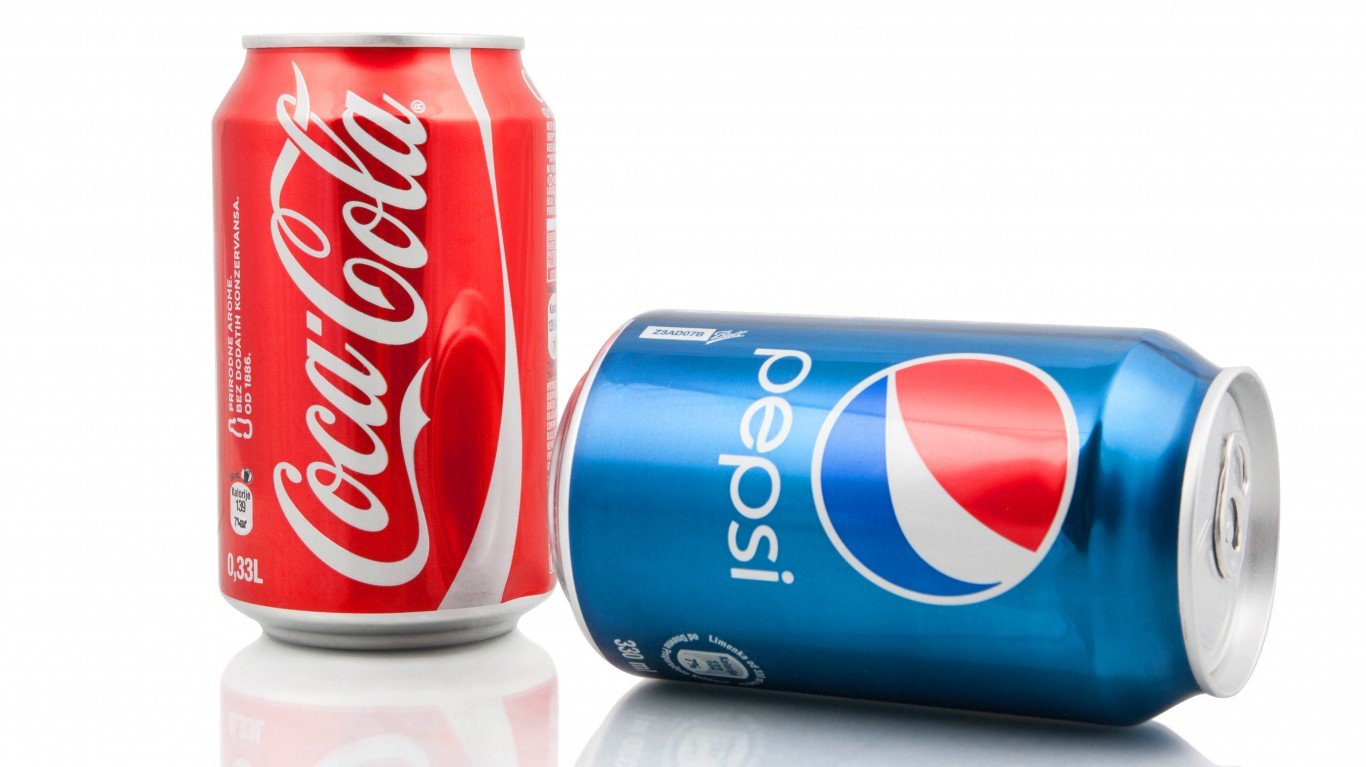
Beverage giant PepsiCo (NASDAQ: PEP | PEP Price Prediction) and Coca-Cola (NYSE: KO) both reported fourth quarter earnings in early February, and the results crystallize a divide that matters to dividend investors: one company leans on snacks and international momentum to stabilize a pressured North American business, while the other generates stronger margins and free cash flow from a focused, asset-light beverage model.
Snacks Carry PepsiCo. Zero Sugar Carries Coca-Cola.
PepsiCo’s fourth quarter revenue came in at $29.34B, growing 5.6% year over year, with the headline beat driven by international segments. EMEA revenue surged 12%, and operating profit in that segment jumped 72%, a standout result that offset softer North American volumes.
The full-year picture is harder: full-year net income fell 13.97% and operating income dropped 19.57%, weighed down by $1.9B in intangible asset impairments, including the Rockstar energy brand.
Coca-Cola’s quarter was cleaner. Full-year net income rose 23.29% to $13.11B, and operating income climbed 37.73% to $13.76B, impressive for a company running on roughly half PepsiCo’s revenue base.
The engine behind that margin strength is Coca-Cola Zero Sugar, where unit case volume grew 13% in Q4 and 14% for the full year. Revenue missed estimates slightly at $11.82B for Q4, but the margin profile more than compensated.
| Business Driver | PepsiCo | Coca-Cola |
|---|---|---|
| Main Growth Engine | International segments, Frito-Lay | Coca-Cola Zero Sugar, fairlife |
| Full-Year Net Income | $8.24B (-13.97% YoY) | $13.11B (+23.29% YoY) |
| Operating Income | $11.50B | $13.76B |
| FY2026 Organic Revenue Growth Target | 2-4% | 4-5% |
63 Years of Raises vs. 54: Two Very Different Dividend Profiles
Both companies are Dividend Kings, but the mechanics differ. PepsiCo’s annualized dividend of $5.92 per share reflects a 4% raise, its 54th consecutive annual increase. At a current price of $153.04, that yields roughly 3.87%. Coca-Cola’s most recent quarterly dividend of $0.53 per share annualizes to $2.12, yielding approximately 2.80% against a price of $75.71. PepsiCo pays a materially higher yield today.
Coca-Cola holds the longer streak at 63 consecutive years of dividend increases, and its balance sheet supports continuity. Projected free cash flow for FY2026 is approximately $12.2B, a figure that dwarfs its dividend obligation and signals strong coverage.
PepsiCo targets roughly $8.9B in total shareholder returns for FY2026, split between $7.9B in dividends and $1.0B in buybacks, backed by a new $10B share repurchase program through February 2030. The commitment is credible, but PepsiCo’s earnings pressure and impairment charges introduce more execution uncertainty.
Asset-Light Franchise Model vs. Diversified Portfolio: The Risk Trade-Off
Coca-Cola’s franchise model insulates it from direct commodity and manufacturing headwinds. PepsiCo carries more exposure: tariff-driven commodity costs created an 11-percentage-point impact in its PBNA segment in Q4, a concrete drag that Coca-Cola’s bottling partners largely absorb.
PepsiCo’s snack diversification provides revenue resilience but also means more cost lines and more brand-level risk, as the Rockstar impairment demonstrated.
Valuation reflects this difference. PepsiCo trades at forward P/E of roughly 18x, while Coca-Cola sits at approximately 23x forward earnings. The market pays a premium for Coca-Cola’s margin quality and growth visibility.
Comparing the Two Dividend Profiles
Coca-Cola shows stronger dividend safety and earnings quality metrics. Margin expansion, free cash flow generation, and Zero Sugar momentum point toward durable compounding. The lower current yield is a real trade-off against the reliability of that yield.
PepsiCo offers a higher income stream today alongside more near-term volatility. The international acceleration is real, and the forward valuation at roughly 18x is genuinely cheaper. If commodity pressures ease and North American volumes stabilize, PepsiCo’s total return profile strengthens.
Contact [email protected] for any questions or corrections.
Vandita Jadeja is a financial publisher with over a decade of experience writing about financial topics, including investment, savings, retirement, insurance and banking. Vandita is a Chartered Accountant who loves to debunk financial concepts for readers.
Her work has appeared on sites that include The Motley Fool, InvestorPlace, and Benzinga. She covers investing and focuses on stock picks and price prediction for 24/7 Wall St.
When not looking for the next stock investment opportunity, she can be found traveling, reading, chasing sunsets and enjoying her iced latte.