Exxon Mobil and Chevron Fall 5%: What Iran’s President Just Did to U.S. Oil Stocks
Exxon Mobil (NYSE:XOM | XOM Price Prediction) shares are down 5% in midday trading on Wednesday, and Chevron (NYSE:CVX) shares are also off 5%. The catalyst is hard to miss: reports that Iran’s President is prepared to end the ongoing…

This post may contain links from our sponsors and affiliates, and Flywheel Publishing may receive compensation for actions taken through them.

Exxon Mobil (NYSE:XOM | XOM Price Prediction) shares are down 5% in midday trading on Wednesday, and Chevron (NYSE:CVX) shares are also off 5%. The catalyst is hard to miss: reports that Iran’s President is prepared to end the ongoing conflict are unwinding the geopolitical risk premium that had driven oil prices to over $100 per barrel.
Both stocks had been among the best performers in the S&P 500 heading into today. XOM stock had surged 41.95% year to date through March 31, while CVX shares had climbed 37.09% over the same period. That kind of run makes both names vulnerable to sharp reversals the moment the geopolitical tailwind starts to fade.
Granted, a single day’s decline doesn’t erase a remarkable year. Yet, today’s move is a sharp reminder that a meaningful portion of both stocks’ 2026 gains was built on a war premium, and peace talks have a way of repricing that premium quickly.
Iran De-escalation Pulls the Rug on Oil
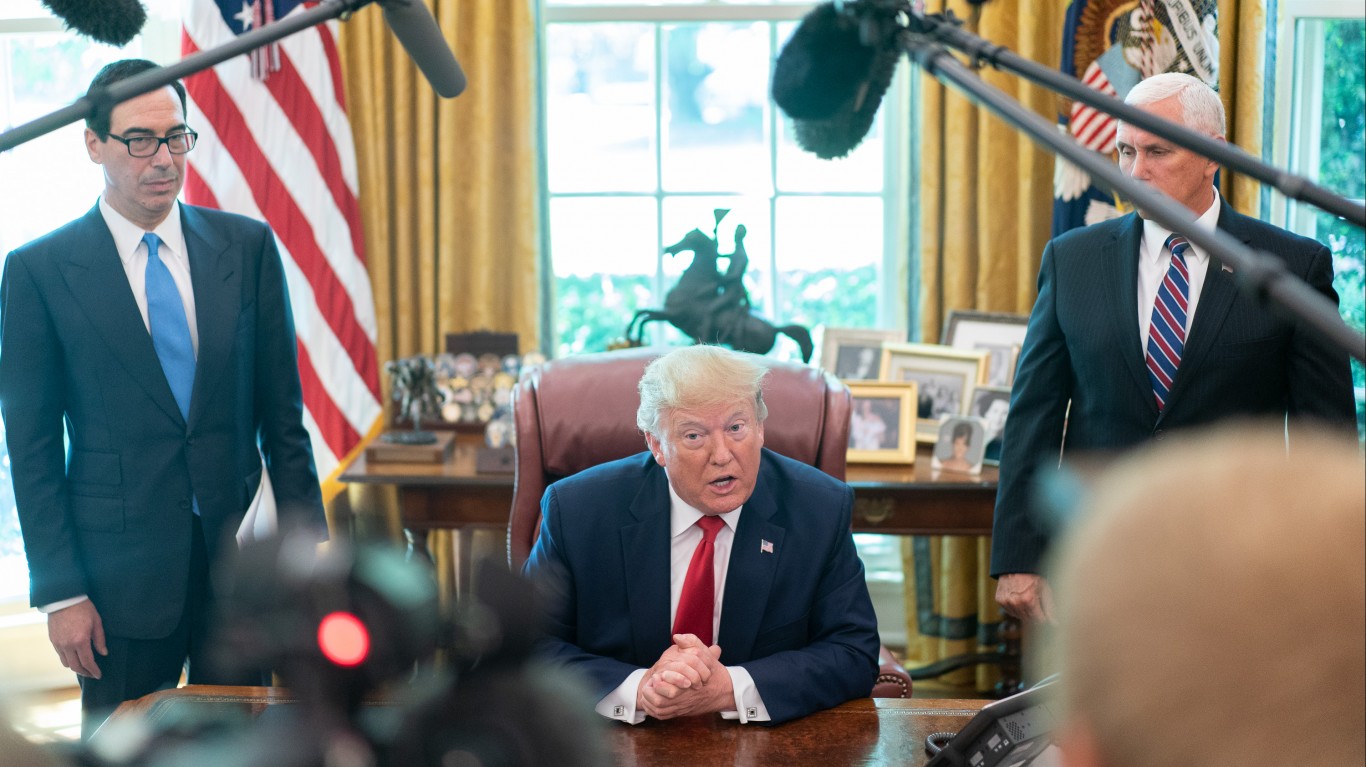
Recent reports describe hopes of an early end to the Iran conflict leading to lower crude oil and food-based commodity prices, with President Trump actively negotiating regarding the Strait of Hormuz and NATO. That diplomatic activity is creating the de-escalation momentum pulling oil prices lower today.
WTI crude oil had climbed from $71.13 per barrel on March 2 to over $100, before retreating back under $100 today. The Iran conflict was the primary driver of that climb, and any genuine resolution would reduce the structural justification for prices near the $100 level.
For context, Guggenheim Partners had previously warned that oil remaining near $100 per barrel for several months could trigger a 10% selloff in U.S. equities, with their base case calling for oil to ease to $70. Morgan Stanley projected WTI to average $80 per barrel in 2026. Today’s oil price decline suggests the market is beginning to price in something closer to those forecasts.
XOM stock opened today at $169.66 and has traded as low as $159.87 intraday, with the current price sitting near $161. UBS maintained a Buy rating on Exxon Mobil shares with a $171 price target as recently as this week.
Exxon Mobil’s fundamentals, including its integrated business model spanning Permian Basin and Guyana production, haven’t changed. Thus, today’s move reflects geopolitical repricing, not a fundamental deterioration.
Chevron Faces Additional Headwinds
CVX shares are absorbing the same sector-wide oil price pressure, but Chevron carries an additional company-specific burden today. Chevron’s Wheatstone LNG plant remains offline due to storm damage, raising near-term concerns about earnings and delivery commitments tied to one of its highest-margin international revenue streams.
CVX stock opened at $206.90 and has declined to the $196 area as of midday. The Wheatstone outage is a real operational headwind on top of a sector-wide selloff, which explains why CVX shares are tracking closely with XOM despite having a second, independent catalyst weighing on sentiment.
That said, Chevron’s broader financial position remains well-capitalized. The company reported record full-year 2025 operating cash flow of $33.9 billion and returned $27.1 billion to shareholders during the year. Chevron has raised its annual dividend for 39 consecutive years. The Wheatstone situation could merely be a near-term disruption, when all is said and done.
Sector Selloff Spreads Broadly
The energy sector is not escaping this move. Vanguard Energy Index Fund ETF (NYSEARCA:VDE) is down 4.2% on the day, reflecting the same de-escalation dynamic hitting Exxon Mobil and Chevron as its two largest holdings. VDE shares had surged 38.19% year to date through March 31, making today’s pullback a sector-wide repricing event rather than a company-specific story. You can read more about VDE’s 2026 run in this recent analysis.
Meanwhile, the Polymarket prediction market currently prices the probability of a U.S.-Iran ceasefire occurring before a Russia-Ukraine ceasefire at 89.5%, suggesting traders view a formal agreement as the more likely near-term geopolitical resolution. If that consensus proves correct, the structural oil price premium tied to Strait of Hormuz disruptions could continue unwinding over coming weeks.
No matter how you slice it, both Exxon Mobil and Chevron remain massive year-to-date outperformers even after today’s decline. Structural undersupply in global oil markets, per the U.S. Energy Information Administration’s 2026 outlook, provides a meaningful price floor well above pre-conflict levels.
At 40%-plus gains year to date, both XOM and CVX stocks were priced for a world where $100 oil was the baseline. Whether WTI crude oil stabilizes above or below that key $100 level could determine whether today’s move is a one-day repricing or the start of a broader energy sector rotation.
Contact [email protected] for any questions or corrections.
David Moadel is financial writer specializing in stocks, ETFs, options, precious metals, and Bitcoin. David has written well over 1,000 articles for leading online publications, helping investors understand markets, income strategies, and risk.His work has appeared in The Motley Fool, InvestorPlace, U.S. News & World Report, TipRanks, ValueWalk, Benzinga, Market Realist, TalkMarkets, Finmasters, 24/7 Wall St., and others.With a master’s degree in education, David has taught at the elementary, high school, and college levels. That teaching background shapes his writing style: clear, educational, and practical. David has also built a loyal social-media audience by providing trustworthy financial content on YouTube, X/Twitter, and StockTwits.