




Consumer staples stocks have delivered steady but unspectacular results while the broader market chased AI-fueled gains. PepsiCo (NASDAQ:PEP | PEP Price Prediction) spent 2025 navigating volume softness, pricing pushback, and one-time charges that masked underlying progress.
The beverage giant delivered full-year net revenue of $93.9 billion, up 2.3% on a GAAP and 1.7% organically. Net income fell 14% to $8.24 billion after a $1.993 billion impairment charge tied primarily to the Rockstar brand. Yet the fourth quarter told a different story: revenue hit $29.3 billion, up 5.6% on a GAAP basis and 2.1% organically, with core earnings of $2.26 per share, rising 11% on a constant-currency basis. Do these green shoots justify buying PEP shares today?
Pricing Held the Line, Volume Did Not
PepsiCo’s top line grew, but the mix revealed pressure. Organic revenue rose 1.7% for the year, driven by 4.5% effective net pricing in Q4 that offset a 2% organic volume decline. Convenience foods volumes fell 2% while beverages rose 1%. International segments, especially Europe, Middle East and Africa, delivered double-digit revenue and operating-profit gains that offset North America softness. The impairment charge reduced reported EPS to $6.00, down from $6.95 in the prior year, while core EPS reached $8.14. Free cash flow for the trailing 12 months stood at $7.67 billion. That left the free cash flow payout ratio near 99.5%, meaning dividends and stock repurchases consumed nearly every dollar of cash generated.
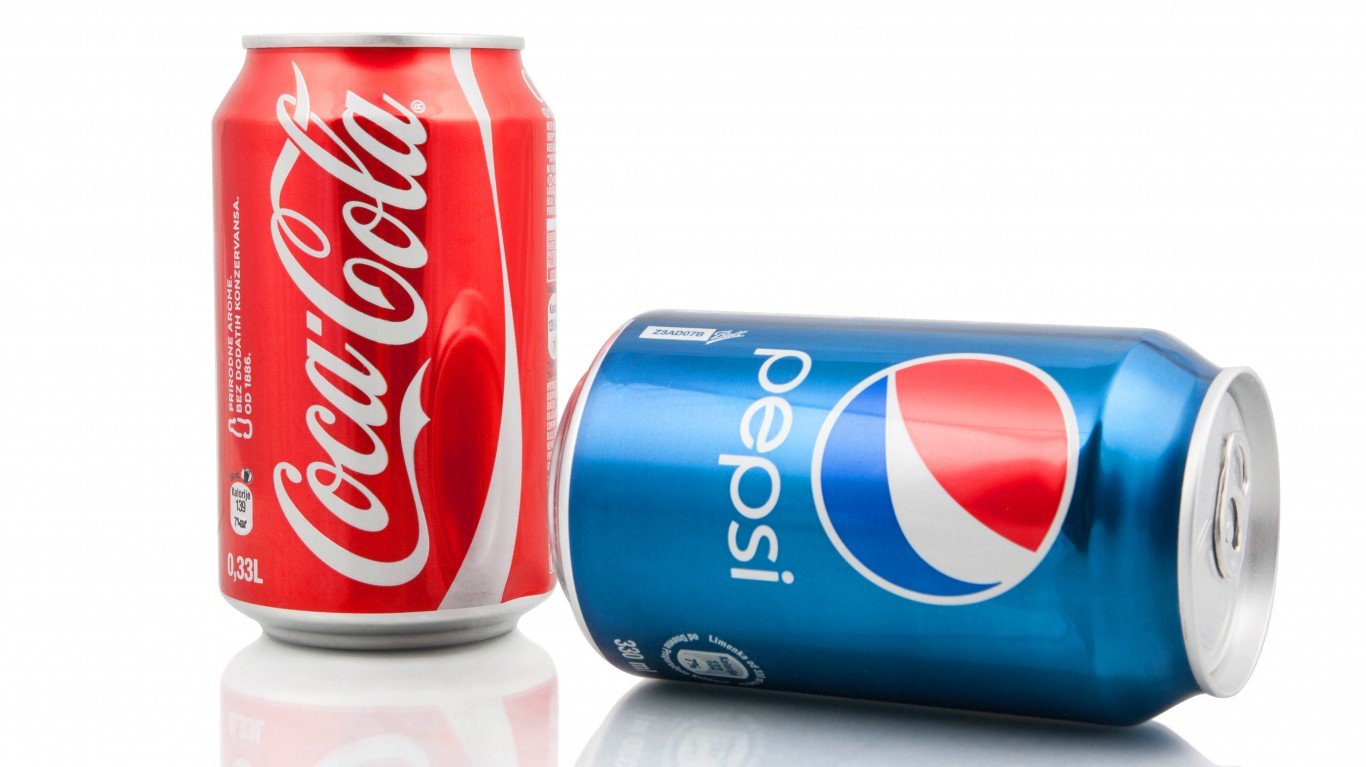
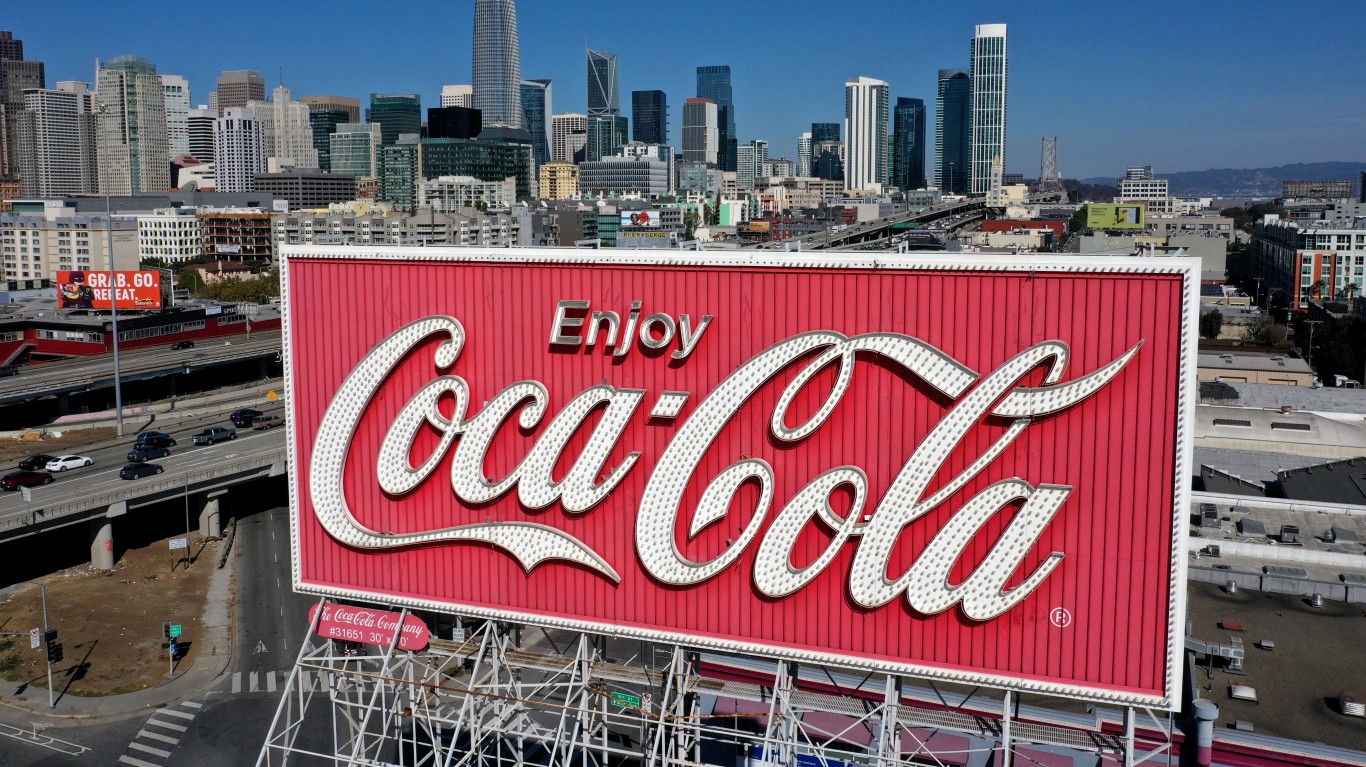
Compare that to Coca-Cola. The rival posted full-year 2025 net income of $13.1 billion, up 23%, with stronger margin expansion on roughly half PepsiCo’s revenue base. PepsiCo’s capital-intensive model — owning manufacturing and distribution — delivers scale but thinner margins and higher capex, which ran below 5% of revenue yet still pressured cash conversion. No matter how you slice it, 2025 exposed PepsiCo’s reliance on pricing to offset volume weakness, while peers like Coca-Cola grew both faster and more profitably.
Signs of Momentum
The fourth quarter delivered the first clear acceleration. Revenue growth quickened sequentially in both North America and International, while operating margin expanded on productivity savings. For 2026 the company guided organic revenue growth of 2% to 4%, and core constant-currency EPS growth of 4% to 6%. It expects free cash flow conversion of at least 80%, capital spending below 5% of revenue, and total cash returns to shareholders of $8.9 billion — including $7.9 billion in dividends and $1 billion in repurchases. The board also approved a 4% dividend increase to an annualized $5.92 per share, marking the 54th consecutive raise, plus a new $10 billion share-repurchase program through February 2030.
Let’s translate that. Record productivity savings will fund brand restaging, functional innovation, and sharper value pricing to address affordability. Management sees North America improving and International remaining resilient. Pepsi’s earnings report is on April 16, offering the first test of these plans. Granted, guidance looks modest next to Coca-Cola’s 4% to 5% organic target, but it represents the clearest upward inflection in two years.
Pepsi Is Still Fairly Valued
Pepsi trades at a forward P/E of 17 times estimated 2026 core EPS, well below the 23 to 24 multiple seen in 2022-2023 and near five-year lows. The current dividend yield sits at 3.62% based on the $5.69 annualized rate before the June increase. That’s competitive with peers and backed by 54 years of raises. Analysts’ average 12-month price target implies roughly 12% upside from recent levels around $157, though estimates carry three bullish and seven bearish revisions in the past 90 days.
That said, risks remain plain. High free cash flow payout ratios leave little buffer if volumes weaken further or commodity costs spike. The beverage and snacks categories face shifting consumer tastes and private-label pressure. PepsiCo’s vertical integration, while a moat, demands steady capital outlays that Coca-Cola largely avoids through its asset-light model.
Key Takeaway
In short, Pepsi’s turnaround shows early evidence — Q4 acceleration, explicit 2026 growth plans, and a fresh dividend hike — but free cash flow coverage still sits near the edge. At 17 times forward earnings and a 3.6% yield, the stock offers a reasonable entry for patient income investors who can tolerate one or two more soft quarters.
While the turnaround isn’t fully baked, the data now points to a credible path higher rather than continued flatline performance. I wouldn’t be an aggressive buyer now, but if the stock pulls back to $150 or below, the valuation will align with the opportunity Pepsi’s rebuilding promises.
Contact [email protected] for any questions or corrections.







 Top Gaining Stocks
 Top Losing Stocks