Buy and Hold Forever This Unknown AI Stock up 200%
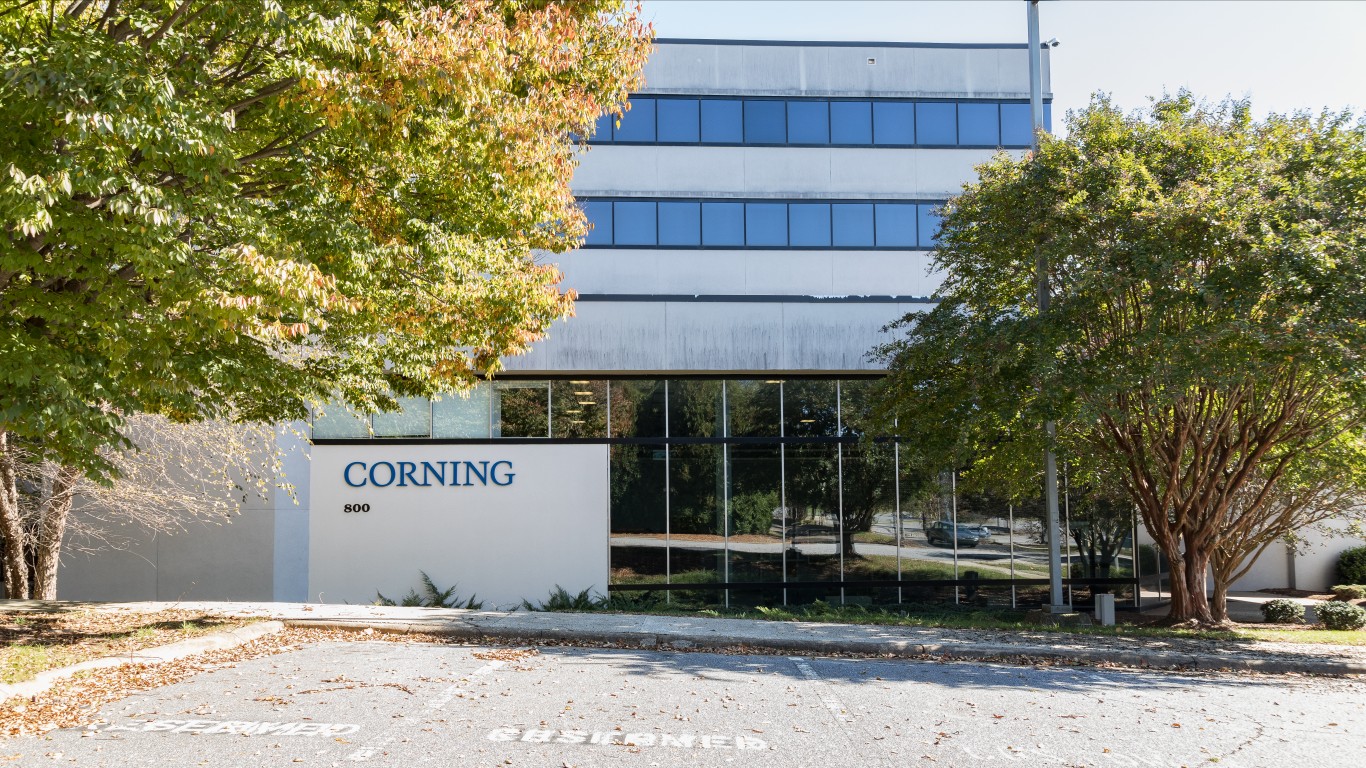
Corning Incorporated (NYSE:GLW | GLW Price Prediction) makes the physical infrastructure that the modern world cannot function without, and that list of dependencies keeps growing.Glass That Holds the World TogetherCorning has spent 170 years making materials others cannot easily replicate.…

Corning Incorporated (NYSE:GLW | GLW Price Prediction) makes the physical infrastructure that the modern world cannot function without, and that list of dependencies keeps growing.
Glass That Holds the World Together
Corning has spent 170 years making materials others cannot easily replicate. Its optical fiber runs through AI data centers, its Gorilla Glass covers every iPhone, and its specialty ceramic is now used in fiber-optic tethered drones immune to electronic jamming. These are structural shifts in how the world moves data, protects borders, and builds technology.
The business is genuinely diversified. In the most recent quarter, Corning generated revenue across six segments, led by Optical Communications at $1.7 billion, with Display, Specialty Materials, Automotive, Life Sciences, Hemlock, and Emerging Growth contributing the rest. No single segment can sink the company, which is rare at this level of quality.
The Compounding Machine Behind the Glass
The financial transformation is the real story. From Q4 2023 to Q4 2025, Corning expanded core operating margin by 390 basis points to 20.2% and expanded core ROIC by 540 basis points to 14.2%, while nearly doubling adjusted free cash flow for full-year 2025. CEO Wendell Weeks described it plainly: “We now have a highly profitable launch point for future growth.”
Free cash flow of $1.72 billion funds the dividend, buybacks, and capacity expansions simultaneously. Corning pays a dividend of $1.12 per share and repurchased $100 million of common stock in Q1 2025. Together, they quietly return capital while the business compounds underneath.
The growth runway is anchored by real contracts. A multiyear agreement with Meta (NASDAQ:META), worth up to $6 billion for AI data center optical solutions, locks in demand through the end of the decade. Apple (NASDAQ:AAPL) has committed $2.5 billion to source 100% of iPhone and Apple Watch cover glass from Corning’s Kentucky facility. These are funded, long-term supply commitments.
Why Market Cycles Cannot Break This Business
Corning sells into needs, not wants. When AI spending slows, data centers still need fiber. When consumers stop upgrading phones, existing screens crack and need replacement glass. And when defense budgets tighten, militaries still need unjammable drone communication that only fiber-optic tethers provide. The U.S. Marine Corps began testing fiber-optic FPV drones in early 2026, and Russia deployed fiber-optic Molniya drones in late 2025. This is now a permanent feature of modern warfare.
The company’s upgraded Springboard plan targets $11 billion in incremental annualized sales by the end of 2028, up from the original $8 billion target. The CFO was direct: “Delivering our internal SpringBoard plan puts our annualized sales run rate at $24 billion by 2028. We almost double our sales run rate over this time period.”
The One Scenario Where It Lags
If AI capital expenditure cycles pause sharply, Corning’s optical segment growth will cool. Enterprise optical sales grew 106% in Q1 2025 and decelerated to 24% by Q4, showing the math gets harder as the base grows. A prolonged spending freeze by hyperscalers would pressure near-term results.
The long-term thesis remains intact. Display, Specialty Materials, automotive glass, life sciences, and the military drone market all operate on different demand cycles. A slowdown in one segment has never historically stopped Corning from generating cash, paying its dividend, and emerging stronger. The stock has returned 823% over the past ten years, compounding through multiple recessions, trade wars, and technology cycles.
The decade ahead gives Corning more structural tailwinds than the decade behind, with demand anchored across fiber, display, defense, and automotive.
Contact [email protected] for any questions or corrections.
Omor Ibne Ehsan is a writer at 24/7 Wall St. He is a self-taught investor with a focus on growth and cyclical stocks that have strong fundamentals, value, and long-term potential. He also has an interest in high-risk, high-reward investments such as cryptocurrencies and penny stocks.