What Peter Lynch Would Buy in This Market and the 3 Stocks That Fit His Playbook Today
Peter Lynch built one of the most storied records in investing history by managing the Fidelity Magellan Fund from 1977 to 1990, compounding capital at roughly 29.2% per year. His philosophy was simple: invest in companies you understand and favor…


Peter Lynch built one of the most storied records in investing history by managing the Fidelity Magellan Fund from 1977 to 1990, compounding capital at roughly 29.2% per year and growing the fund from $18 million to $14 billion. His philosophy was disarmingly simple: invest in companies you understand, pay close attention to what people around you are buying and using, and favor the smaller, lesser-known businesses where institutional money is slow to follow.
Lynch believed that growth stocks hold the real potential for life-changing returns. With markets volatile and everyday investors feeling uncertain about where to put their money, it is worth asking which companies would catch Lynch’s eye today. Here are three stocks that fit his playbook.

Amazon
Amazon.com (NASDAQ:AMZN | AMZN Price Prediction | AMZN Price Prediction) sits squarely inside Lynch’s framework. He always favored companies that were easy to understand, widely used, and embedded deeply in everyday life, and few companies meet that standard as completely as Amazon. Hundreds of millions of households depend on its delivery network, and its Prime membership base has grown to more than 200 million globally, making it as close to a toll road on consumer spending as any business in the market today.
The stock trades near $254, up sharply from the $209 level cited when this article was first published. Lynch’s style called for identifying companies with multiple durable growth engines, and Amazon has at least three. Amazon Web Services drives the company’s profits and stands as one of the most direct beneficiaries of rising enterprise demand for AI infrastructure. The advertising business has expanded into a high-margin revenue stream that rivals the biggest players in digital media. And the core e-commerce platform still commands a dominant share of U.S. online retail, a position that should grow as shopping continues to shift from brick-and-mortar stores to digital channels. Lynch coined the term “tenbagger” to describe a stock that rises tenfold, and Amazon has proven to be one of history’s most dramatic examples of that phenomenon, having appreciated more than 2,200 times since its IPO.
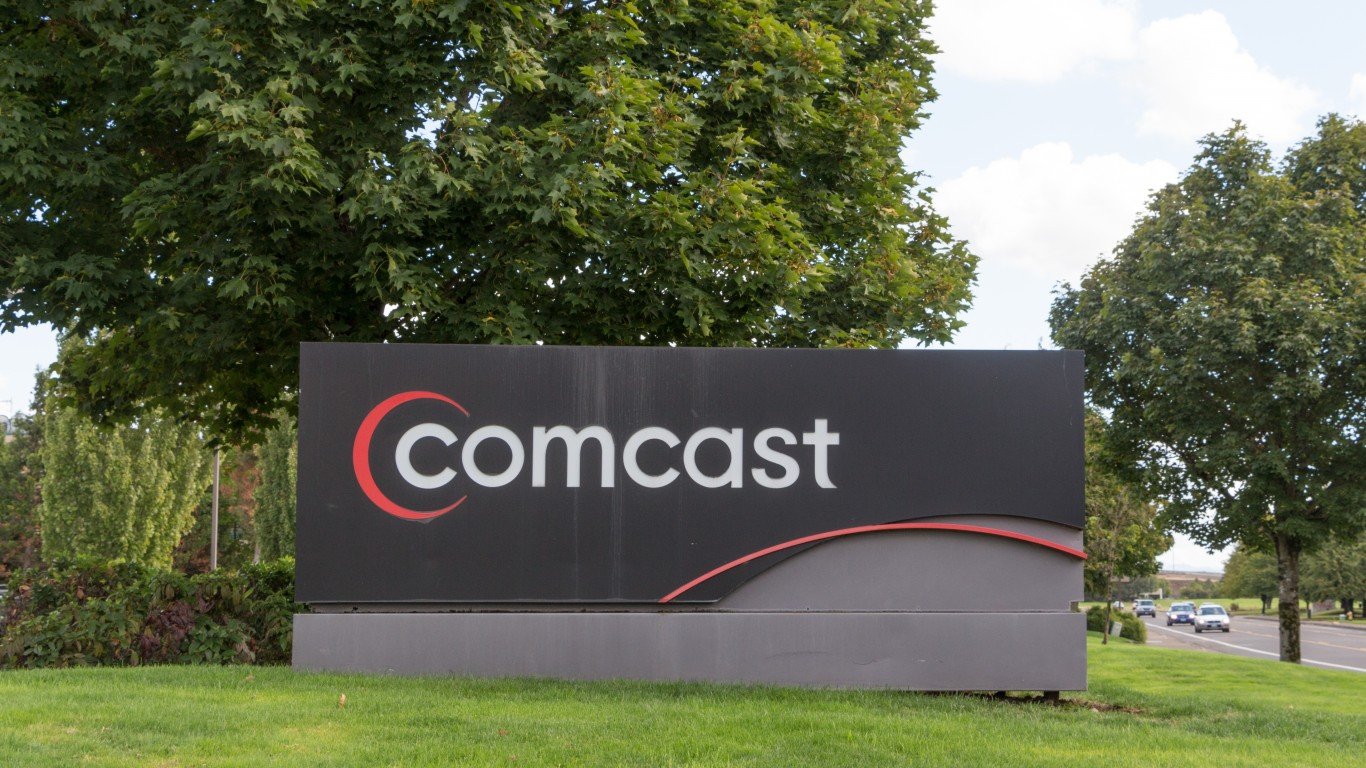
Comcast
Lynch excelled at spotting companies the market had written off prematurely, beaten-down businesses with real assets and reliable cash flow that were simply out of fashion. Comcast (NASDAQ:CMCSA | CMCSA Price Prediction) fits that mold today. The stock has slid from about $27 earlier this year to approximately $23, pushing its dividend yield above 5.7% on an annualized payout of $1.32 per share. That kind of yield, on a company that has maintained its dividend for 18 consecutive years, is exactly the kind of contrarian setup Lynch appreciated.
The company beat expectations in the fourth quarter of 2025, reporting revenue of $32.31 billion and net income of $3.06 billion. Its two main segments tell different stories: residential connectivity revenue slipped 2% as cord-cutting continued, but the content and experiences segment rose 5%. Management has pledged its largest-ever investment in broadband this year, betting that faster network speeds and bundled services can stabilize subscriber trends. The theme park business, often overlooked in analyst models, adds an additional layer of consumer spending exposure that could provide a meaningful earnings boost. Lynch was never put off by boring or unloved businesses. If anything, that was where he often found value, and Comcast today checks most of those boxes.

Block
Block (NYSE:XYZ) fits Lynch’s affinity for overlooked companies providing an essential service with a growing, predictable revenue base. The payment platform operates two complementary ecosystems: Square, which serves small and midsize merchants with point-of-sale hardware, software, and embedded banking tools; and Cash App, which brings those same financial services directly to consumers through a mobile wallet used by tens of millions of Americans. The company acquired Afterpay, a leading buy now, pay later platform, giving it a third monetization channel that ties the two ecosystems together.
Block’s fourth-quarter 2025 results showed a 17% jump in gross profit and a 20% rise in operating income, with revenue reaching $6.25 billion, up 3.6% year over year. Square served more than 4 million merchants by year-end. The more recent second-quarter 2026 report was even more striking, with gross profit up 25% year over year and a record adjusted operating income margin of 27%. The company also expanded Cash App Borrow following FDIC approval and is working with Google on conversational AI features across its platforms. Block also allows U.S.-based sellers to process transactions using Bitcoin, an approach that sets it apart from traditional payment processors.
The stock trades near $76, well above the $59 level from when this article was first published, and is up more than 20% year to date. Management targets 18% annual gross profit growth and a 26% adjusted operating income margin over the medium term. Block’s addressable market spans both merchant services and consumer finance, two large and still-underpenetrated categories. That combination of a clear product story, expanding financials, and room for further penetration is precisely the kind of setup Lynch spent his career hunting for.
Editor’s note: Stock prices for Amazon, Comcast, and Block were refreshed to current levels (approximately $254, $23, and $76, respectively), Comcast’s dividend yield was updated to roughly 5.7% based on its current share price and $1.32 annualized payout, and Block’s Q2 2026 results (25% gross profit growth, 27% adjusted operating margin) were added alongside context on its expanded Cash App Borrow program and AI partnership with Google.
Contact [email protected] for any questions or corrections.
Vandita Jadeja is a financial publisher with over a decade of experience writing about financial topics, including investment, savings, retirement, insurance and banking. Vandita is a Chartered Accountant who loves to debunk financial concepts for readers.
Her work has appeared on sites that include The Motley Fool, InvestorPlace, and Benzinga. She covers investing and focuses on stock picks and price prediction for 24/7 Wall St.
When not looking for the next stock investment opportunity, she can be found traveling, reading, chasing sunsets and enjoying her iced latte.