Boeing’s Turnaround Week: A Fighter Jet Win, a $14.7 Billion Missile Deal and an FAA All-Clear
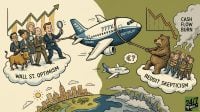
Boeing just landed a Navy fighter contract, a multibillion-dollar missile deal, and an FAA all-clear in a single week, yet analysts still see the stock trading at a 40-plus percent discount to where they think it belongs.

Four pieces of good news reached Boeing (NYSE:BA | BA Price Prediction) in seven days, yet the stock trades at $192.74 against an average analyst price target of $273.42. That leaves an implied upside of about 41.9%.
A gap above 40% is unusual for a company valued near $152.3 billion. Of 28 analysts, 6 rate the stock a Strong Buy, 18 rate it a Buy, and 4 rate it a Hold, with no Sells.
The week brought a Navy fighter selection, an approved engineering labor contract, an FAA finding on a MAX software bug, and a large missile-seeker order. The shares gained 4.52% over the week but remain down 11.24% this year, while the S&P 500 is up 13.62%.
Boeing reports third-quarter results before the market opens on October 27, 2026, a date it confirmed on September 30, 2026. Until then, the market is pricing this news as promises that take years to become cash. I think that discount is partly earned.
Why a $20 Billion Fighter Award Pays Slowly
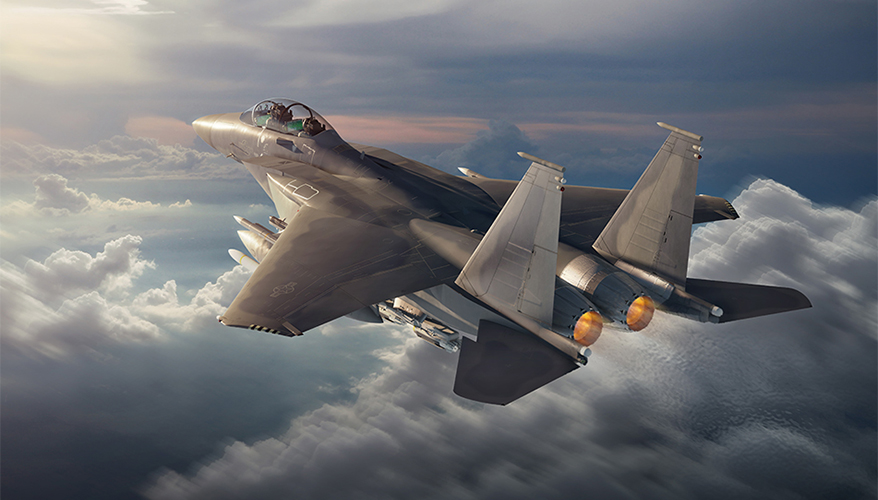
On September 29, 2026, the Navy selected Boeing to build its next carrier-based fighter under a development contract worth about $20 billion. Winning a next-generation fighter usually brings decades of production, upgrade, and maintenance work.
One analyst firm cut its Northrop Grumman (NYSE:NOC) target to $525 from $640 after the award, evidence that the contract carries real economic weight. But the money covers development, and production revenue is years away. A protest by the losing bidder would likely move the calendar by months without changing the long-term economics, unless the award were reversed.
Ceilings, Obligations and Revenue Are Different Numbers
On October 5, 2026, Lockheed Martin (NYSE:LMT) awarded Boeing a contract worth up to about $14.7 billion over seven years to raise Patriot interceptor seeker output toward 2,000 a year from about 600.
That figure is a ceiling, the most the customer can spend. Obligated value is money committed through actual orders, and revenue is what Boeing records as it ships seekers. Congress has not yet appropriated the funds, and ceilings are routinely underspent, so treat the headline figure as an upper bound.
Only the FAA Finding Touches What Drives the Stock
Boeing’s valuation runs on commercial deliveries and free cash flow. Last quarter it delivered 171 airplanes and generated $631 million in free cash flow, and management guided to $1 billion to $3 billion for the year.
On October 2, 2026, an FAA review board found the MAX flight-computer bug is not a safety issue. The bug had threatened to delay certification of the stretched MAX, and because airlines pay most of a jet’s price at delivery, a certification slip leaves finished planes parked and cash unpaid.
The contract covering about 17,000 engineering and technical workers removes strike risk at a company whose troubles have come from execution. However, its immediate 10% raise adds cost to a commercial unit that posted a negative 2.7% operating margin last quarter.
Boeing Carries the Widest Gap Among Defense Peers
Some defense peers have sold off too. Northrop trades at $476.11, down 16.5% this year, against a consensus target of $639.23 that implies about 34.3% upside, though that average may precede the post-award cut. Analysts split 4 Strong Buy, 10 Buy and 10 Hold.
Lockheed is up 6.66% this year at $506.54, with a $636.74 target implying about 25.7% upside. Its ratings tilt cautious, with 2 Strong Buy, 5 Buy, 13 Hold, and 1 Sell. Boeing shows the largest implied upside of the three, although targets carry no guarantee and its wider spread reflects heavier execution risk.


What Would Confirm or Break the Boeing Turnaround
At this price, Boeing trades closer to its 52-week low of $176.77 than its high of $254.35. The bull case needs the 737 ramp toward 47 a month to hold, certification of the 737-7 and 737-10, and positive free cash flow every quarter, starting with management’s call for third-quarter cash in the low hundreds of millions.
It becomes a value trap if the October 27 report shows cash flow turning negative, if stretched-MAX certification slips again, or if fixed-price defense programs take more charges as last quarter’s $280 million VC-25B hit.
Northrop offers defense exposure without commercial-aircraft risk at about 15 times trailing earnings. Boeing’s gap to its consensus target is the widest of the three, and the October 27 report will show whether the turnaround clears it.
Contact [email protected] for any questions or corrections.
Omor Ibne Ehsan is a writer at 24/7 Wall St. He is a self-taught investor with a focus on growth, cyclical, and dividend equities that have strong fundamentals, value, and long-term potential. He also has an interest in high-risk, high-reward investments such as penny stocks.