Johnson & Johnson or Procter & Gamble: If I Could Only Own 1 Dividend King for 20 Years, This Is It
Both Dividend Kings trade at nearly identical valuations, so the real question becomes which one can actually keep raising its payout for two decades without flinching. The answer comes down to three factors most investors overlook entirely.


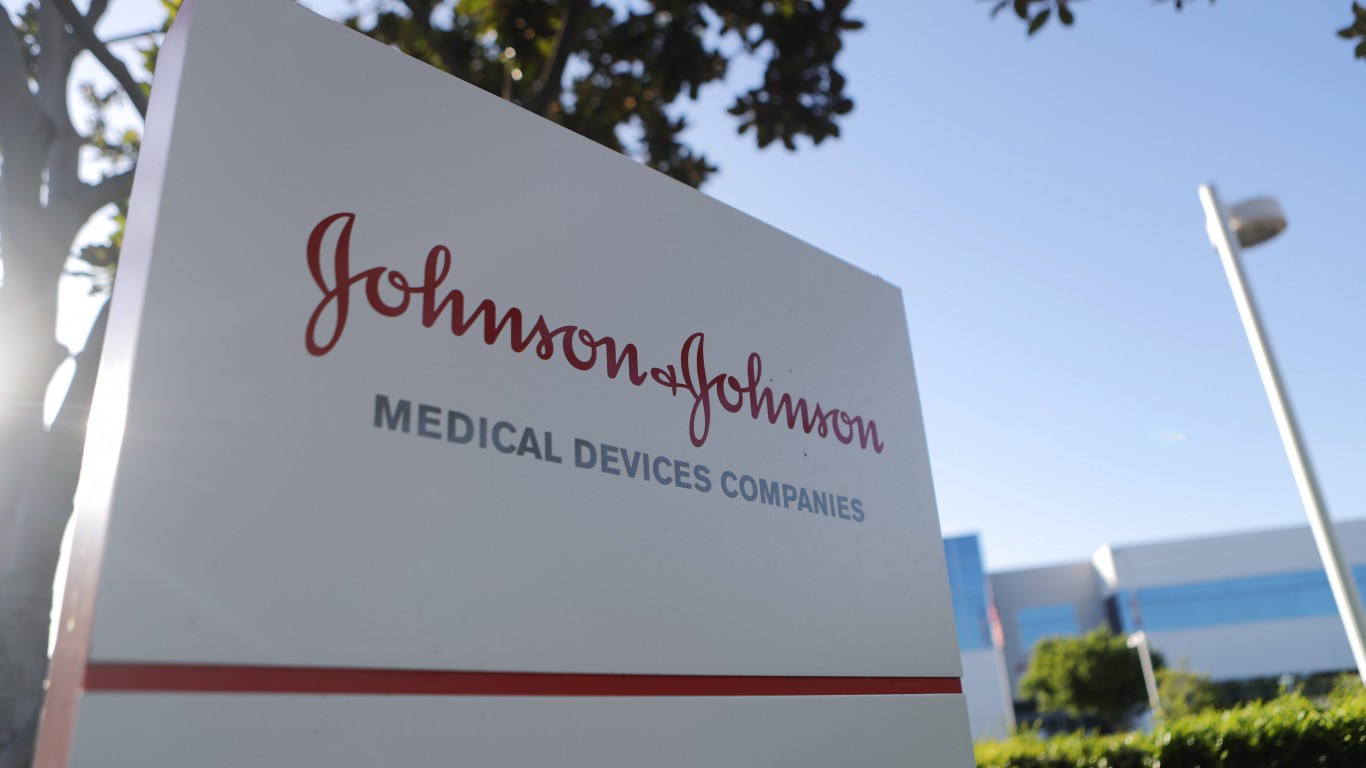
Johnson & Johnson (NYSE:JNJ | JNJ Price Prediction) orProcter & Gamble (NYSE:PG): If someone saving for retirement could hold only one Dividend King for the next 20 years, which one should it be? My pick is Johnson & Johnson, and the gap is wider than the yields suggest. Both stocks trade near 21 times forward earnings (P&G at 21), so valuation is effectively a tie. The decision comes down to three things that matter more to a retiree: dividend coverage, durability and structural risk.

Dividend Track Record and Coverage: J&J Has More Room to Keep Raising
P&G leads on track record. The company has raised its dividend for 70 consecutive years and paid one for 136 consecutive years, compared with J&J’s 64 consecutive years of increases. P&G also yields 2.98%, against 2.12% for J&J.
Coverage tips the scale the other way. J&J’s annualized dividend of $5.36 uses about 46% of the middle of its $11.50 to $11.65 adjusted EPS guidance. P&G’s $4.354 takes about 62% of its $7 core EPS middle. J&J expects free cash flow approaching $21 billion in 2026. P&G produced $15.84 billion in fiscal 2026 and plans to pay out over $10 billion in dividends in fiscal 2027. A long run only lasts a bad year if the payout has room behind it.
Winner: J&J

Business Durability Across Cycles: P&G Wins This Round
People keep buying Tide, Pampers and Charmin in any economy. P&G’s free cash flow rose 12.7% in fiscal 2026 even as operating income fell 3.44%. 9 of 10 categories and all seven regions held or grew organic sales. J&J’s reported results swing with its legal bills. In Q1 2026, net income fell 52.4% on litigation charges and free cash flow dropped 55.4% to $1.5B. Paper towel makers rarely end up in court on that scale.
Winner: P&G

Structural Risk: P&G’s Growth Problem Is Harder to Fix
P&G’s organic sales were flat in its fiscal fourth quarter. Volume, pricing and mix each added nothing. For fiscal 2027, management guides core EPS to $6.89 to $7.11 and expects about a $1.4 billion after-tax drag, or 8% of fiscal 2026 core EPS. When earnings stay flat, a dividend that keeps rising drives the payout ratio higher every year.
J&J’s main exposure is Stelara, which fell 55.7% in Q2 as biosimilars took share. That drug is now a small part of the business. Innovative Medicine chief Jennifer Taubert said on the Q2 call that “Stelara was only 4% of our Innovative Medicine business in the second quarter, and if you exclude that, 96% of our business actually grew over 14%.” Tremfya sales grew 71% to $2 billion, and J&J now has 28 products and platforms each bringing in more than $1 billion a year. Stelara’s decline is already absorbed. P&G’s cost pressure is still ahead of it.
Winner: J&J

Verdict: Johnson & Johnson Is My 20-Year Dividend King
J&J wins two of three, and the long-run record agrees. Its split-adjusted share price rose 180.5% over ten years, while P&G’s rose 116.7%. Its most recent dividend increase was 3.1%, a bit ahead of P&G’s 3%, and it starts from a lower payout ratio. Management is aiming “double-digit growth by the end of the decade.” That gives J&J more room to raise its dividend for 20 years than a company guiding to in-line to +3% EPS growth.
P&G is the better fit for one kind of investor: a retiree who needs the extra yield today and values a 136-year payment record above everything else. Over a 20-year horizon, J&J has the stronger dividend profile (we ranked ten Dividend Kings by valuation right now in a free report that you can grab here).
Here is what would break that thesis. Litigation charges were $330M in Q1 2026 and $854M in Q4 2025. If those keep rising, or if oncology falls short of its goal of more than $50 billion in sales by 2030, the coverage edge shrinks quickly. The events to track are the DePuy Synthes separation planned for mid-2027 and the size of J&J’s next annual dividend increase.
Contact [email protected] for any questions or corrections.
Joel South covers large-cap stocks, dividend investing, and major market trends, with a focus on earnings analysis, valuation, and turning complex data into actionable insights for investors.
He brings more than 15 years of experience as an investor and financial journalist, including 12 years at The Motley Fool, where he served as an investment analyst, Bureau Chief, and later led the Fool.com investing news desk. He has also co-hosted an investing podcast and appeared across TV and radio discussing market trends.