Gold Soared 50% This Year. Here’s Which ETF to Buy Before Rates Fall
Gold is up 50% in the last twelve months. I’ve been watching this asset for many years, and a move like that doesn’t happen because everyone’s feeling cheerful. It happens because something underneath the floorboards is rotting. Look at the…


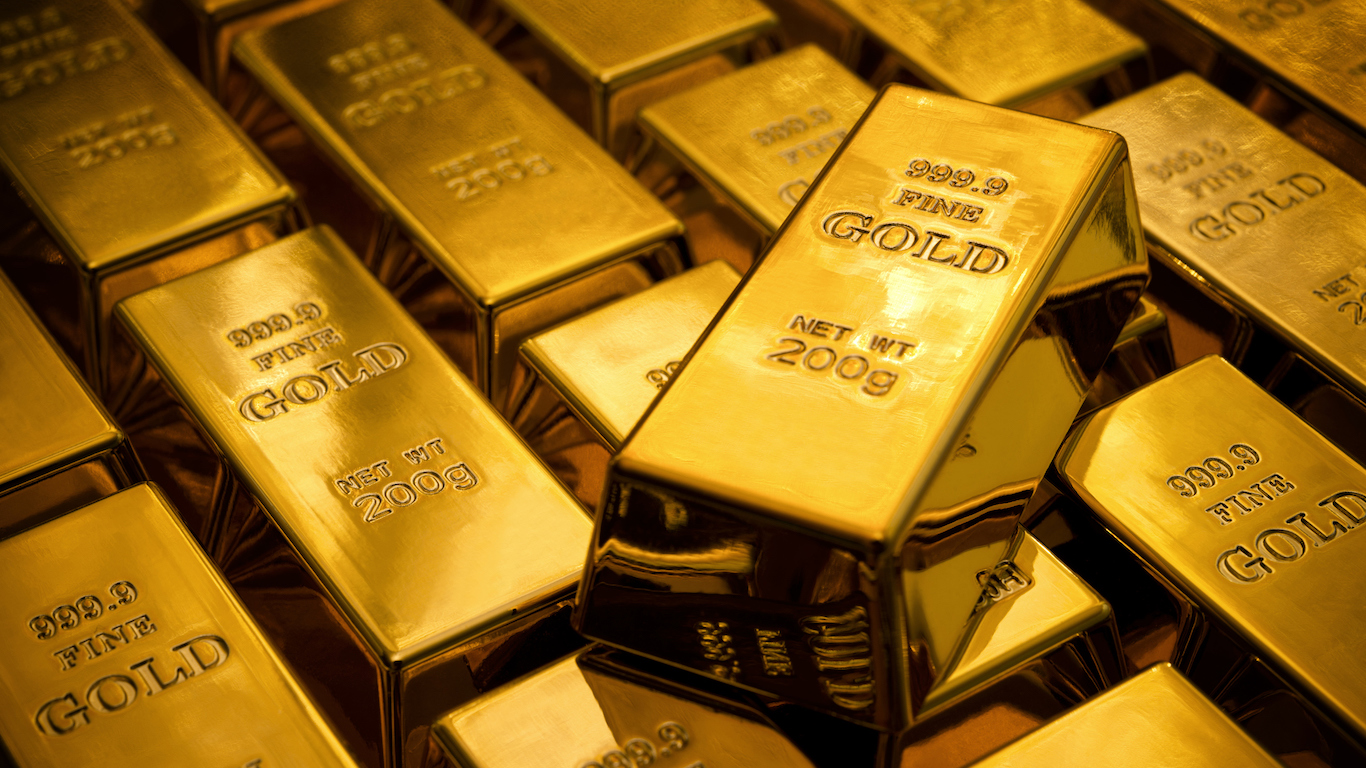
Gold is up 50% in the last twelve months.
I’ve been watching this asset for many years, and a move like that doesn’t happen because everyone’s feeling cheerful. It happens because something underneath the floorboards is rotting.
Look at the conditions. CPI hit 330.3 in March — sitting in the 90th percentile of its historical range. M2 has quietly added almost a trillion dollars since last April, climbing from $21.78 trillion to $22.67 trillion. The 10-year Treasury pays 4.3%, which sounds respectable until you remember inflation is still running hot above the Fed’s 2% target. That’s not a real yield worth getting out of bed for.
None of those conditions are easing. If anything, they’re digging in.
So in my view, the question isn’t whether to own gold right now. The question is how — and the vehicle you choose matters more than most people realize.
SPDR Gold Trust: The Institutional Standard for Physical Gold
SPDR Gold Trust (NYSEARCA:GLD) is the largest physically backed gold ETF in the world, holding approximately $159 billion in net assets. Each share represents a fractional claim on actual gold bars held in vaults, so GLD’s price tracks the metal directly with no equity risk layered on top. When gold moves, GLD moves with it.
The fund’s scale is its defining feature, as GLD trades with exceptional liquidity, making it the preferred vehicle for institutional investors, traders executing large positions, and anyone who needs to move in and out of gold exposure quickly without meaningful bid-ask friction. Of course, this level of liquidity comes at a cost: the expense ratio runs at 0.40% annually. For a long-term buy-and-hold investor, that fee drag compounds meaningfully over time. For a trader or institution that values deep liquidity above all else, it is a reasonable price.
GLD has been trading since November 2004, giving it over two decades of price history through multiple inflation cycles, financial crises, and rate environments. That track record means GLD is universally recognized and held across brokerage platforms, retirement accounts, and institutional portfolios. Its year-to-date gain of about 12% mirrors gold’s own move, which is exactly what a physically backed fund should do.
GLD is the most expensive of the three funds covered here, and it pays no dividend. Investors who plan to hold for years rather than trade actively will find the cost differential versus GLDM meaningful over time.
SPDR Gold MiniShares: The Long-Term Holder’s Version of GLD
World Gold Trust (SPDR Gold MiniShares) (NYSEARCA:GLDM) was designed specifically to address GLD’s cost structure. Launched in June 2018, it holds physical gold through the same custodial structure but charges an expense ratio of 0.10%, a fraction of what GLD costs. Over a decade, that difference in annual fees compounds into a real performance gap for a buy-and-hold investor.
The investment mechanics are identical to GLD: physical gold, no counterparty risk from derivatives, no equity exposure. GLDM’s performance confirms this, with a one-year return of about 51% and a year-to-date gain of roughly 12%, tracking gold almost precisely. The fund holds about $31.1 billion in assets, which is large enough to provide solid liquidity for retail investors and most advisors.
Where GLDM differs from GLD is in trading volume and per-share price. GLD’s higher share price and deeper trading volume make it preferable for institutional-scale trades. GLDM’s lower share price makes it accessible to smaller accounts and easier to dollar-cost-average into without fractional-share mechanics. For a retirement account investor making regular contributions, GLDM’s combination of physical gold exposure and low cost is a more efficient structure than GLD.
The caveat here is liquidity relative to GLD: GLDM is liquid enough for virtually all retail investors, but anyone executing very large trades may encounter slightly wider spreads than they would in GLD.
VanEck Gold Miners ETF: Amplified Exposure Through Mining Equity
VanEck Gold Miners ETF (NYSEARCA:GDX) takes a fundamentally different approach. Rather than holding gold itself, it holds the companies that extract gold from the ground, giving investors equity exposure to miners whose profitability scales with the gap between gold prices and their production costs.
That operating leverage is what separates GDX from the physical funds. When gold rises, a miner’s revenue goes up while fixed costs stay relatively stable, so profit margins expand faster than the metal’s price gain. This dynamic explains why GDX has returned roughly 103% over the past year while gold itself returned around 50%. The amplification is real and has been substantial in the current cycle.
GDX holds 52 positions across major gold producers and precious metals royalty companies. The top holdings include Newmont, Agnico Eagle, and Barrick Mining, which together account for a meaningful share of global gold production. The fund also includes royalty and streaming companies like Wheaton Precious Metals and Franco-Nevada, which together represent over 10% of the portfolio. Royalty companies earn revenue based on a percentage of mine output rather than bearing operating costs directly, giving GDX a layer of exposure that is more resilient to cost inflation at individual mines.
The fund carries net assets of about $28.2 billion and has been operating since May 2006. Its expense ratio of 0.51% is higher than either physical gold fund, reflecting the cost of managing an equity portfolio. The fund also pays a small dividend, yielding around 0.3%, though income is not the primary reason to own it.
GDX carries risks that physical gold funds avoid entirely. Individual companies face operational problems, geopolitical exposure in their mining jurisdictions, labor disputes, and management execution risk. GDX’s geographic spread across North America, Australia, Africa, and Asia provides diversification across those risks, but it does not eliminate them. In a sharp equity market selloff, miners can fall harder and faster than gold itself, even when the fundamental case for gold remains intact. Investors who want gold exposure without equity-specific volatility should stick with GLD or GLDM.
GLD, GLDM, or GDX: Matching the Fund to the Strategy
The choice between GLD and GLDM comes down to how you use them. You should choose GLD for large, active trades where liquidity is the priority, and GLDM for long-term, cost-conscious holders who want to minimize fee drag over time. GDX belongs in a different conversation entirely. It is for investors who believe gold’s bull case is strong enough to justify the added volatility of mining equities, and who want the operating leverage that turns a strong gold rally into an outsized equity gain. Because that amplification runs in both directions, GDX demands higher conviction and a longer time horizon to absorb the swings that come with equity ownership.
Contact [email protected] for any questions or corrections.
David Beren has been a Flywheel Publishing contributor since 2022. Writing for 24/7 Wall St. since 2023, David loves to write about topics of all shapes and sizes. As a technology expert, David focuses heavily on consumer electronics brands, automobiles, and general technology. He has previously written for LifeWire, formerly About.com. As a part-time freelance writer, David’s “day job” has been working on and leading social media for multiple Fortune 100 brands. David loves the flexibility of this field and its ability to reach customers exactly where they like to spend their time. Additionally, David previously published his own blog, TmoNews.com, which reached 3 million readers in its first year. In addition to freelance and social media work, David loves to spend time with his family and children and relive the glory days of video game consoles by playing any retro game console he can get his hands on.