




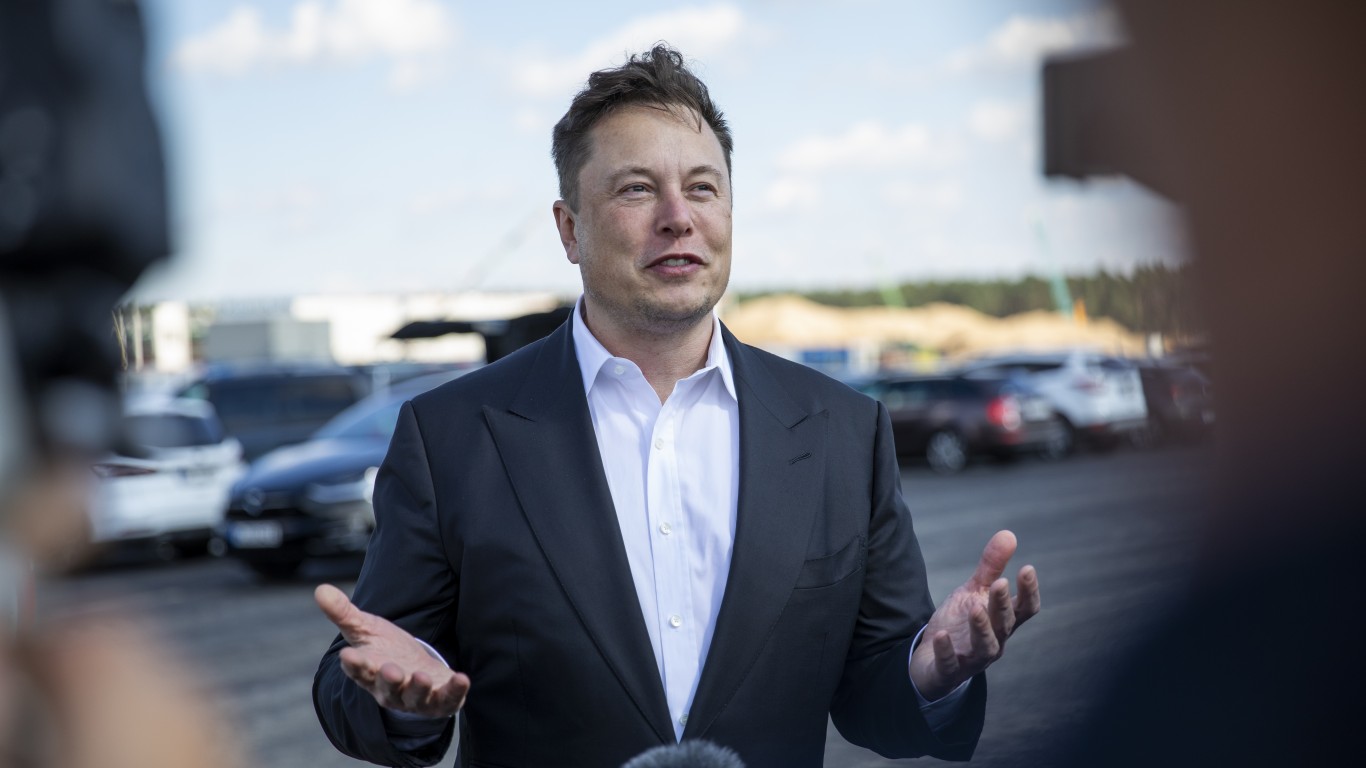
Tesla (NASDAQ: TSLA | TSLA Price Prediction) CEO Elon Musk has publicly taunted rivals: “What happened to all the Tesla killers?” With Tesla holding over 54% of the U.S. electric vehicle (EV) market share in Q1 2026, the taunt carries weight. But the competitive landscape is more nuanced than a single market share figure suggests. The answer, stock by stock, follows.
Rivian: Limping but Still in the Race
Rivian Automotive (NASDAQ: RIVN) is the most credible domestic EV pure-play challenger, though the numbers are humbling. Q4 2025 revenue fell 25.8% year over year to $1.29 billion, driven largely by a collapse in regulatory credits from $299 million to $29 million. The company did cross one meaningful threshold: full-year 2025 gross profit reached $144 million, up 112% year over year, marking the first full year of positive consolidated gross profit.
CEO R.J. Scaringe framed the next chapter around the R2 launch: “It’s incredibly exciting to see the early strong reviews of the R2 pre-production builds, and we can’t wait to get them to our customers next quarter.” First deliveries are targeted for Q2 2026. The R2 will eventually carry a base price around $45,000 with a cost structure less than half that of the R1. Polymarket puts the probability of Rivian announcing bankruptcy before 2027 at 16.5%. Verdict: the R2 launch is the make-or-break moment.
GM and Ford: Retreating, Not Advancing
General Motors (NYSE: GM) absorbed $7.2 billion in EV capacity realignment charges in Q4 2025 alone, on top of $1.59 billion in Q3 and $330 million in Q2. CEO Mary Barra pointed to operational resilience: “GM’s strong brands and winning vehicles, as well as our technology-driven services and operating discipline, have delivered consistently strong cash generation.” But that language describes the legacy internal combustion engine business, not an EV offensive. Full-year 2025 net income fell 55.11% year over year to $2.70 billion. Verdict: the EV killer thesis is dead at GM for now.
Ford (NYSE: F) recorded $10.70 billion in Model e asset impairments and EV program cancellations in Q4 2025, contributing to a GAAP net loss of $11.10 billion for the quarter. CEO Jim Farley called them “difficult but critical strategic decisions” and pointed toward an 8% adjusted EBIT margin target by 2029. Ford Model e is still projected to lose $4.0 billion to $4.5 billion in 2026. Verdict: dead as a near-term Tesla killer.
Pony AI: The Most Credible Long-Term Threat
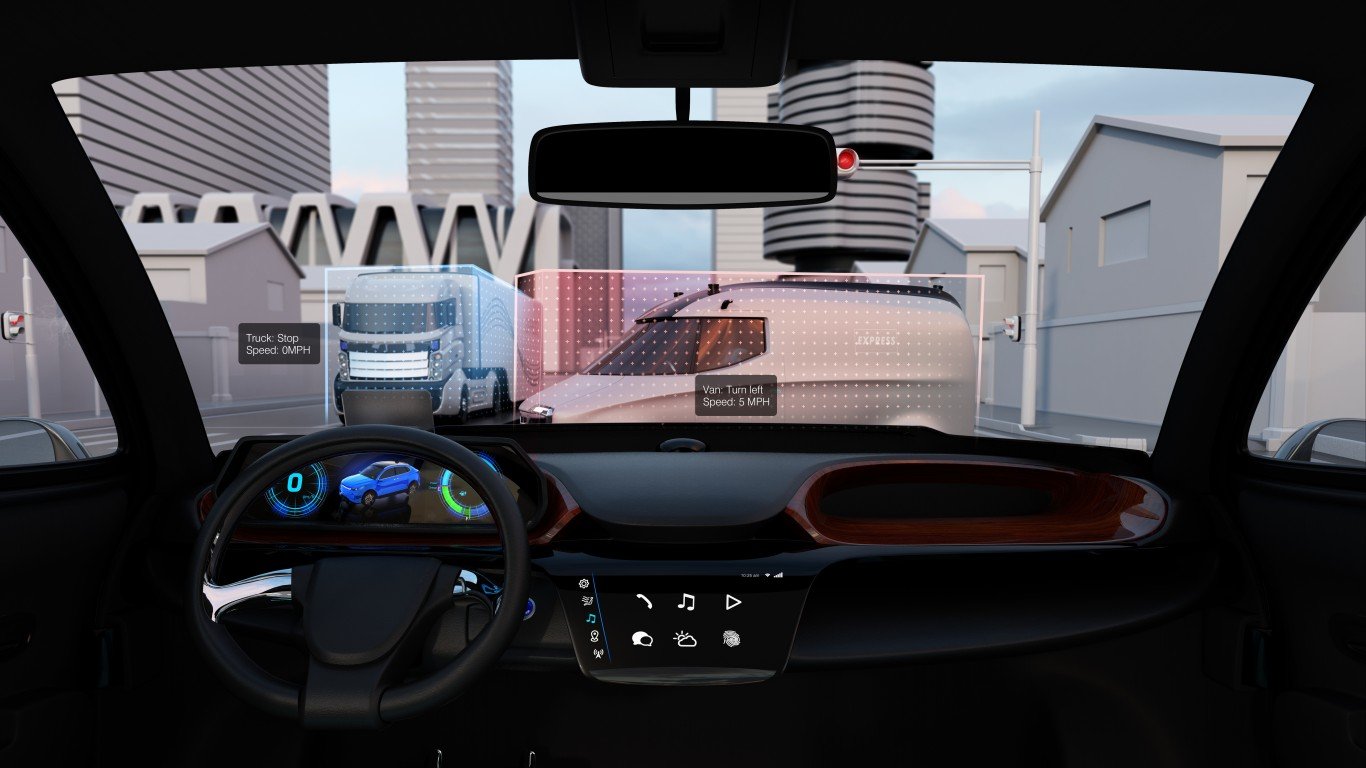
Pony AI (NASDAQ: PONY) competes in autonomous mobility, where Tesla’s robotaxi ambitions live. The Chinese company grew robotaxi revenue 159.5% year over year in Q4 2025 and achieved citywide unit economics breakeven in Guangzhou and Shenzhen. CEO James Peng set a concrete 2026 target: “We will accelerate top-line growth at faster speed, scale up fleet size to over 3,000 and expand operational areas to deploy Robotaxis in more than 20 cities globally.”
Prediction markets assign only a 10.5% probability to Tesla launching its robotaxi service in California by June 30, 2026. Tesla’s FSD subscriptions grew 38% year over year to 1.1 million, but Pony AI is already generating fare-paying rides at scale in China with a Toyota-backed production pipeline of 1,000 Gen-7 vehicles secured for 2026. Verdict: the most credible threat to Tesla’s autonomous future.












 Top Gaining Stocks
 Top Losing Stocks