Is XOVR the Best ETF to Buy as Private AI Companies Go Public?
Private AI companies are preparing for what could be the largest IPO wave in stock market history, and most retail investors have no way in. SpaceX has confidentially filed for an IPO targeting a valuation above $1.75 trillion, having already…


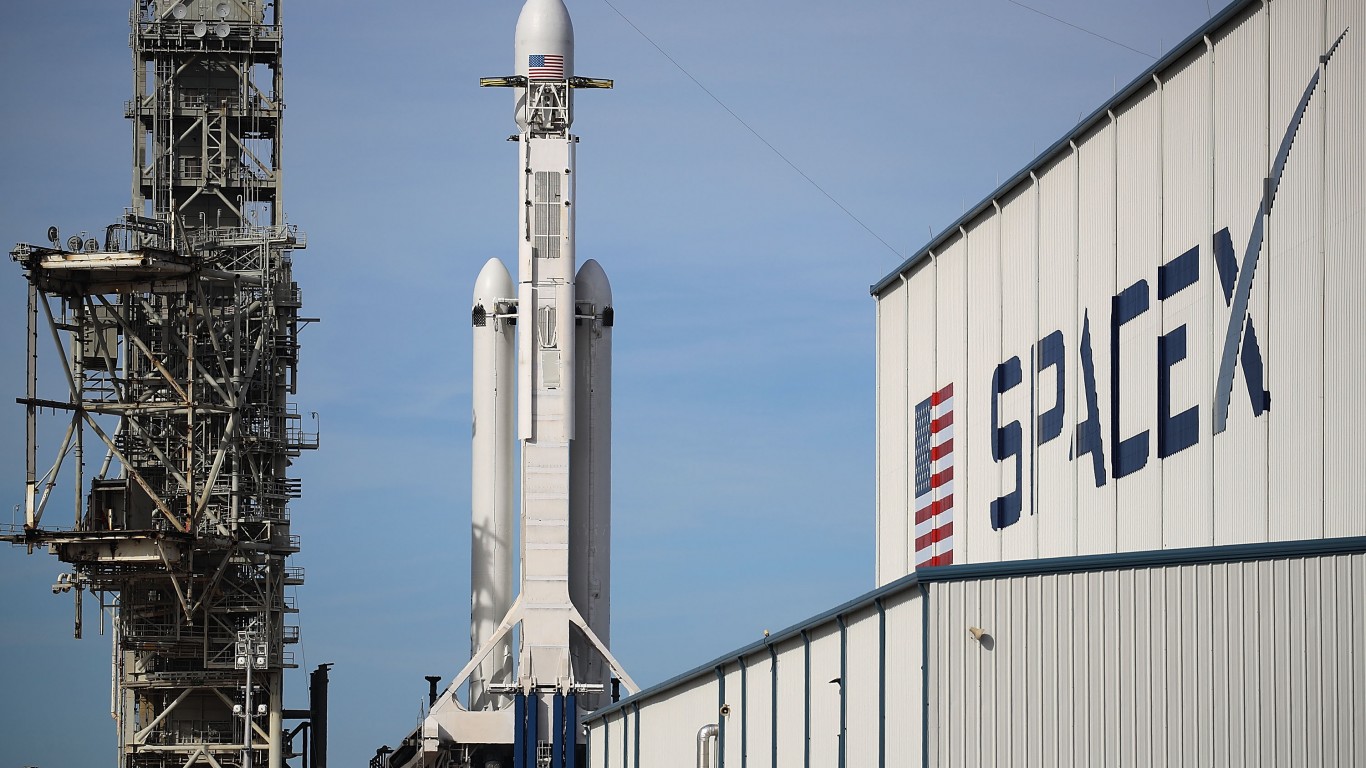
Private AI companies are preparing for what could be the largest IPO wave in stock market history, and most retail investors have no way in. SpaceX has confidentially filed for an IPO targeting a valuation above $1.75 trillion, having already absorbed xAI at a combined $1.25 trillion valuation. OpenAI, Anthropic, and Databricks are each expected to pursue public listings, with OpenAI potentially targeting a $1 trillion valuation before turning a profit. That pipeline is the entire thesis behind ERShares Private-Public Crossover ETF (NYSEARCA:XOVR).
The fund was built to give non-accredited retail investors access to late-stage private companies alongside a concentrated basket of public innovators. The execution, as the data shows, has been more complicated than the pitch suggests.
Two Sleeves, One Big Bet
XOVR operates through two distinct components. The public sleeve tracks a proprietary Entrepreneur 30 index, holding concentrated positions in high-growth names. Information Technology accounts for 20.4% of the portfolio, with top public holdings including NVIDIA (NASDAQ:NVDA | NVDA Price Prediction) at 10.3%, and Meta Platforms (NASDAQ:META). NVIDIA posted Q4 FY2026 revenue of $68.1 billion, up 73% year-over-year, while Palantir reported Q4 2025 US commercial revenue of $507 million, up 137% year-over-year.
The private sleeve is where XOVR earns its differentiation. SpaceX is its largest holding with 10.86% exposure. It is held through a special purpose vehicle structure. Anduril and Klarna round out the private holdings at smaller weights. For retail investors who cannot write a $250,000 check into a venture fund, that SPV access is genuinely novel.
IonQ (NYSE:IONQ) illustrates the kind of pre-commercial, high-growth technology the fund targets. IonQ posted FY2025 revenue of $130 million, up 202% year-over-year, and guides for $225 to $245 million in 2026 revenue.
The Promise vs. the Track Record
XOVR’s performance record reveals the core tension. The fund is down about 15% year-to-date through early April 2026. Over five years, it has remained flat. NVIDIA alone returned over 1,200% across the same five-year window. Even Palantir, despite a 28% year-to-date decline, has returned over 488% over five years.
XOVR lost roughly 4.6% annually since late 2024, even as SpaceX’s private valuation climbed. The disconnect stems from how the private sleeve is valued. SpaceX shares trade infrequently, meaning the fund’s stated NAV partly reflects manager judgment rather than continuous market pricing. Investors buying XOVR for SpaceX exposure may not see that value reflected until an actual IPO forces a market-clearing price.
Three Tradeoffs Every Buyer Should Understand
- Valuation opacity in the private sleeve: The SpaceX position is held through an SPV, and because SpaceX shares rarely trade, the fund’s daily NAV is partly a function of manager-applied valuation methodology rather than market prices. When SpaceX eventually goes public, that price discovery could work in either direction.
- The public sleeve largely duplicates cheaper alternatives: NVIDIA and Meta are available in any broad Nasdaq index fund at a fraction of XOVR’s 1.81% expense ratio. The public sleeve’s five-year underperformance against simple index products suggests the active selection process has not added value.
- Concentration risk is real: With zero allocation to Consumer Staples, Utilities, Energy, or Real Estate and a private sleeve dominated by a single name, XOVR behaves more like a concentrated speculative position than a diversified ETF. In a risk-off environment, that concentration amplifies drawdowns.
On Reddit’s r/ETFs community, the debate around XOVR centers on this tension. One widely upvoted thread from April 2026 noted that while SpaceX has filed for an IPO targeting a valuation above $1.75 trillion, XOVR investors have not seen those private gains reflected in their shares. The community consensus leans toward XOVR as a speculative SpaceX proxy rather than a core AI portfolio holding.
XOVR makes sense as a small speculative allocation for growth-oriented investors who want pre-IPO SpaceX exposure and accept that the public equity sleeve will likely trail a simple Nasdaq index fund. Anyone expecting the private AI IPO wave to translate directly into strong total returns should recognize that the math has not worked that way historically.
Contact [email protected] for any questions or corrections.
Omor Ibne Ehsan is a writer at 24/7 Wall St. He is a self-taught investor with a focus on growth, cyclical, and dividend equities that have strong fundamentals, value, and long-term potential. He also has an interest in high-risk, high-reward investments such as penny stocks.