Ripple (XRP) News: XRP Goes Live on Solana as the Price Hits $1.50
Solana just announced that XRP (CRYPTO: XRP) is live on its network—a move that connects two of crypto’s biggest ecosystems for the first time. XRP is now available on Solana as wXRP, a 1:1 custody-backed wrapped token issued by Hex…

This post may contain links from our sponsors and affiliates, and Flywheel Publishing may receive compensation for actions taken through them.

Solana just announced that XRP (CRYPTO: XRP) is live on its network—a move that connects two of crypto’s biggest ecosystems for the first time. XRP is now available on Solana as wXRP, a 1:1 custody-backed wrapped token issued by Hex Trust and bridged through LayerZero, with over $100 million in liquidity behind the launch. It’s available on Jupiter, Phantom, Titan Exchange, and Meteora as of today.
The news came on the same day the XRP price broke past $1.50 for the first time since February. A broader market rally has kicked in after Iran declared the Strait of Hormuz open and oil prices dropped over 10%. XRP had failed at $1.45 three times this year—and it took a Solana integration and a geopolitical shift happening on the same day to finally push it through.
How XRP Now Works on Solana Through wXRP
wXRP is a wrapped version of XRP that runs on the Solana blockchain. Every wXRP token is backed 1:1 by native XRP sitting in segregated custody with Hex Trust, a regulated digital asset custodian based in Hong Kong.
If you hold wXRP, you can redeem it for real XRP on the XRP Ledger at any time. The backing is enforced through a mint-and-burn mechanism—new wXRP only gets created when an equal amount of XRP is deposited into custody, and it gets burned when someone redeems it.
The bridge between chains runs on LayerZero’s Omnichain Fungible Token (OFT) standard instead of the kind of unregulated bridges that have been hacked repeatedly in crypto. LayerZero processed over 85 million cross-chain messages in 2025, and the OFT standard lets wXRP move between Solana and future chains like Ethereum, Optimism, and HyperEVM without going through a third party that adds risk.
XRP has always been a payments asset—fast, cheap cross-border settlements on its own ledger. But the XRP Ledger’s DeFi ecosystem has been small compared to where the rest of crypto has gone. Solana, on the other hand, processes over 30 million transactions a day and runs one of crypto’s deepest DeFi ecosystems, with billions in daily DEX volume across hundreds of protocols.
With wXRP, you can now trade XRP on Jupiter, provide liquidity on Meteora, use Phantom wallet, or access Titan Exchange—all on Solana. wXRP also trades against Ripple’s RLUSD stablecoin on supported networks, so for the first time, XRP and RLUSD work together across chains rather than just on the XRP Ledger.
What’s Behind XRP’s Rally to $1.50?
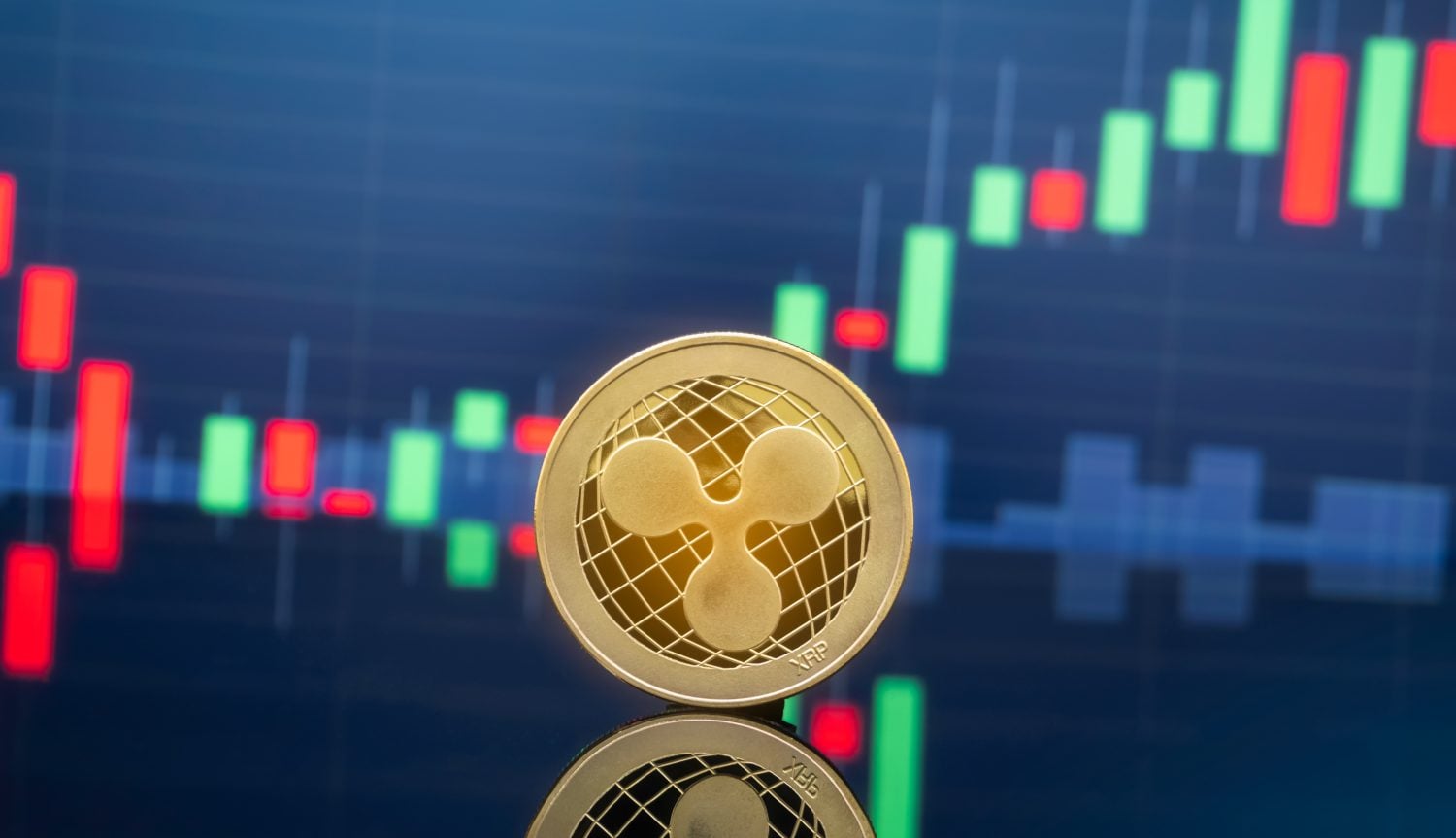
The broader crypto market has been stuck in a fear cycle since February, when the U.S.-Iran war started and oil prices shot above $100 a barrel. Every rally attempt since then has faded as the conflict escalated, and XRP was no exception—it stalled at $1.45 three separate times this year as sellers who bought between $1.45 and $1.47 in January kept selling to break even.
That changed today after Iran’s Foreign Minister Abbas Araghchi declared the Strait of Hormuz completely open after Israel and Lebanon agreed to a 10-day ceasefire, and oil prices dropped over 10% within hours. Bitcoin broke above $77,000 for the first time since February, pulling the rest of crypto higher with it.
XRP has gained over 5% on the day to hit $1.50, outperforming Bitcoin, Ethereum, and Solana. The Hormuz reopening gave every crypto asset a tailwind, but XRP had something the others didn’t—the Solana announcement dropping. So instead of just riding the macro wave, XRP had its own reason to rally on top of it—and that’s what pushed it through to $1.50.
The Levels to Watch After XRP’s $1.50 Breakout
Breaking $1.50 was a big deal because of how many times XRP had stalled there, but it doesn’t mean the hard part is over. XRP is now trading above its 50-day EMA at $1.40, which is a good sign after months of sitting below it. The 100-day EMA sits at $1.55, and XRP hasn’t traded above it since February. If it clears $1.55 and holds, that would be the best sign XRP has had all year.
Beyond that, the 200-day EMA sits around $1.80, and that’s where things really change. XRP lost over 27% in Q1, and only a sustained move above $1.80 would prove that the slide is actually behind it.
For XRP to reach higher price levels, a few things need to go right at the same time. The CLARITY Act markup is still expected in the final weeks of April, the ceasefire between the U.S. and Iran expires on April 22, and Bitcoin needs to hold above $77,000 to keep the broader rally going.
If those things line up, $1.50 could flip from resistance to support and XRP could push toward $1.55 and eventually $1.80. Should the ceasefire fall apart or the CLARITY Act stall, the XRP price could slip back to $1.30 or lower.
Is XRP’s Solana Launch a Turning Point?
XRP going live on Solana means it’s now plugged into a $6.6 billion DeFi ecosystem instead of relying on its own ledger, which ranks outside the top 40 in DeFi activity. That opens up a whole new use case for XRP beyond cross-border payments—and it doesn’t need banks to get on board for it to matter.
The big question now is how the next two weeks play out. The ceasefire expires on April 22, the CLARITY Act markup could move any day, and Bitcoin needs to hold its current level to keep the rest of crypto moving. If all three break the right way, XRP at $1.50 looks like the start of something, and it could be well on its way to test the $3.65 cycle high.
Contact [email protected] for any questions or corrections.
Sam Daodu is a crypto analyst who's spent nearly a decade making blockchain understandable—no easy task when most whitepapers read like fever dreams. He writes for 24/7 Wall St., covering Bitcoin, altcoins, and crypto market analysis for investors. Before crypto, he was a tech writer (back when explaining "the cloud" was peak innovation). Since 2018, he's written for CoinTelegraph, Yahoo Finance, The Block, Cryptonews, Zypto, Rain, and more—basically anywhere people want crypto news without the headache. Sam runs MacLabs Marketing, a content agency for crypto brands tired of sounding like AI wrote their website. He also publishes free crypto education on his site for Web3 enthusiasts who think "gas fees" is a typo. When he's not writing or staring at charts, Sam's either: - Watching anime (currently convinced One Piece has better tokenomics than most altcoins) - At the gym sculpting himself into a Greek god - Listening to the music your mum warned you only bad boys listen to Connect: LinkedIn | Email | MacLabs Marketing