The Global Energy ETF That Turns a Middle East Crisis Into a Worldwide Dividend Machine
Oil crossed $114 a barrel in early April 2026, a level not seen since 2022, and iShares Global Energy ETF (NYSEARCA:IXC) was up nearly 29% year-to-date by mid-April, collecting dividends from Riyadh to Rotterdam while the Strait of Hormuz sat…

This post may contain links from our sponsors and affiliates, and Flywheel Publishing may receive compensation for actions taken through them.
Oil crossed $114 a barrel in early April 2026, a level not seen since 2022, and iShares Global Energy ETF (NYSEARCA:IXC) was up nearly 29% year-to-date by mid-April, collecting dividends from Riyadh to Rotterdam while the Strait of Hormuz sat effectively closed to tanker traffic. Whether this holds depends on how long the Hormuz disruption lasts and whether oil prices stay elevated once the geopolitical premium fades.
How the Iran Conflict Reshaped Oil Markets
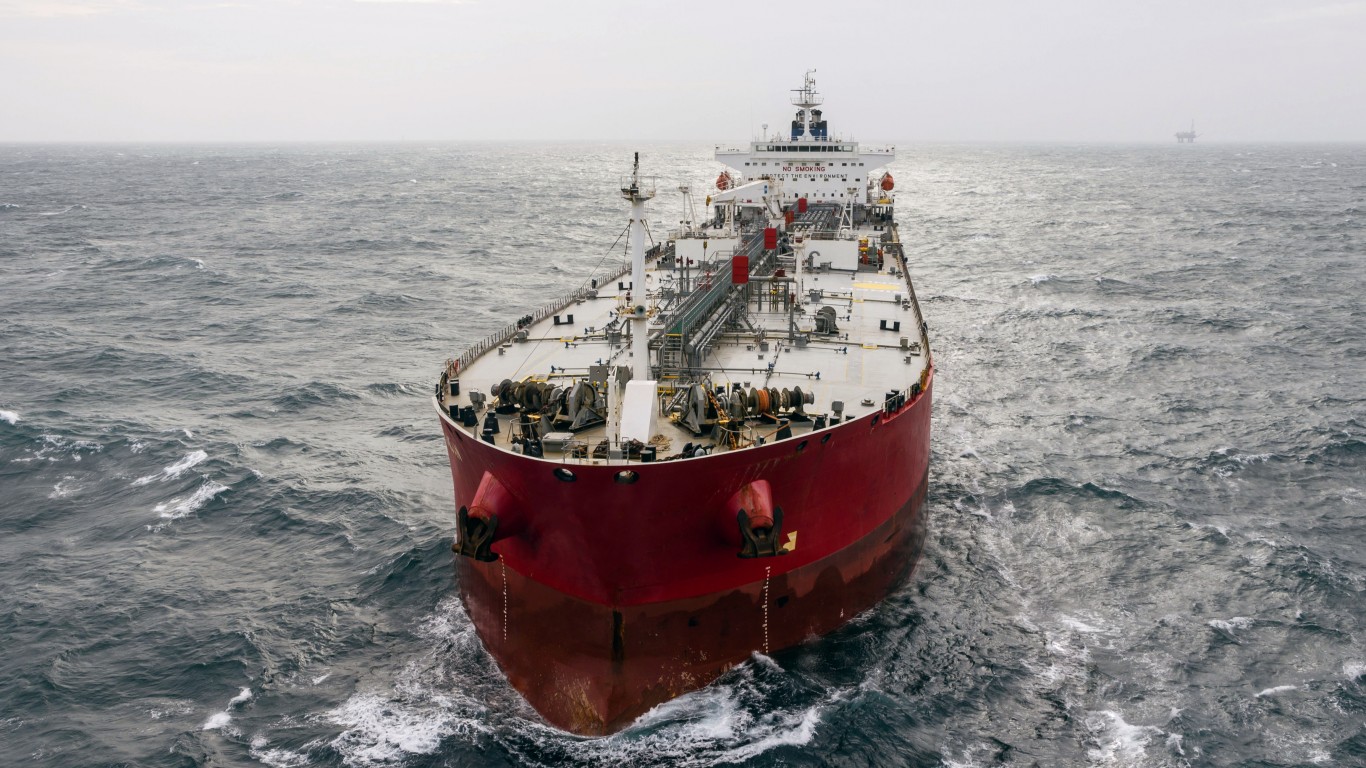
The U.S. and Israel attacked Iran earlier this year, triggering a conflict that spread across the region. Iran responded by effectively shutting the Strait of Hormuz, a critical global oil chokepoint. Crude oil, which had spent most of 2025 in the $65-$80 range, began climbing. By late March, it had broken through $104, and by early April, it settled above $113.
A two-week ceasefire brokered by Pakistan took hold, but peace talks in Islamabad collapsed. Trump announced a naval blockade of Iranian ports, and markets have priced in a prolonged standoff. WTI remains above $92, well above where it started the year.
What IXC Holds and How It Works
IXC tracks the S&P Global 1200 Energy Index, giving investors exposure to the world’s largest energy companies across upstream, midstream, downstream, and services. The fund has been around since November 2001, holds ~$2.9 billion in net assets, and charges just 0.04% in annual fees.
The return engine is straightforward: own the world’s most cash-generative energy businesses, collect their dividends, and benefit when oil prices rise. The fund’s current 2.9% dividend yield is paid semi-annually, with recent distributions of $0.848 per share in December 2025 and $0.697 in June 2025. It has maintained this cadence without interruption for 25 years, through the 2008 financial crisis, the 2020 COVID collapse, and every oil cycle in between.
The holdings reflect a global tilt. ExxonMobil (NYSE:XOM | XOM Price Prediction) sits at 18.5% of the portfolio and Chevron (NYSE:CVX) at 10.6%, but the fund also carries Shell (NYSE:SHEL) at 7%, TotalEnergies (NYSE:TTE) at 4.9%, and BP (NYSE:BP) at 3.1%. The combined supermajor weighting across ExxonMobil, Chevron, Shell, TotalEnergies, and BP is ~46% of the fund, with midstream and other global names rounding out the remainder.
The Numbers Behind Recent Performance
IXC’s one-year return stands at nearly 55%, and the five-year return is 167%. That is not a dividend story alone. The geopolitical premium embedded in oil prices has been doing heavy lifting. A Seeking Alpha analysis from September 2025 cited a 14.5x P/E and a 10.2% long-term EPS growth rate as reasons for optimism, even before the Iran conflict began.
Annual payouts peaked near $2.78 in a single December 2007 payment during the last energy supercycle, collapsed to sub-$0.40 ranges during the post-crisis years, and have recovered to $1.74 for full-year 2024. Investors who held through lean years were rewarded when energy margins recovered. The dividend follows oil prices with a lag, and oil prices right now are extremely elevated.
Three Key Tradeoffs
- Cyclicality is the strategy. IXC’s dividend fluctuates with energy sector earnings. The $1.74 paid in 2024 compares to just $1.35 in 2023. Investors needing predictable income will find the semi-annual, variable structure uncomfortable.
- Concentration risk is real. ExxonMobil alone is nearly one-fifth of the fund. A Seeking Alpha analysis noted that four companies comprise over 40% of holdings. If U.S. supermajors underperform due to regulatory pressure or a demand downturn, the fund feels it immediately.
- The crisis premium cuts both ways. Reuters reported in March that major oil company shares saw “only limited gains” despite the oil price surge, because traders had priced in a temporary disruption. If the Hormuz situation resolves quickly, the geopolitical premium in crude could unwind sharply, pulling IXC back toward pre-crisis levels near $42. The IEA had already flagged oversupply risks and trimmed 2026 demand growth forecasts before the conflict began.
Investors drawn to IXC typically want genuine global diversification across the full oil and gas value chain and accept that dividends will ebb and flow with commodity cycles, including the inevitable moments when geopolitical premiums dissolve.
Contact [email protected] for any questions or corrections.
Omor Ibne Ehsan is a writer at 24/7 Wall St. He is a self-taught investor with a focus on growth, cyclical, and dividend equities that have strong fundamentals, value, and long-term potential. He also has an interest in high-risk, high-reward investments such as penny stocks.