Elon’s Terafab Is Moving at “Light Speed” — and That Could Mean Big Things for Tesla
Elon Musk's Terafab may be the most ambitious undertaking Tesla or any of his companies has ever attempted. Capable Optimus humanoid robots, fully reusable rockets, and long-range Mars colonization plans each carry their own gravity. The Terafab is different: it…

Tesla (NASDAQ:TSLA | TSLA Price Prediction | TSLA Price Prediction) CEO Elon Musk has never been shy about ambitious bets, but the Terafab may be the most consequential undertaking any of his companies has ever attempted. Capable Optimus humanoid robots, fully reusable rockets, and long-range Mars colonization plans each carry their own gravity. The Terafab is different. It is a direct challenge to the global semiconductor supply chain itself.
When it comes to building a foundry that would reduce dependence on a third party like Taiwan Semiconductor (NYSE:TSM), Musk’s ambitions have genuinely reached a new level. Even with the involvement of Intel (NASDAQ:INTC), whose stock rose roughly 50% over the course of April 2026 (the largest monthly gain in the company’s 57-year history) after the Terafab partnership was announced, this is a profoundly expensive endeavor with little room for error. The potential rewards, however, scale with the risk.
The strategic logic is straightforward. Tesla’s AI roadmap, from Full Self-Driving to Optimus robots to Dojo training clusters, requires far more leading-edge silicon than existing foundry capacity can reliably supply. Musk has publicly acknowledged his gratitude to current suppliers Samsung, TSMC, and Micron, while also noting there is a hard ceiling on how fast they are willing to expand on his behalf. Terafab is the answer to that ceiling.
The Terafab is official. And the pace is accelerating.
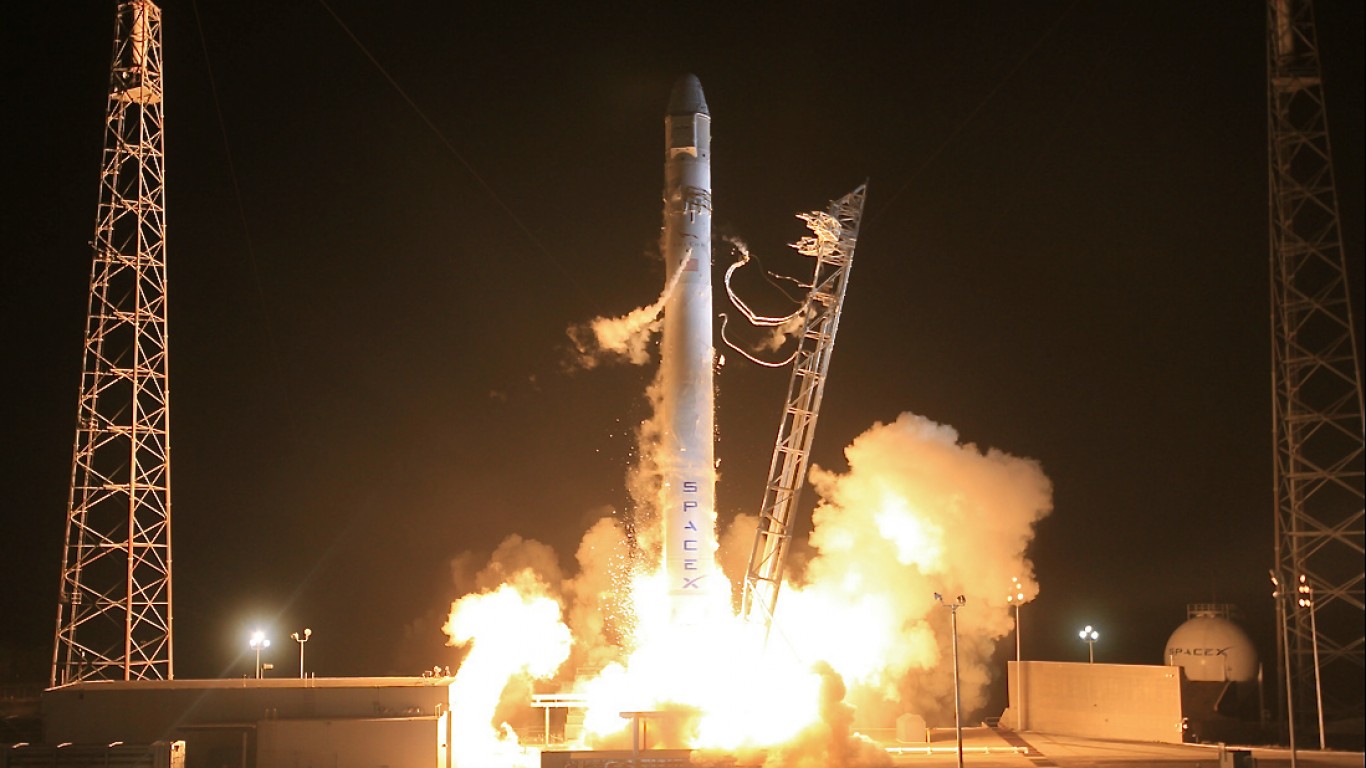
Musk officially launched the Terafab project on March 21, 2026, at the historic Seaholm Power Plant in Austin, calling it “the most epic chip-building exercise in history by far.” The facility is structured as a joint venture between Tesla, SpaceX, and xAI, which SpaceX acquired in an all-stock deal in February 2026. The planned site is the North Campus of Giga Texas, and its design is unusually ambitious: chip design, lithography, fabrication, memory production, advanced packaging, and testing would all happen under a single roof. That kind of end-to-end vertical integration does not exist at any other semiconductor facility on earth.
The cost figures have grown considerably since the project first surfaced. The initial announcement carried a headline figure of roughly $25 billion. A public hearing notice filed in Grimes County, Texas, later revealed that the first phase alone is projected to cost $55 billion, with the full buildout potentially reaching $119 billion. SpaceX, which controls the filing, is seeking a property tax abatement agreement with the county. Chip analyst Ben Bajarin of Creative Strategies has described the Terafab as a “15-year strategy,” which frames the capital commitment in its proper context. This is not a near-term play.
The production targets remain staggering even after scaling back some early claims. The facility is designed to target 2-nanometer-class process technology and an initial output of 100,000 wafer starts per month, scaling toward 1 million wafer starts per month at full capacity. For context, that ceiling would represent roughly 70% of TSMC’s entire current global output, from a single facility run by companies that have never fabricated a chip at scale. Musk has since walked back some of those figures, saying the research fab is really intended “to try out ideas,” but the long-term ambition has not changed. Tesla CFO Vaibhav Taneja has reinforced that goal, noting the facility will co-locate logic, memory, and advanced packaging to allow rapid iteration on chip designs without shipping wafers between facilities.
Intel, the 14A node, and what the partnership actually means
Intel posted on X on April 7, 2026, that it was “proud to join the Terafab project” with SpaceX, xAI, and Tesla “to help refactor silicon fab technology.” On Tesla’s Q1 2026 earnings call two weeks later, Musk confirmed that Tesla plans to use Intel’s forthcoming 14A process node to produce chips at the facility, describing it as “state-of-the-art.” Intel CEO Lip-Bu Tan, who had previously warned that the foundry business could be shut down entirely if it failed to attract outside clients, described the partnership as a potential turning point. Tesla became the first major external customer committed to Intel’s 14A node.
The 14A node is still several years away from high-volume production. Intel has provided customers with a PDK 0.5 release as of mid-2026, with a more mature PDK 0.9 targeted for October 2026. Risk production is scheduled for 2028, with high-volume manufacturing expected in 2029. For the Terafab, this timeline means that the Intel-powered, Tesla-branded silicon the facility is ultimately designed to produce is realistically a 2029 or later proposition. Intel’s 14A node does offer meaningful performance advantages over its 18A predecessor, including a 15% to 20% speed improvement, 30% higher transistor density, and 25% to 35% lower power consumption, according to Intel’s own disclosed specifications.
In the meantime, Tesla’s own chip roadmap has hit a meaningful near-term milestone. On April 15, 2026, Musk announced that the AI5 inference processor had completed tape-out, sending the finalized design to TSMC and Samsung for fabrication. Tesla’s own SEC filings confirm the AI5 design was completed in April. Volume production is not expected until mid-2027, and the Cybercab is scheduled to launch on the existing AI4 platform. The AI5 tape-out confirms that Tesla’s in-house silicon team is executing at a level that lends credibility to the Terafab’s longer-term ambitions. AI6 and Dojo3 are already in development in parallel.
Can Terafab actually change the timeline for Tesla and SpaceX?
Tesla posted revenue of $22.39 billion in Q1 2026, up 16% year over year, with total GAAP gross margin recovering to 21.1% from 16.3% in the same period a year earlier, a 478 basis point improvement. Automotive gross margin, excluding regulatory credits, came in at 19.2%, the highest of any quarter in 2025 or early 2026. Non-GAAP EPS came in at $0.41, and free cash flow of $1.44 billion surprised analysts who had expected negative cash generation. Those are solid numbers. Capex guidance for the full year jumped to over $25 billion, well above prior plans of $20 billion, as the company redirects capital toward AI compute, Cybercab production, and Optimus. The Terafab adds a separate, multidecade capital obligation on top of that already elevated spending profile.
For those trying to gauge how the market values Musk’s broader empire, the SpaceX IPO delivered a clear data point. SpaceX listed on Nasdaq under the ticker SPCX on June 12, 2026, raising $75 billion by selling 555.6 million shares at $135 each, making it the largest IPO in Wall Street history. The stock opened at $150 and closed its first trading day at $160.95, up 19%, giving SpaceX a market capitalization at close of approximately $2.1 trillion. The Terafab’s role as shared infrastructure spanning Tesla, SpaceX, and xAI is now embedded in a publicly visible, publicly priced investment story.
Whether Musk can compress a project that industry veterans call a 15-year strategy into a faster timeline is the central question. The research fab at Giga Texas is designed precisely to enable rapid iteration, making and testing chips on site without shipping wafers between facilities. That loop, if it works, could accelerate the learning curve considerably. But semiconductor manufacturing has humbled far better-funded and more experienced players. The capital is committed. The partnerships are in place. The chips will tell the rest of the story.
Editor’s note: This pass corrects Intel’s stock gain during April 2026 from “more than doubled” to roughly 50% (its largest monthly move since 1974), distinguishes Tesla’s total GAAP gross margin of 21.1% from its automotive gross margin excluding credits of 19.2%, corrects SpaceX’s Day 1 market capitalization to approximately $2.1 trillion at the closing price of $160.95, and adds that SpaceX raised $75 billion in its record IPO. It also incorporates Tesla’s Q1 2026 free cash flow of $1.44 billion and Intel CEO Lip-Bu Tan’s prior warnings about the foundry business’s survival, along with Intel’s 14A performance specifications.
Contact [email protected] for any questions or corrections.
Joey is a 24/7 Wall St. contributor and seasoned investment writer whose work can also be found in publications such as The Motley Fool and TipRanks. Holding a B.A.Sc in Computer Engineering from the University of British Columbia (UBC), Joey has leveraged his technical background to provide insightful stock analyses to readers.
Joey's investment philosophy is heavily influenced by Warren Buffett's value investing principles. As a dedicated Buffett disciple, Joey is committed to unearthing value in the tech sector and beyond.