Which of These 5 Companies Benefits Most From Easing China Tariffs?
Washington is signaling renewed engagement with Beijing, and investors are trying to figure out which stocks would benefit if tariffs ease, export controls loosen, and Chinese consumer demand stabilizes. Prediction markets currently put the odds of a tariff reduction announcement…

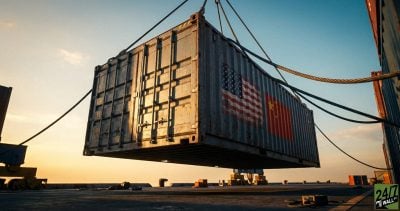
Washington is signaling renewed engagement with Beijing, and investors are trying to figure out which stocks would benefit if tariffs ease, export controls loosen, and Chinese consumer demand stabilizes. Prediction markets currently put the odds of a tariff reduction announcement at 53% and AI export restriction relief at roughly 51%. Here we look at five names with meaningful China exposure to see whose business is most directly levered to a thaw.
Five Stocks Most Exposed to a U.S.-China Thaw
Apple (NASDAQ: AAPL | AAPL Price Prediction) is the cleanest play. iPhones are largely assembled in China, and Greater China generated $16.4 billion in the March quarter, or roughly 18.0% of total revenue. Tim Cook cited $1.4 billion in Q1 tariff costs, so relief flows straight to margins.

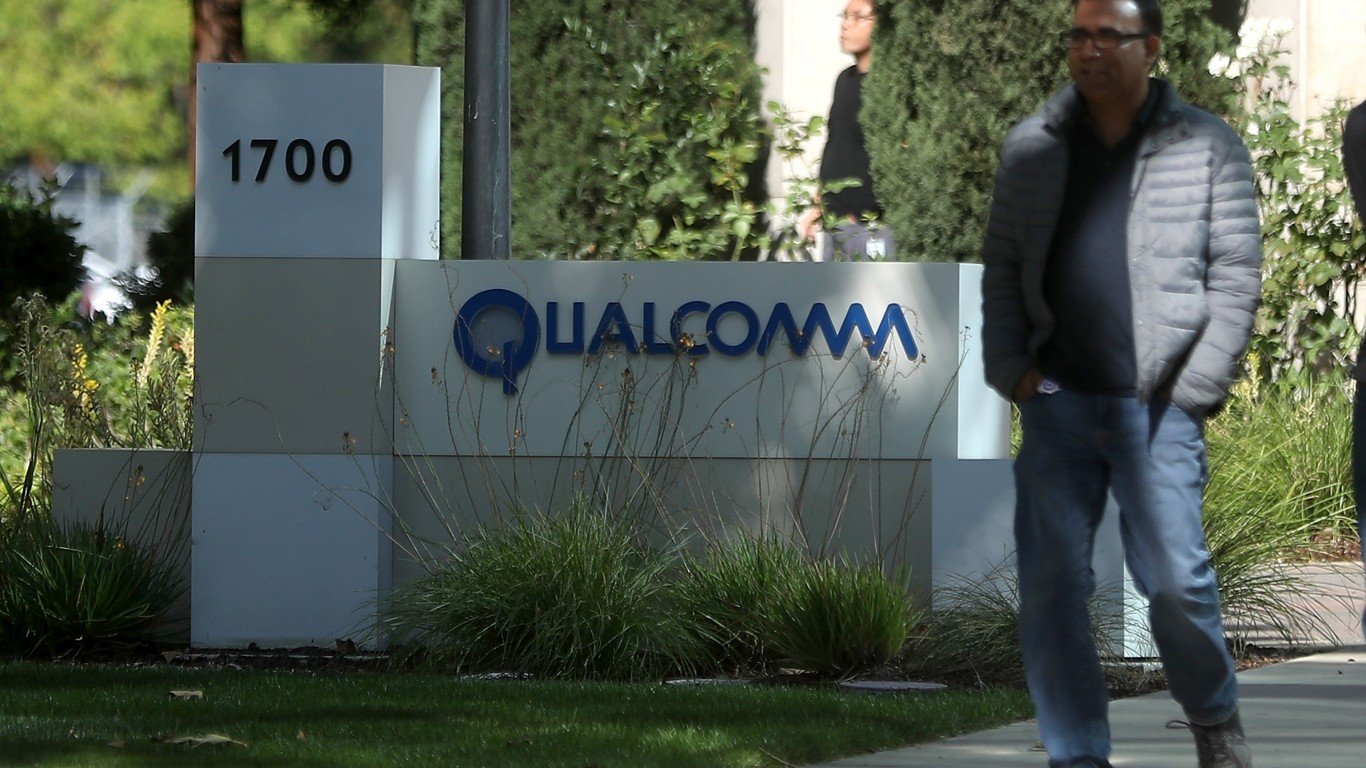
Qualcomm (NASDAQ: QCOM) sells Snapdragon chips powering most premium Chinese Android phones. Handset revenue fell 13% to $6.02 billion last quarter, weighed by Chinese OEM softness.
Broadcom (NASDAQ: AVGO) makes custom AI accelerators and networking silicon. AI revenue hit $8.4 billion, up 106% year-over-year, with management guiding to $10.7 billion next quarter. China export rules cap a meaningful slice of that market.
NXP Semiconductors (NASDAQ: NXPI) supplies automotive and industrial chips, with automotive at $1.782 billion last quarter. Chinese EV and industrial customers are core to that book.
Nike (NYSE: NKE) manufactures heavily in Asia and depends on the Chinese consumer. Greater China revenue was $1.615 billion last quarter, down 7% reported.
How Each Business Is Positioned
| Company | China Exposure | Trend Lever |
|---|---|---|
| Apple | Manufacturing + ~17% revenue | Tariffs, consumer demand, App Store |
| Qualcomm | Chinese OEM handset sales | Snapdragon volume recovery |
| Broadcom | AI chip export limits | Easing advanced-chip restrictions |
| NXP | Auto/industrial customers in China | Supply chain stability |
| Nike | Manufacturing + ~14% revenue | Tariff relief, China consumer |
Apple sits on both sides of the trade: it builds product in China and sells heavily into it. Qualcomm and NXP are pure customer-demand stories. Broadcom’s lever is narrower but powerful, tied to whether advanced AI silicon can ship more freely. Nike’s path is longest, since the company is rebuilding brand momentum on top of any policy tailwind.
What Management Is Saying
Apple CEO Tim Cook: “Greater China was up 38% year on year. It was driven by iPhone, where we set an all-time revenue record.”
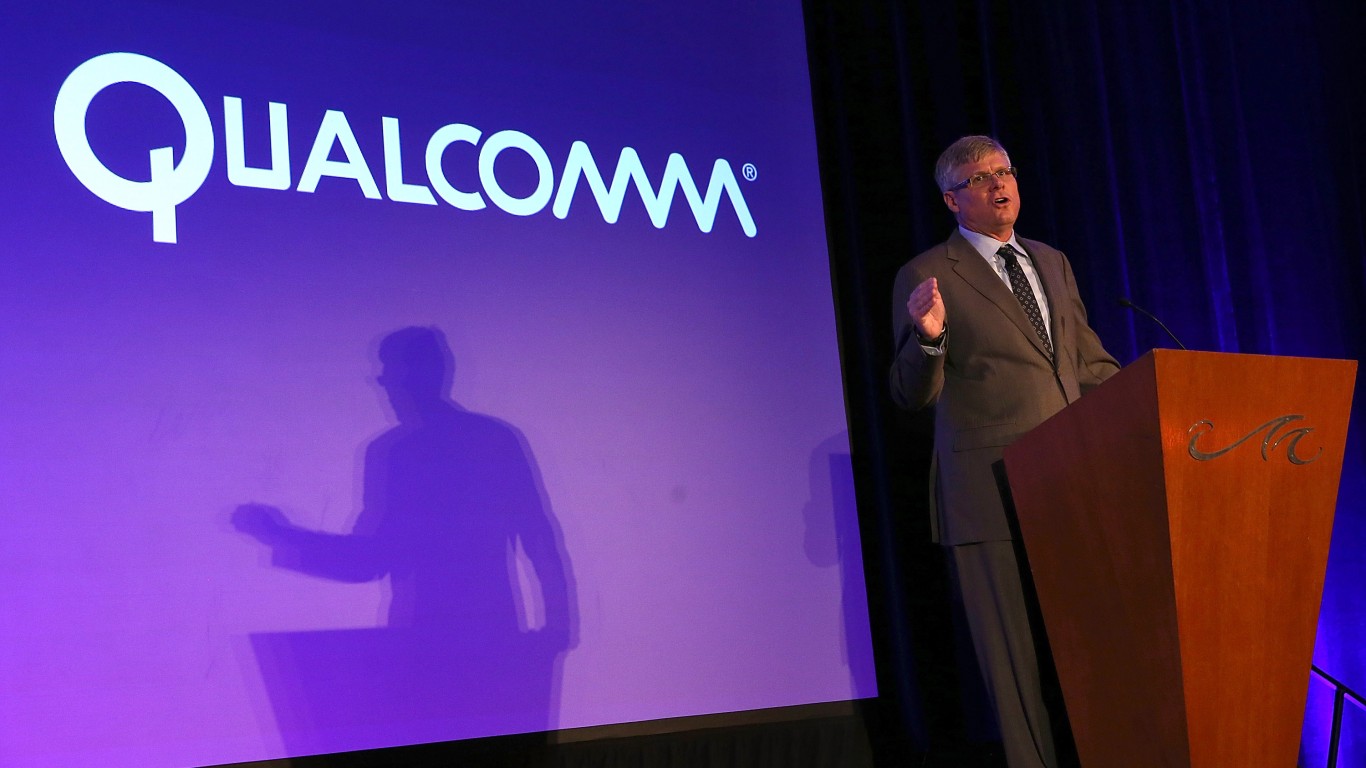
Qualcomm CEO Cristiano Amon: “We are pleased to deliver results in line with our guidance, reflecting solid execution as we navigate a challenging memory environment.” Amon expects Chinese handset revenue to bottom in Q3 and return to sequential growth.
Broadcom CEO Hock Tan: “Our AI revenue growth is accelerating, and we expect AI semiconductor revenue to be $10.7 billion in Q2.”
NXP CEO Rafael Sotomayor: “The momentum we have built is expected to accelerate through the remainder of 2026.”
Nike CEO Elliott Hill: “We are even more committed to the opportunity for growth in China… our path to winning in China is through sport.” CFO Matt Friend pegged annualized tariff costs at roughly $1.5 billion.
Who Actually Benefits Most
Apple looks best positioned. It makes its highest-volume product in China, sells billions of dollars back into the same market, and runs services across an installed base that crossed 2.5 billion active devices. Tariff relief flows directly to gross margin, improved supply chain flexibility would expand manufacturing capacity, and any easing on App Store or AI deployment in China unlocks the services flywheel.

Qualcomm benefits next, with a direct line to Chinese OEM recovery. NXP and Broadcom gain through industrial demand and any softening of advanced-chip export rules. Nike has the right China commitment, though its turnaround depends more on product and brand work than policy.
The Bottom Line
A U.S.-China thaw would lift every name here, but Apple has the most leverage because it touches manufacturing, consumer demand, services, and tariff cost in one business. Qualcomm, Broadcom, NXP, and Nike all carry real China exposure worth watching. Watch for tariff headlines and any signals on chip export rule changes in the coming months.
Contact [email protected] for any questions or corrections.
Trey has been an editor and author at 24/7 Wall St. for more than a decade, where he has published thousands of articles analyzing corporate earnings, dividend stocks, short interest, insider buying, private equity, and market trends. His comprehensive coverage spans the full spectrum of financial markets, from blue-chip stalwarts to emerging growth companies.
Beyond 24/7 Wall St., Trey has created and edited financial content for Benzinga and AOL's BloggingStocks, contributing additional hundreds of articles to the investment community.
Trey's editorial expertise extends across multiple publishing environments. He served as production editor at Dearborn Financial Publishing and development editor at Kaplan, where he helped shape financial education materials. Earlier in his career, he worked as a writer-producer at SVE. His freelance editing portfolio includes work for prestigious clients such as Sage Publications, Rand McNally, the Institute for Supply Management, the American Library Association, Eggplant Literary Productions, and Spiegel.
Outside of financial journalism, Trey writes fiction and has been an active member of the writing community for years, moderating workshop sessions at regional conventions.