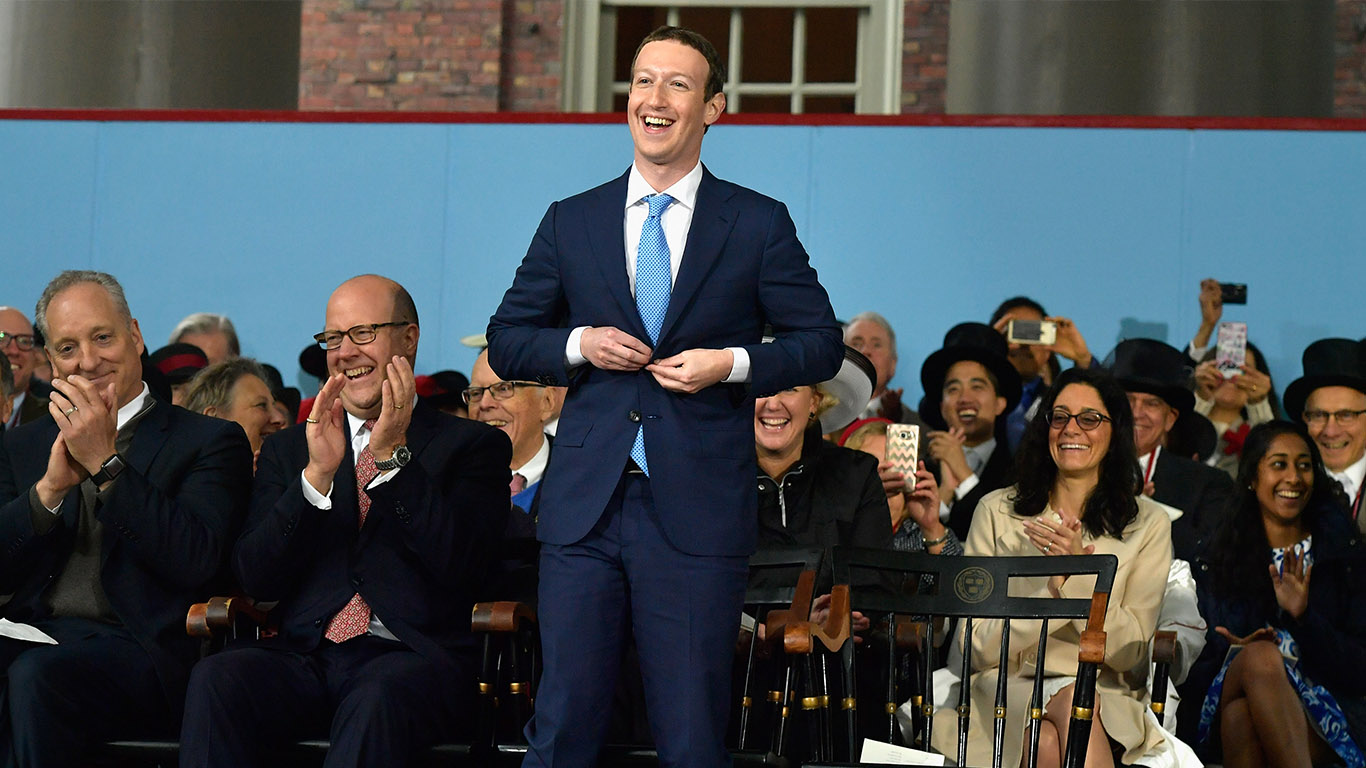
Mark Zuckerberg’s 1,000-Person Royal Guard: Inside the “Draft” That Forcibly Moved Meta’s Top Engineers Into a New AI Division
For much of the past three years, Wall Street has rewarded Meta Platforms (NASDAQ:META | META Price Prediction) for ruthless capital discipline. The 2023 Year of Efficiency cut roughly 21,000 jobs, pushed operating margin from the mid-20s to the low-40s,…

For much of the past three years, Wall Street has rewarded Meta Platforms (NASDAQ:META | META Price Prediction) for ruthless capital discipline. The 2023 Year of Efficiency cut roughly 21,000 jobs, pushed operating margin from the mid-20s to the low-40s, and gave shareholders one of the great re-rate stories of the decade. I bought my position in December 2022 and have written about why it remains my largest holding by a wide margin (see Does Meta Need a Decade of Efficiency? and Why Meta is My Largest Position By Far). But news from Menlo Park in early April changes the texture of that thesis. Mark Zuckerberg did not ask for volunteers. He drafted them.
According to reporting from The Information, in early April 2026 Meta forcibly transferred at least 1,000 top engineers into a new Applied AI Engineering division inside Reality Labs. The division builds tools and data to help research scientists develop better generative AI models. Engineers who refused the transfer faced layoff, which is unusual in Silicon Valley, where technical employees normally enjoy internal mobility during a restructuring. Employees internally called it a “draft.” One technical employee told reporters Meta was “no longer seeing us as partners.”
That line stuck with me. Zuckerberg is operating in a very specific historical mode.

The Long Memory: Google’s Code Red
The cleanest pattern match comes from Google’s late-2022 “Code Red,” declared by Sundar Pichai weeks after ChatGPT launched. Founders Larry Page and Sergey Brin were pulled back into product reviews, multiple research teams were folded together, and engineers across Search, Assistant, and DeepMind were reassigned to ship a competitive chatbot within months. That reorganization produced Bard, then Gemini, and eventually a frontier model line that genuinely competes. It also produced an exodus. Senior researchers walked to OpenAI, Anthropic, Mistral, and xAI, taking institutional knowledge with them.
Forced internal drafts in tech tend to deliver real short-term product velocity and meaningful long-term talent attrition to competitors. IBM lived this through every platform shift of the 1990s. Microsoft lived it during the early Azure reorg under Satya Nadella, when on-prem server engineers were reassigned into cloud whether they liked it or not. Apple’s original iPhone “Purple Project” pulled engineers off Mac teams under conditions that bordered on conscription. Each program shipped. Each program also bled people to rivals within 18 to 36 months.
The Draft Is the Sequel to the Year of Efficiency
In December I asked whether Meta needed a decade of efficiency given capex was guided to roughly $70 to $72 billion for 2025 versus around $37 billion in 2024. The Draft is the answer to that question, and so is the latest guide. Management raised full-year 2026 capex to $125 to $145 billion, up from the prior $115 to $135 billion range, with full-year expenses held at $162 to $169 billion. Q1 capex alone was $19.8 billion, up 45% year over year.

Year of Efficiency was capital discipline applied to headcount. The Royal Guard is capital discipline applied to talent allocation. The mechanism is the same: ignore consensus, accept the social cost, optimize for the constraint that actually matters. In 2023 the constraint was margin. In 2026 it is the closing AI window.
On the Q1 call Zuckerberg said, “We had a milestone quarter with strong momentum across our apps and the release of our first model from Meta Superintelligence Labs,” and added that the company is “on track to deliver personal superintelligence to billions of people.” The Draft is what that sentence costs internally.
The Numbers Underneath
The fundamentals still carry the thesis. Q1 revenue rose 33% year over year to $56.31 billion, EPS came in at $10.44 (with roughly $3.13 of that from a one-time CAMT/R&D tax benefit), and Family daily active people reached 3.56 billion. Ad impressions rose 19% and average price per ad rose 12%. Reality Labs still bled $4.03 billion in operating losses, which is the price of admission.
The stock has not loved the bill. META closed at $616.63 on May 13, down roughly 7% year to date and roughly 6% over the past year, even as the shares are still up roughly 97% over five years. At a P/E around 22 on a business compounding revenue in the 30s, this is not a richly priced asset.

What This Means for the Position
I have been holding META for over three years now, and the question I keep asking is whether the CEO running this company has the temperament to spend $145 billion of capex without flinching. The Draft is the answer. A leader willing to forcibly conscript his best engineers and absorb the resulting attrition is a leader with conviction. Zuck loves to win. More importantly, he hates to lose.
Of course, if even a fraction of those 1,000 drafted engineers walks to Anthropic, OpenAI, or xAI over the next 18 months, Meta will have funded the bench of its competitors. That is exactly what happened to Google after Code Red. Whether you believe the Draft confirms or threatens the bull case comes down to one question: do you trust this CEO to spend through a window that will not wait? After watching Year of Efficiency become the sequel to itself, I do. The position stays.
Contact [email protected] for any questions or corrections.
I've been writing about stocks and personal finance for 20+ years. I believe all great companies are tech companies in the long run, and I invest accordingly.