Are Trump’s 3,642 Stock Trades in Q1 the Clearest Case for Banning Politicians From the Market?
For years, investors have debated whether politicians should be allowed to trade individual stocks while in office. The argument usually flares up after a suspiciously well-timed trade, a blockbuster IPO allocation, or a senator beating the market by a margin…

This post may contain links from our sponsors and affiliates, and Flywheel Publishing may receive compensation for actions taken through them.
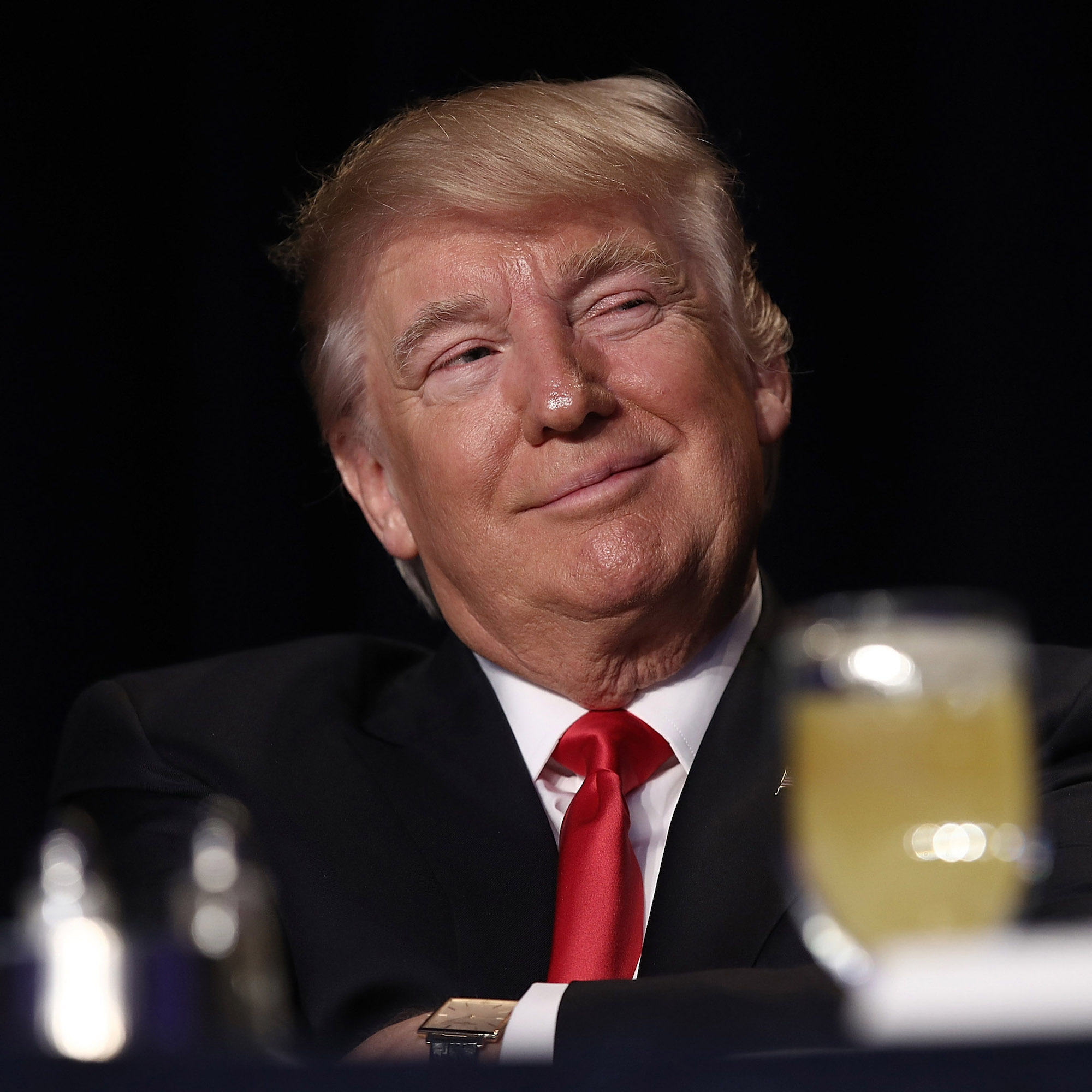
For years, investors have debated whether politicians should be allowed to trade individual stocks while in office. The argument usually flares up after a suspiciously well-timed trade, a blockbuster IPO allocation, or a senator beating the market by a margin that would make most hedge funds blush. Yet President Donald Trump’s newly filed OGE Form 278-T may have pushed the debate into entirely new territory.
The filing revealed Trump executed 3,642 stock trades during the first quarter alone. That’s not a typo. More surprising was the size of many of the transactions, with dozens falling between $500,000 and $5 million.
At a moment when markets are already trying to price in tariffs, interest rates, and geopolitical risk, investors are now being forced to ask another question: Are policy decisions influencing portfolios — or vice versa?
The STOCK Act Was Supposed to Solve This Problem
Congress passed the STOCK Act in 2012 after mounting criticism that lawmakers could profit from insider knowledge gained through committee work and regulatory oversight. The law technically bars members of Congress and other officials from trading on nonpublic information and requires disclosure of trades within 45 days.
That sounds reassuring on paper. In practice, many investors view it as little more than an accounting regime with weak enforcement.
The issue keeps resurfacing because the optics never improve. Politicians often enter public office with modest wealth and leave with net worths in the millions. Fairly or unfairly, many Americans suspect those gains are tied to access — access to legislation, regulation, defense contracts, healthcare policy, or economic data before the public sees it.
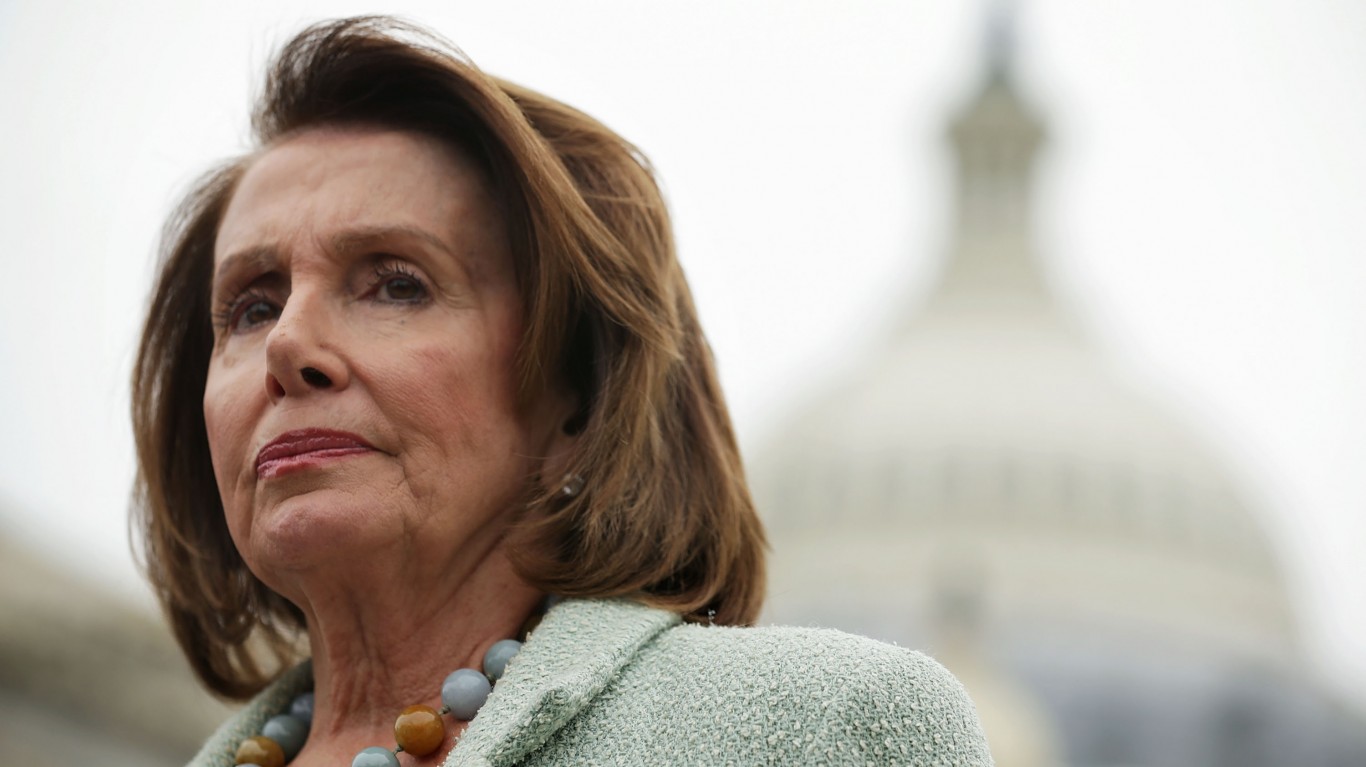
Rep. Nancy Pelosi has become the poster child for the debate. Various public databases tracking congressional trades have shown returns from Pelosi-linked investments frequently outpacing benchmark indexes and, during her time in office, far outperforming legendary investor Warren Buffett by wide margins. Whether those trades were skill, luck, or timing, the perception problem remains.
That’s the real issue here. Markets run on trust. Once investors start believing the game pitch is tilted, confidence erodes quickly.
Trump’s Filing Changed the Scale of the Debate
Trump’s disclosure shocked observers less because stock trading occurred and more because of the sheer volume involved.
According to the OGE Form 278-T filing, Trump made 3,642 transactions in the first quarter. Only about 630 were purchases, meaning over 3,000 were sales. Yet many of the purchases carried unusually large price tags. Numerous trades landed between $500,000 and $1 million, while others stretched between $1 million and $5 million.
That dwarfs the typical political filing. Most congressional trades tend to fall in the $15,000 to $50,000 range, with occasional six-figure positions. Trump’s activity looked more like an active institutional portfolio manager than a sitting president.
Granted, Trump is a billionaire. A $1 million trade for him is not equivalent to a $1 million trade for the average officeholder. Still, regardless of wealth, the issue becomes unavoidable when the same person shaping tariff policy, trade negotiations, antitrust enforcement, and tax policy is also actively trading equities tied to those outcomes.
Surprisingly, many of Trump’s reported purchases were in Big Tech companies that later faced pressure from his tariff proposals and broader trade policies. That cuts against the easy narrative that every trade was positioned to benefit from policy moves. But that almost strengthens the broader argument for restrictions — because investors are now forced to analyze not just policy itself, but how personal investments might interact with those decisions.
That’s a layer of uncertainty markets simply do not need.
Why a Full Ban May Be the Only Real Solution
Historically, many presidents attempted to avoid even the appearance of conflicts. Some used blind trusts. Others parked assets in Treasuries, index funds, or diversified holdings managed independently.
Trump stands out because he appears to have remained an active participant in the market while serving in office.
Importantly, none of the disclosed trades have been shown to violate the law. This is not an allegation of wrongdoing. But ethics rules are not just about legality. They are about preserving public confidence.
And when all is said and done, the current rules have not solved the perception problem.
Congress has repeatedly floated proposals to ban lawmakers from owning or trading individual stocks while in office. Nearly all have stalled. Many politicians oppose outright bans, arguing they would discourage successful people from entering public service or unfairly restrict personal financial freedom. Yet the very resistance itself fuels public skepticism.
Let’s be honest about what investors are seeing. If lawmakers truly believed there was no advantage to political access, why fight so hard to preserve the ability to trade?
Key Takeaway
In short, Trump’s 3,642 trades may become the clearest modern example of why stock trading bans for politicians keep gaining bipartisan public support.
The trades were legal. The proper forms were filed. But legality alone does not eliminate conflicts of interest — or the appearance of them.
Smart investors understand markets already contain enough uncertainty. Inflation, earnings, tariffs, and Federal Reserve policy create more than enough variables to track. Adding politicians’ personal portfolios into that equation risks weakening confidence in the fairness of the market itself.
Regardless of party affiliation, the cleanest solution may also be the simplest one: ban elected officials and top policymakers from buying or selling individual stocks while they hold office. Because when the people writing the rules are also trading on the field, many investors will always wonder whether the game is truly fair.
Contact [email protected] for any questions or corrections.
After two decades of patrolling the dark corners of suburbia as a police officer, Rich Duprey hung up his badge and gun to begin writing full time about stocks and investing. For the past 20 years, he’s been cruising the markets looking for companies to lock up as long-term holdings in a portfolio while writing extensively on the broad sectors of consumer goods, technology, and industrials. Because his experience isn’t from the typical financial analyst track, Rich is able to break down complex topics into understandable and useful action points for the average investor. His writings have appeared on The Motley Fool, InvestorPlace, Yahoo! Finance, Money Morning, and, of course, 24/7 Wall St. He has been featured in both U.S. and international publications, including MarketWatch, Financial Times, Forbes, Fast Company, and USA Today.