If Your Advisor Said to Add Bonds at 65, They Were Right in 1995. Here’s What That Advice Should Sound Like in 2026.
Over the past 30 years, the investing landscape for retirees has changed radically. The fundamental bases for portfolio allocation have required revision. While those allocation ratios have shifted considerably, the ETF boom has made the menu of options broader than…


Over the past 30 years, the investing landscape for retirees has changed radically. The fundamental bases for portfolio allocation have required revision. While those allocation ratios have shifted considerably, the ETF boom has made the menu of options broader than ever before. For a tried and true equities ETF, Vanguard Total Stock Market ETF (NYSEARCA:VTI) still deserves serious consideration across many portfolios.
Times Like These

Rocker Dave Grohl is only 2 years away from joining those in their 60s requiring retirement portfolio consideration.
“It’s time like these you learn to live again” – Dave Grohl
In the latter part of the 20th century, the baby boomer generation began creating one of the largest retirement-age demographics in US history. Financial advisors, stockbrokers, fund managers, and accountants responded with a quiver of marketing arrows designed for quick reference in portfolio allocation and asset management.
One rule of thumb that became conventional wisdom was the “equity percentage = 100 minus your age” formula. Under that formula, a 45-year-old would put 55% of a portfolio into equities and 45% into bonds. The underlying premise was straightforward: as investors aged, shifting more capital into safer, less volatile bonds provided security. That made sense when bond yields were robust and life expectancies shorter. It no longer tells the whole story.
Fast forward to 2026. Investors have navigated a dramatically different set of conditions since that formula took hold:
- The 2000 dot-com stock market recession.
- The 2008 subprime mortgage banking meltdown.
- The 2020 Covid-19 pandemic.
- The 2020 to 2024 inflation surge, with a cumulative total of 17.1% by 2023.
- The AI-powered surge of the S&P 500, fueled by the Magnificent 7 technology stocks.
- Medical advances that have lifted average US life expectancy from roughly 75.8 years in 1995 to 79.0 years in the most recent CDC data.
- The Trump administration’s One Big Beautiful Bill Act (OBBBA), signed into law on July 4, 2025, which introduced a new temporary $6,000 per-person deduction for qualifying taxpayers age 65 and older (up to $12,000 for married couples where both spouses qualify), helping many seniors offset federal taxes on Social Security income through 2028.
In light of all those forces, financial professionals have had to revamp their formulas and recommendations. A greater range of investment products, longer lifespans, persistent inflation, shifting tax codes at both the federal and state levels, and escalating medical costs have collectively pushed equity percentages higher for retiree portfolios. A few of the approaches advisors are now using:
- Some advisors have revised the formula’s base from 100 to 110 or even 120 to increase the equity allocation portion.
- Eschewing age-based math entirely, some advisors apply a fixed equity/bond ratio of 60/40 or 70/30 regardless of age.
- Many advisors tailor allocations individually, weighing tax bracket, Social Security benefits, medical insurance coverage, and other personal factors.
The sheer number of investment product choices can overwhelm even experienced investors. Some ETFs, however, have stood the test of time and remain solid performers. Among them, the Vanguard Total Stock Market ETF has served as both a reliable portfolio staple and a fallback when more speculative vehicles disappoint.
Vanguard Total Stock Market ETF

Vanguard is now the largest ETF issuer in the United States, having surpassed BlackRock in June 2026.
John Bogle of Vanguard is widely regarded as “the father of the index fund” and is closely associated with popularizing disciplined, low-cost allocation thinking for individual investors. He was also a vocal critic of ETFs, believing they would encourage harmful short-term trading. The irony is striking: since his passing, Vanguard has grown into the largest ETF issuer in the United States. On June 12, 2026, it surpassed BlackRock, which had held the top spot since 2003, after Vanguard’s inflows drove its total to roughly $4.39 trillion across 116 US-listed ETFs.
Stock indexes are designed to cover a defined category of equities and then calculate averages of various criteria to quantify that category. The Dow Jones Industrial Average covers 30 stocks. The S&P 500 covers 500. VTI uses the CRSP US Total Market Index as its benchmark, which is designed to include large-cap, micro-cap, and everything in between, representing the entire US corporate stock market in a single fund.
VTI holds approximately 3,500 different stocks and carries a very low 0.03% expense ratio. It launched on May 24, 2001, and has delivered an average annual return of approximately 9.7% since inception.
|
Net Assets (ETF) |
~$666.9 billion |
Beta |
1.03 |
|
Yield |
~1.02% |
YTD Return |
~13.8% |
|
52-wk. Range |
$304–$374.70 |
Expense Ratio |
0.03% |
VTI’s top 10 holdings (as of May/June 2026) are:
- NVIDIA – 6.70%
- Apple – 6.29%
- Microsoft – 4.60%
- Amazon – 3.59%
- Alphabet Class A – 3.04%
- Broadcom – 2.91%
- Alphabet Class C – 2.39%
- Meta Platforms Class A – 1.90%
- Tesla – 1.69%
- Micron Technology – 1.50%
VTI Flexibility
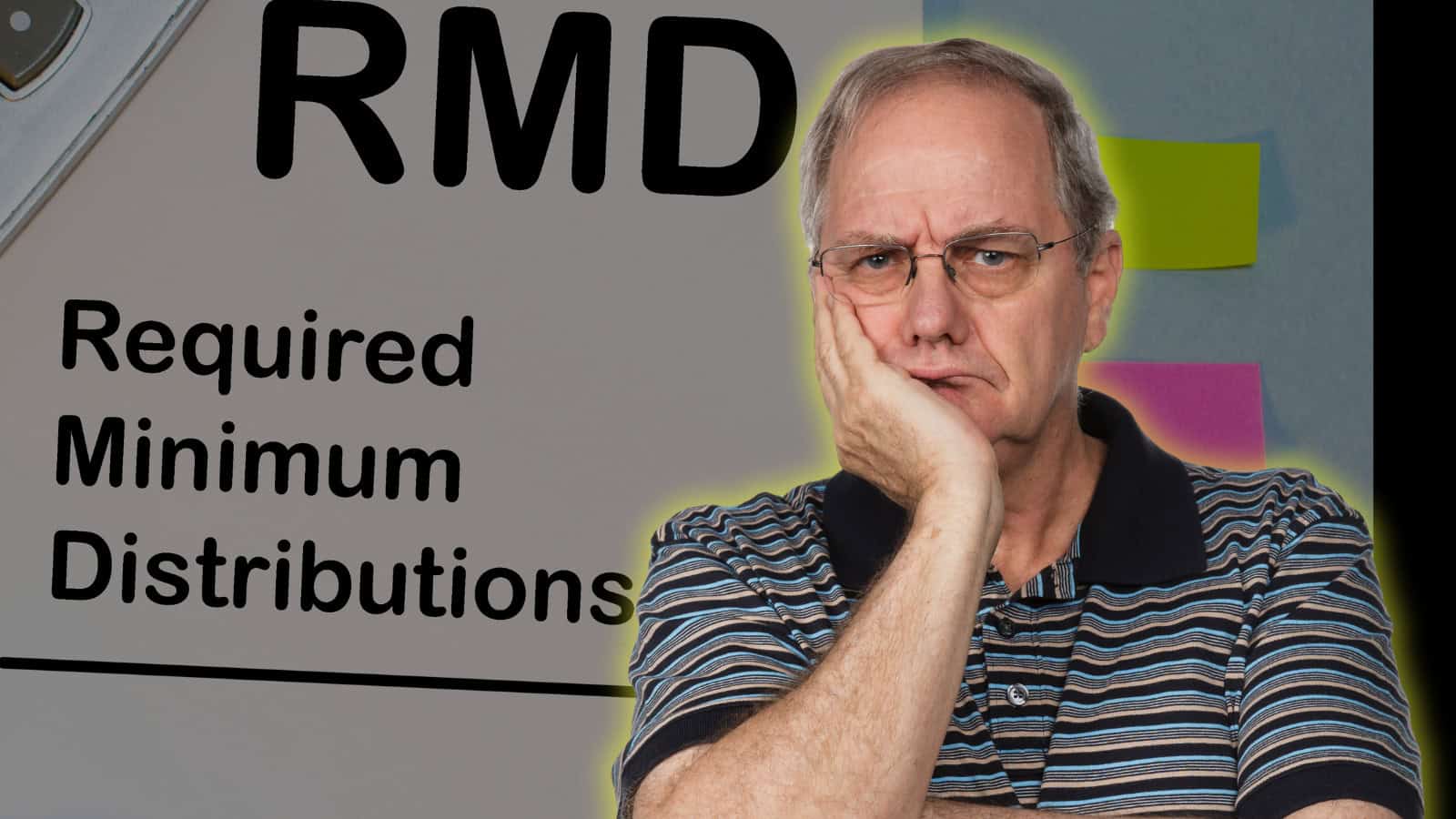
VTI is a good choice for retirement accounts subject to RMD.
For retirees in reasonably good health who have at least a modest nest egg, VTI can offer several strategic advantages worth considering:
- For retirees holding both traditional IRA and 401(k) accounts alongside Roth accounts, VTI’s strong long-term growth history makes it particularly well suited for overweighting in Roth IRA accounts, which grow tax-free.
- Taxable accounts can also benefit from VTI’s growth profile, since that growth can offset any potential principal reduction that results from Required Minimum Distribution (RMD) rules. Under the SECURE 2.0 Act, RMDs now begin at age 73 for most current retirees, rising to age 75 for those born in 1960 or later. The fund’s appreciation can also partially compensate for tax outlays in those accounts.
- When RMD requirements compel partial liquidation of holdings, selling VTI first may be preferable to selling higher-yielding bonds or more aggressively positioned growth funds. Retaining those positions may better serve the portfolio’s ongoing income and long-term expansion goals.
One additional planning consideration stands out for qualifying retirees: the OBBBA’s new senior deduction, effective for tax years 2025 through 2028, may create a narrow window for Roth conversions. The deduction provides up to $6,000 per eligible individual age 65 or older (up to $12,000 for a married couple where both spouses qualify). It begins to phase out for single filers with modified adjusted gross income above $75,000 and phases out entirely at $175,000; for joint filers, the phase-out range runs from $150,000 to $250,000. Retirees whose income falls below those phase-out thresholds may find the extra deduction reduces taxable income enough to make a Roth conversion unusually cost-effective before the provision expires.
Editor’s note: This article has been updated to reflect current VTI data, including a revised net asset figure of approximately $666.9 billion and an updated YTD return of approximately 13.8%. The OBBBA senior deduction section has been expanded to note the $12,000 combined benefit available to eligible married couples and to add the full income phase-out thresholds of $175,000 for single filers and $250,000 for joint filers. The description of Vanguard’s milestone was updated with the confirmed date of June 12, 2026, when Vanguard surpassed BlackRock, which had held the top ETF issuer position since 2003, managing roughly $4.39 trillion across 116 US-listed ETFs.
Contact [email protected] for any questions or corrections.
After 15 years on Wall Street with 7 of them as Director of Corporate and Municipal Bond Trading for a NYSE member firm, I started my own project and corporate finance consultancy. Much of the work involves writing business plans, presentations, white papers and marketing materials for companies seeking budgetary allocations for spinoffs and new initiatives or for raising capital for expansion or startup companies and entrepreneurs. On financial topics, I have been published under my own byline at The Motley Fool, 247wallst.com, DealFlow Events’ Healthcare Services Investment Newsletter and The Microcap Newsletter, among others. Additionally, I have done freelance ghostwriting writing and editing for several financial websites, such as Seeking Alpha and Shmoop Financial. I have also written and been published on a variety of other topics from music, audiophile sound and film to musical instrument history, martial arts, and current events. Publications include Copper Magazine, Fidelity (Germany), Blasting News, Inside Kung-Fu, and other periodicals.