$10,000 in Asia’s Biggest 50 Stocks Became $15,267 in Five Months: Here’s Why
$10,000 dropped into the iShares Asia 50 ETF (NYSEARCA:AIA) on the last trading day of 2025 was worth roughly $15,267 by the close on June 3, 2026. That is the kind of half-year a US large-cap investor doesn’t get out…

This post may contain links from our sponsors and affiliates, and Flywheel Publishing may receive compensation for actions taken through them.

$10,000 dropped into the iShares Asia 50 ETF (NYSEARCA:AIA) on the last trading day of 2025 was worth roughly $15,267 by the close on June 3, 2026. That is the kind of half-year a US large-cap investor doesn’t get out of the SPDR S&P 500 ETF Trust (NYSEARCA:SPY) in a calendar year, let alone five months. AIA is up 52.67% year to date through June 3, while SPY is up 10.61% over the same window. The headline writes itself. The mechanism, which is what you actually need, is more interesting and a little narrower than the headline implies.
The Arithmetic, Stripped Down
AIA opened the year at $97.51 and closed June 3 at $148.87. The one-year number is even larger, with the fund up 100.7% from June 2025, when shares traded near $74.18. SPY’s twelve-month return over that same window is 26.53%. The gap is not a rounding error. It is the widest stretch of Asia mega-cap outperformance versus the S&P 500 in a decade.
One number flips the framing. AIA’s five-year return is 79.67%. SPY’s, over the identical five-year window, is 78.48%. AIA spent most of 2021 through late 2025 going sideways or worse while the S&P compounded. The 2026 surge is largely the long delayed catch-up of a single sector inside this fund finally getting paid.
What Did the Work
AIA is marketed as the 50 largest companies across developed and emerging Asia. In practice, as of the March 31, 2026 N-PORT filing, it is a concentrated semiconductor bet wearing a diversified suit. Taiwan Semiconductor Manufacturing (NYSE:TSM | TSM Price Prediction) alone was 22.42% of net assets. Samsung Electronics added another 12.69% in common shares (and roughly 14.12% counting preferreds), and SK hynix brought in 4.15%. The three combined ran 39.26% of the fund, with broader semiconductor and electronics exposure (MediaTek, Hon Hai, Delta, UMC, ASE) pushing the cluster past 45%.
TSM did exactly what a 22%-weighted top holding has to do to power a 52% fund return. The stock is up 44.1% year to date and 123.65% over twelve months. Q2 2026 revenue reached NT$1.13 trillion, with net income up 43.82% year over year and gross profit up 37.26%. Management cited "surging demand for advanced AI and high-performance computing chips" and authorized $31.28 billion in new capex plus a $20 billion equity injection into TSMC Arizona. At a forward P/E of 28 on a market cap of roughly $2.32 trillion, TSM now trades as critical AI infrastructure rather than a cyclical foundry.
The China Internet Story Was a Drag
If you assumed the AIA rally was a China tech recovery, the underlying data argues otherwise. Alibaba (NYSE:BABA), AIA’s fourth-largest holding at 4.38%, is down 13.21% year to date. NetEase (NASDAQ:NTES), a smaller position at roughly 0.98%, is down 10.02%. Tencent, the third-largest holding at 7.13%, did its share, but the China internet basket as a whole has been a drag on the fund this year, not the engine.
Alibaba’s Q4 fiscal 2026 captured why. Revenue grew just 3% to $35.28 billion and the company posted a $123 million operating loss as adjusted EBITA collapsed 84% on aggressive cloud and quick-commerce spending. Cloud Intelligence Group revenue did accelerate 40%, with CEO Eddie Wu noting "Alibaba’s full-stack AI investments have progressed from incubation to commercialization at scale." The market is still digesting whether to reward that pivot or punish the margin compression.
The other ballast was financials. HSBC Holdings is up 23.15% year to date and 65.64% over twelve months, riding banking NII guidance raised to roughly $46 billion despite a brutal Q1 ECL print. HSBC isn’t an AIA holding directly, but AIA’s roughly 12% combined weight to Asian banks, insurers, and exchanges (DBS, OCBC, UOB, AIA Group itself, ICBC, CCB) caught the same regional re-rating that lifted HSBC.
The Numbers Side By Side
| Holding / Benchmark | YTD 2026 Return | Role in AIA |
|---|---|---|
| AIA (the fund) | 52.67% | Subject |
| SPY (benchmark) | 10.61% | Reference |
| TSM | 44.1% | 22.42% top holding |
| BABA | -13.21% | 4.38% holding (drag) |
| NTES | -10.02% | ~1% holding (drag) |
| HSBC | 23.15% | Sector proxy |
The Retail Tell
The crowd noticed TSM before they noticed AIA. A viral wallstreetbets post titled "TSMC is the Hormuz Strait of semiconductors. I moved 30% of my portfolio over today" hit 507 upvotes over Memorial Day weekend, with sentiment scoring very bullish (80+) through six consecutive measurement windows on May 29-30. The framing tells you what kind of trade this has become. Retail is treating TSM as critical infrastructure. That is also how it has been priced.
What Has To Hold For The Run To Continue
The forward question is simple and the answer is not. AIA’s 2026 is a leveraged bet on three things continuing in roughly their current shape. First, AI capex must keep its current cadence, because TSM, Samsung, SK hynix, and the Taiwanese supply chain that surrounds them are doing one thing right now, which is selling leading-edge silicon into hyperscaler buildouts. TSM’s $31.28 billion capex authorization is a vote of management confidence. It is also a forward bet that needs the demand curve to keep cooperating.
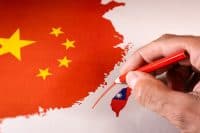
Second, Taiwan Strait geopolitical risk has to stay theoretical. With roughly 27% of AIA in Taiwan-domiciled companies and about 20% in South Korea, this fund is closer to a single-region tech bet than its "Asia 50" label suggests.
Third, the China internet basket cannot get worse. It is already a drag, with BABA down 13% and NTES down 10% year to date despite a 52% fund-level return. If China tech stays flat from here while semiconductors continue running, AIA keeps working. If China tech rolls over while AI capex normalizes, the fund’s concentration becomes its problem.
Goldman Sachs Asset Management framed the China piece honestly in its 2026 outlook, noting that recent support for China equities stems from "abundant liquidity, increasing retail participation, and limited alternative investment options" and that long-term outperformance "hinges on translating this liquidity into durable earnings growth." The translation has not happened yet inside AIA’s China sleeve. The fund is up 52% despite that China sleeve, with the gains coming from elsewhere.
The thing to actually watch is TSM’s next earnings print and the direction of hyperscaler capex commentary out of US mega-caps. AIA now functions as a leveraged TSM trade with a Samsung kicker, a Tencent sidecar, and a China internet weight that has been actively working against shareholders rather than as a diversified pan-Asia index. If that arrangement keeps working, the run continues. If TSM gives back the AI premium, AIA gives back the year. The 52% return tells you what happened. The 22.42% top weight tells you what to watch next.
Contact [email protected] for any questions or corrections.
Austin Smith is a financial publisher with over two decades of experience as an investor, analyst, and advisor. He covers stocks, ETFs, Artificial intelligence and personal finance for 24/7 Wall St. Previously, he spent over a decade at The Motley Fool as a senior editor for Fool.com, portfolio advisor for Millionacres, and launched The Ascent to help reader take control of their personal finances.
His work has been featured on Fool.com, NPR, CNBC, USA Today, Yahoo Finance, MSN, AOL, Marketwatch, and many other publications. He is as an advisor to private companies, and co-hosts The AI Investor Podcast with Eric Bleeker.
When not looking for investment opportunities, he can be found skiing, running, or playing soccer with his children. Learn more about Austin's investment approach here.