




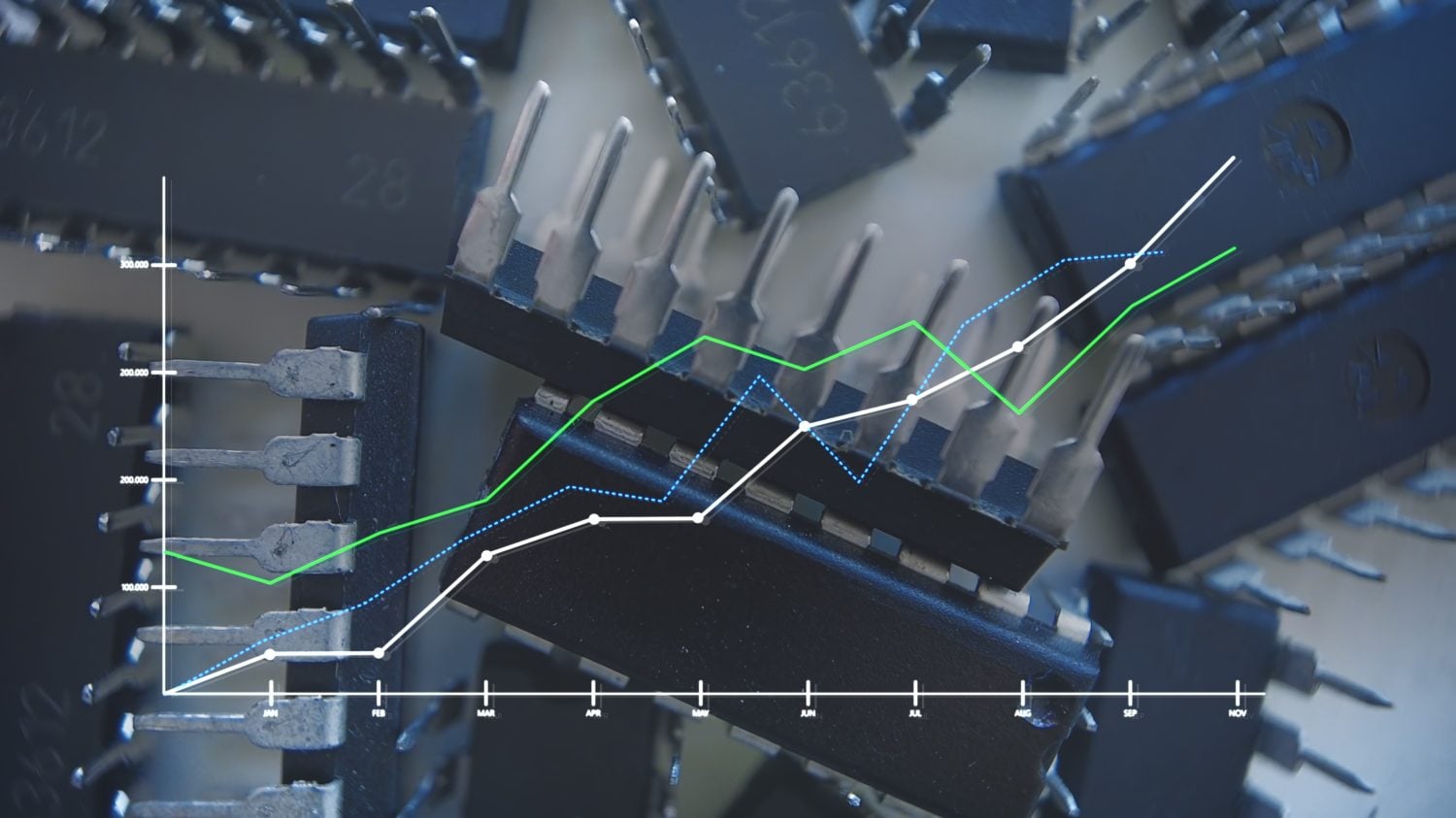
The choice between the Roundhill Memory ETF (CBOE:DRAM) and the iShares Semiconductor ETF (NASDAQ:SOXX) looks like a semiconductor exposure decision, but it is really a question about how concentrated a cyclical bet you want to make. SOXX gives you the whole chip stack. DRAM gives you three companies in a trench coat: Samsung Electronics, SK hynix, and Micron Technology together account for 73.04% of the fund, all riding the same memory pricing cycle.
What Each Fund Is Actually Betting On
SOXX is a diversified bet on the secular growth of compute, spanning logic, foundry, equipment, and analog names. It needs broad semiconductor demand. It does not need any single sub-segment to cooperate. The 0.34% net expense ratio reflects its index-fund mainstream status.
DRAM is a pure-play wager on memory pricing. With Samsung at 24.99%, SK hynix at 24.22%, and Micron at 23.83%, plus Kioxia, Sandisk, and Western Digital filling out NAND exposure, the fund effectively tracks the global DRAM and NAND supply-demand balance. It outperforms when memory bit pricing rises, HBM demand from AI accelerators tightens supply, and inventories normalize. It underperforms harshly when the memory cycle turns: oversupply, falling ASPs, and capex hangovers crush all three top holdings simultaneously. You pay 0.65% for that concentrated thesis.
Where The Difference Shows Up
Recent action makes the divergence visible. Over the past month, DRAM rose 51.22% while SOXX rose 32.10%, as HBM pricing and AI memory demand drove Micron and SK hynix higher. Over the past week, DRAM gained 15.55% versus SOXX at 7.65%. That is the upside leverage of a focused memory bet.
The longer record belongs to SOXX, which has compounded through multiple cycles: 309.17% over five years and 1,916.25% over ten. DRAM is too new for an honest long-term comparison.
The Practical Comparison
| Factor | DRAM | SOXX |
|---|---|---|
| Net expense ratio | 0.65% | 0.34% |
| Top 3 concentration | 73.04% | Broad semis |
| 1-month return | 51.22% | 32.10% |
| YTD return | n/a (new fund) | 76.11% |
| Implicit bet | Memory pricing cycle | Broad chip demand |
The Verdict
SOXX fits the majority of investors who want semiconductor exposure as a long-term allocation. It is cheaper, more diversified, and survives cycle turns without the fund itself becoming a binary call. DRAM fits investors who already hold broad chip exposure and want to add tactical leverage to the memory cycle specifically, particularly during AI-driven HBM tightness. If memory pricing rolls over and NAND oversupply returns, DRAM’s three-stock concentration will hurt going down as much as it helped going up. That is the trade.
Contact [email protected] for any questions or corrections.










 Top Gaining Stocks
 Top Losing Stocks