The DRAM ETF Holds 73% in Just Three Companies, And That’s the Real Problem
The Roundhill Memory ETF (CBOE:DRAM) launched on April 2, 2026 as the first pure-play memory chip ETF, and in roughly six weeks it has returned 96%. Investors own DRAM for clean exposure to the HBM and AI memory build-out without…

This post may contain links from our sponsors and affiliates, and Flywheel Publishing may receive compensation for actions taken through them.
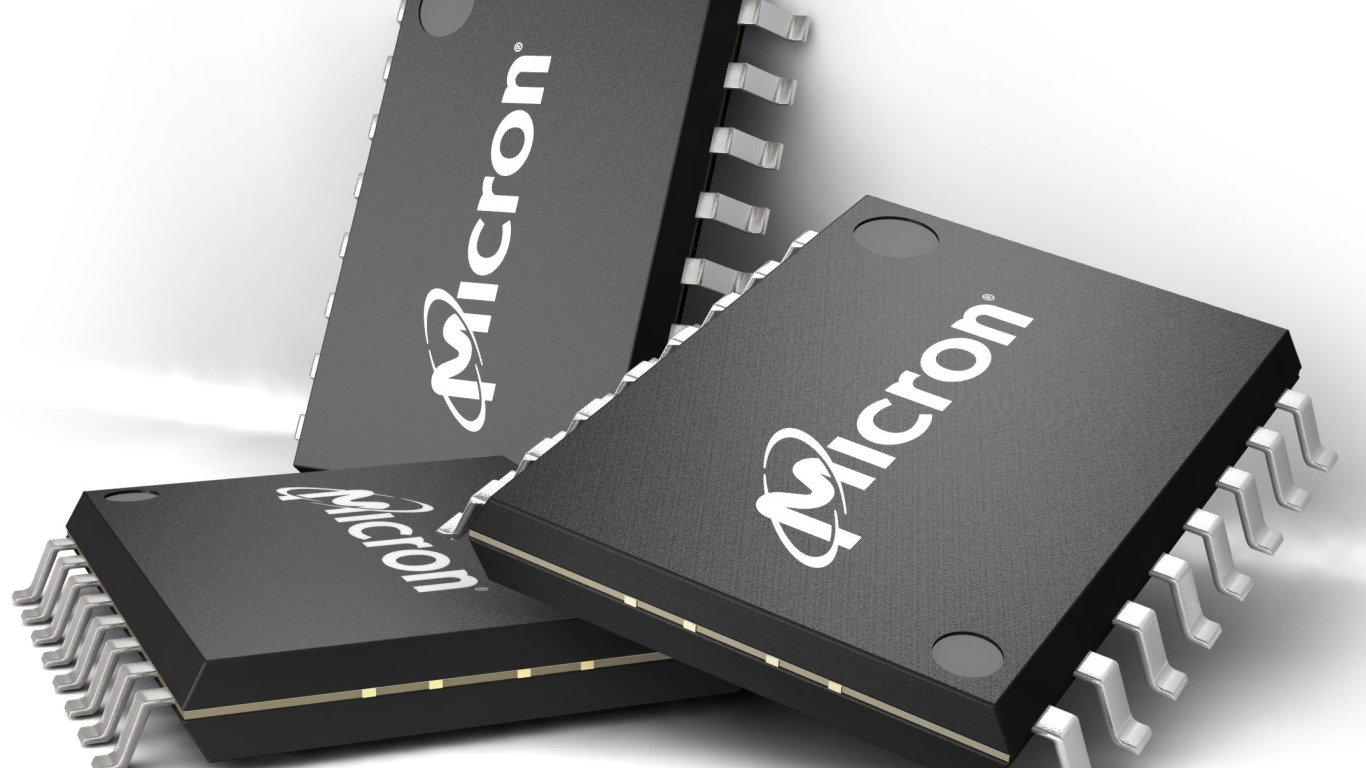
The Roundhill Memory ETF (CBOE:DRAM) launched on April 2, 2026 as the first pure-play memory chip ETF, and in roughly six weeks it has returned 96%. Investors own DRAM for clean exposure to the HBM and AI memory build-out without picking between Samsung, SK hynix, or Micron. The catch: DRAM is a three-stock basket in one of technology’s most cyclical industries, and that single fact drives the biggest risk facing the ETF right now.
DRAM ETF Snapshot
[stock_chart symbol=”DRAM”]
A Three-Stock Fund Dressed as a Basket
The prospectus shows DRAM holds Samsung Electronics at 25%, SK hynix at 24%, and Micron Technology at 24%. Those three names account for 73% of net assets. The remaining holdings (Kioxia, SanDisk, Western Digital, Seagate, Nanya, and Winbond) sit in low-single-digit weights and tilt toward NAND and hard drives rather than the leading-edge DRAM and HBM the fund is sold on.
Geographic exposure compounds the issue. South Korea represents 49% of the portfolio, the United States 38%, Taiwan 6%, and Japan 5%. Roughly half of DRAM’s NAV moves with two Korean companies whose ADRs do not trade during U.S. hours, meaning the ETF’s price during the New York session is a guess at where Samsung and SK hynix will open in Seoul.
The Real Risk: A Synchronized Memory Cycle Turn
Memory is a commodity. DRAM and NAND prices move together, capex decisions move together, and earnings at Samsung, SK hynix, and Micron move together. When the cycle turns, it turns for all three at once. In a normal diversified ETF, a soft quarter at one holding is offset by strength elsewhere. In DRAM, a contract price reset hits roughly three-quarters of the fund in the same week.
The setup magnifies that risk. Micron is up 731% over the past year and 182% year to date, trading near $804. DRAM itself rose 63% in the last month alone. Bank of America’s bull case rests on a $1.7 trillion 2030 AI data center TAM, and Seeking Alpha’s $1 trillion Micron thesis assumes FY28 owner earnings of $80 to $90 per share. Both require the AI capex curve to keep bending up. Any digestion phase, an order push-out at a hyperscaler, an HBM3E inventory build, or a contract DRAM price cut would pressure all three top holdings simultaneously.
Two structural details worsen this. First, total net assets are roughly $0.25 million, which is essentially seed capital. Bid-ask spreads and premium-to-NAV slippage will be wider than a mature ETF, especially on volatile sessions. Second, Korea uses up to a 30% daily price limit on individual stocks, so a gap move in Samsung or SK hynix overnight can leave the U.S.-listed DRAM trading well away from fair value the next morning. The 2x leveraged Samsung/SK hynix ETF reportedly being prepared in the U.S. market suggests retail enthusiasm in this trade is approaching the late-cycle stage.
Secondary Risk: Geopolitics on a Single Customer
The Trump-Xi summit on May 13, 2026, attended by Micron CEO Sanjay Mehrotra, is a reminder that China is both a customer and a regulator for the top three holdings. Micron has already faced a ban on its products in Chinese critical infrastructure. A re-escalation or a Korean export-control concession would land on a fund where 73% of assets sit in three companies with overlapping China exposure.
What to Monitor
- DRAM and NAND contract prices. TrendForce and DRAMeXchange publish monthly contract pricing. Watch the sequential change in DDR5 and HBM3E. A flip from rising to flat is the earliest cycle signal.
- Hyperscaler capex guidance. Microsoft, Meta, Amazon, and Google quarterly capex commentary drives HBM order books. A trim of 10% or more from any two would matter.
- Samsung and SK hynix overnight prints. Seoul closes before New York opens. Track those moves to anticipate DRAM’s premium or discount to NAV at the open.
- Korean and U.S. export-control headlines. Any change to the framework on advanced node tooling or HBM sales to China is a same-day catalyst.
The Bottom Line for Holders
DRAM gives concentrated exposure to the three companies that matter in memory. The risk is concentration on top of a cyclical commodity that has just delivered a parabolic run. Holders who bought DRAM as an AI memory thesis should size it accordingly and accept that drawdowns will look like single-stock drawdowns. A lower-risk way to capture overlapping exposure is owning Micron directly, where position sizing is in the investor’s hands, or a broader semiconductor ETF that dilutes memory cyclicality with logic and equipment names. The thesis is intact. The packaging just leaves less room to be wrong.
Contact [email protected] for any questions or corrections.
I am a long time investor and student of business, and believe finding good companies that can become great investments is the best game on earth. After 20 years of writing and researching the public markets it is clear that individuals have never had more tools and information to take control of their financial lives. From ETFs and $0 commissions to cryptos and prediction markets there has never been a greater democratization of access to investing.
I write to help people understand the investments available to them so they can make the best choice for their portfolio, whether they're starting out or looking for income in retirement.