Hedge Your AI Holdings With This Safe Haven ETF if the Bubble Bursts
If you are sitting on a portfolio that has ridden Nvidia (NASDAQ:NVDA | NVDA Price Prediction), the hyperscalers, and every adjacent AI name to fresh highs, the question is what happens when the narrative cracks. The Consumer Staples Select Sector SPDR…

If you are sitting on a portfolio that has ridden Nvidia (NASDAQ:NVDA | NVDA Price Prediction), the hyperscalers, and every adjacent AI name to fresh highs, the question is what happens when the narrative cracks. The Consumer Staples Select Sector SPDR Fund (NYSEARCA:XLP) is the unglamorous answer most AI-heavy investors have not bothered to consider. XLP owns the companies that sell toothpaste, soda, and groceries, and it has a track record of holding its value while the NASDAQ gives back twelve months of gains in three weeks. The numbers behind it are more interesting than the boring reputation suggests.
What you are actually buying
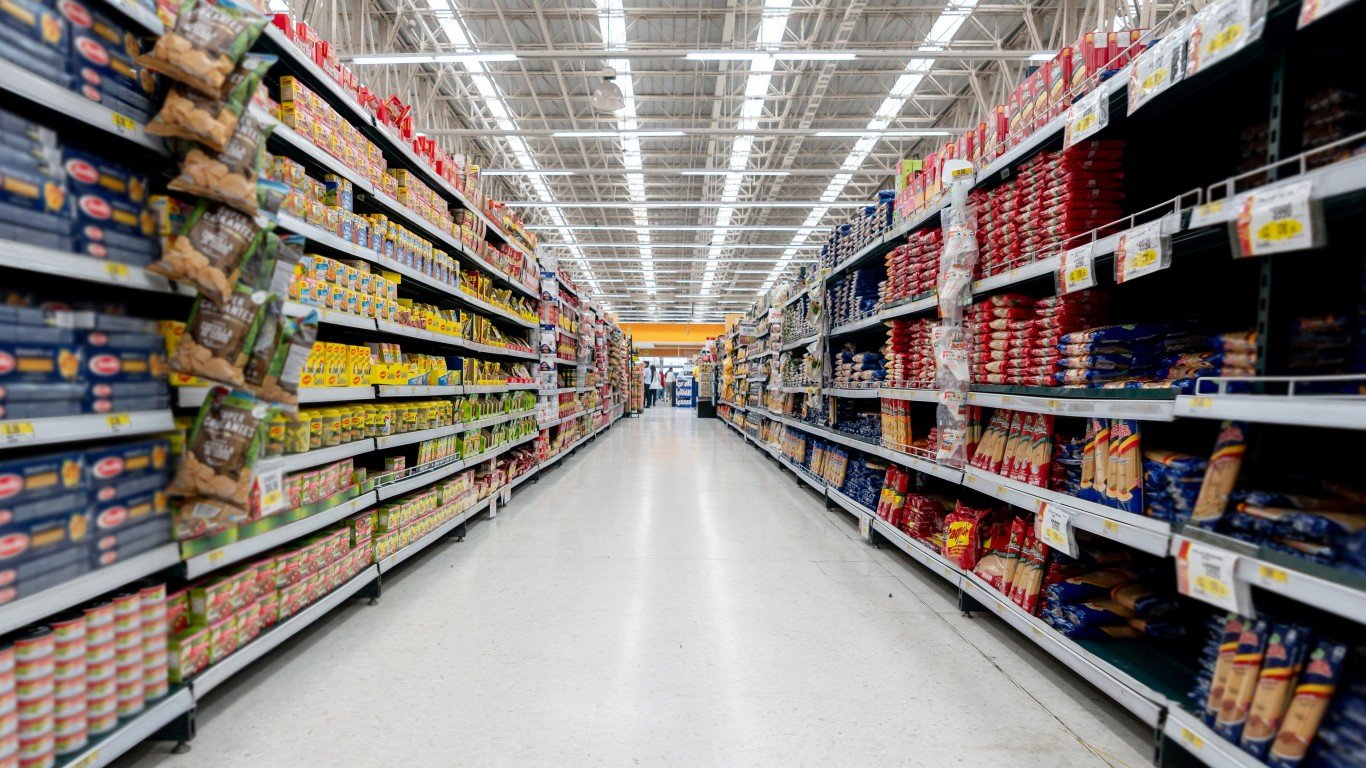
XLP is a concentrated bet on 35 holdings drawn from the S&P 500 consumer staples sector. Walmart alone is 12% of the fund, Costco another 10%, Procter & Gamble 7%, Coca-Cola 6%, and Philip Morris 6%. Consumer staples distribution and retail accounts for roughly 34% of the portfolio, beverages another 19%, with food products, household products, tobacco, and personal care filling the rest.
These are mature businesses with pricing power, defensible shelf space, and dividend programs older than most fund managers. You collect a 2.57% yield and pay 0.08% a year for the privilege, which is essentially free.
The 2020 and 2022 evidence
The case for XLP as a hedge is not theoretical. In calendar 2020, with COVID detonating the market in March, XLP finished the year up 11%. The interesting part is that staples kept pace with a functioning economy while absorbing a once-in-a-generation shock. From November 2021 through the end of December 2022, the Invesco QQQ Trust (NASDAQ:QQQ) fell 31% as rates rose and the prior tech rally unwound, while XLP gained 8%. An investor holding both in equal weight would have cut their drawdown roughly in half.
What the hedge actually costs you
Defense is not free. Over the past five years, XLP returned 37% while QQQ returned 121%. Stretch that to ten years and XLP is up 107% against QQQ’s 574%. Owning XLP as your whole portfolio would have been a slow-motion mistake during the AI boom. Size it as a sleeve, not a replacement.
Three real tradeoffs deserve attention. First, concentration risk runs in both directions. With Walmart and Costco combining for more than 21% of the fund, a single retail miss can move XLP more than the “diversified sector” label implies. Second, staples are bond-proxy stocks, and at a P/E near 20 with a price-to-book of 4.2, they are not the bargain they were a decade ago. A renewed spike in long rates pressures these multiples directly. Third, GLP-1 drugs, private label competition, and tobacco litigation are genuine structural headwinds for specific top-ten names, and XLP is forced to own them.
Who this fund actually fits
XLP makes sense as a 5% to 15% sleeve for an investor whose portfolio is already overweight AI, semiconductors, or large-cap tech, and who wants something that historically zigs when the NASDAQ zags. It is up 10% year to date in a market that has continued rewarding risk, so you are not buying it at a stressed price, but you are buying optionality on the AI trade rolling over.
Investors expecting capital appreciation to keep up with the index should look elsewhere. Investors who would sleep better knowing a chunk of their book owns Coca-Cola and laundry detergent should consider whether they already have enough of that exposure, and if the answer is no, XLP is the cleanest way to get it.
Contact [email protected] for any questions or corrections.
Omor Ibne Ehsan is a writer at 24/7 Wall St. He is a self-taught investor with a focus on growth, cyclical, and dividend equities that have strong fundamentals, value, and long-term potential. He also has an interest in high-risk, high-reward investments such as penny stocks.