Meredith Whitney Warns: The One Money Move Middle-Income Americans Are Making to Survive Each Month
Meredith Whitney, CEO of Meredith Whitney Advisory Group, returned to CNBC May 14, 2026 with a warning that cuts against the “resilient consumer” refrain from bank earnings calls. Her argument: middle-income America has shifted from living paycheck to paycheck into…


Meredith Whitney, CEO of Meredith Whitney Advisory Group, returned to CNBC May 14, 2026 with a warning that cuts against the “resilient consumer” refrain from bank earnings calls. Her argument: middle-income America has shifted from living paycheck to paycheck into something more fragile, and the traditional banking system can no longer see it.
The Shadow Banking Shift
Whitney’s framing is direct. "The state of the consumer has changed dramatically from the last credit cycle. And a lot of people continue to look at banks, ceos for guidance, and bank ceos continue to use the word. The consumer’s resilient. But the reality is the banks have not been exposed to as wide a swath of consumers as they were during the last credit cycle."
The mechanism, in her view, is withdrawal. "Banks have pulled dramatically back from consumer lending and from many consumers. And that restrictive lending environment has driven so many consumers out of the banking system." What replaced bank credit is a private market most investors never see on a balance sheet.
"More consumers, more households aren’t living paycheck to paycheck, but payday to payday. So in the private, you know, shadow banking system, there’s on demand pay where employees can access daily pay wages as opposed to biweekly checks. And that has been exploding in terms of growth." The harder edge is pawn. "The average apr on a pawn loan, as an example, a monthly pawn loan can be in excess of 200%. And these are the unintended consequences."
Kraft Heinz CEO Steve Cahillane corroborated the squeeze: "People are running out of money at the end of the end of the month."
The Data Behind the Warning
The macro picture supports the thesis. The U.S. personal savings rate has compressed from 6.2% in 2024Q1 to 4.0% in 2026Q1, with Americans now spending roughly 92.3% of disposable income. Yet headline retail sales reached $757.1 billion in April 2026, up 0.5% month over month, and weekly jobless claims sit at 211,000. University of Michigan consumer sentiment, at 53.3 in March 2026, signals strain beneath the surface.
Why Walmart and the Dollar Stores Matter
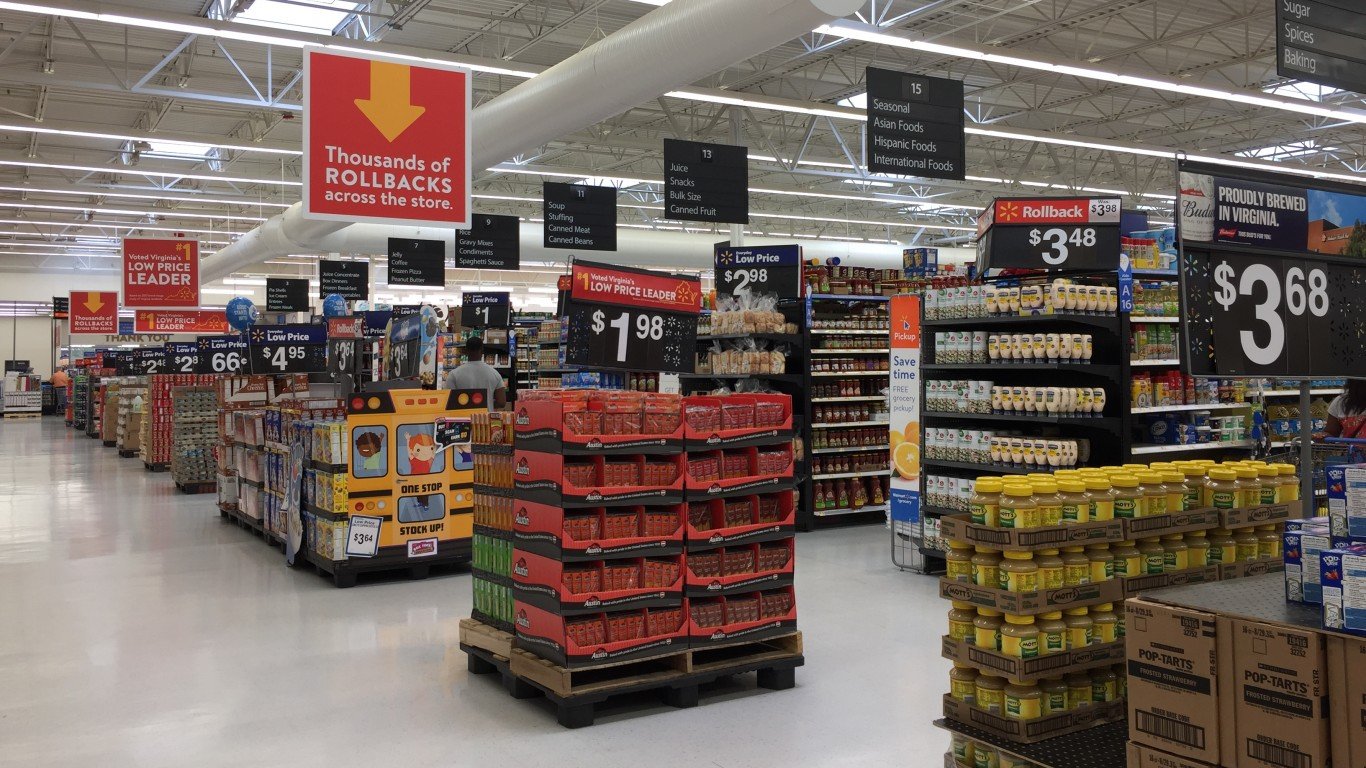
This is where Whitney points investors. Walmart (NYSE:WMT | WMT Price Prediction) flagged grocery share gains led by upper-income households in its most recent results, the signature of trade-down behavior. The stock is up 19.37% year to date through May 14, with the market rewarding that mix shift. Doug McMillon’s most recent shareholder letter emphasized value and convenience as the company’s anchor.
The dollar channel tells a different story. Dollar General (NYSE:DG) posted same-store sales growth of 2.4% on flat traffic, with CEO Todd Vasos citing "potential uncertainty related to consumer behavior". Shares are down 20.17% year to date. Dollar Tree (NASDAQ:DLTR) is down 26.86% year to date despite 5.4% comp growth.
The split matters. When the consumer who funds dollar-store traffic borrows at 200% APR to make it to Friday, the spending shows up in retail sales before strain appears elsewhere. Watch the value retailers for the first crack.
Contact [email protected] for any questions or corrections.
Don Lair writes about options income, dividend strategy, and the kind of boring-but-durable investing that actually funds retirement. He's the founder of FITools.com, an independent contributor to 24/7 Wall St., and a former writer for The Motley Fool.