Semiconductor Exposure in S&P 500 Hits 18%. That’s More Than Double the Tech Bubble Peak.
Cameron Dawson, chief investment officer at NewEdge Wealth, dropped a statistic on Thoughtful Money with Adam Taggart that should reframe how investors think about diversification in 2026. “10 years ago, the semiconductor index or weight in the S&P 500 was…


Cameron Dawson, chief investment officer at NewEdge Wealth, dropped a statistic on Thoughtful Money with Adam Taggart that should reframe how investors think about diversification in 2026. “10 years ago, the semiconductor index or weight in the S&P 500 was 2%. Today it’s 18%,” she said, adding that “that 18% is more than double what it was at the peak during the tech bubble.”
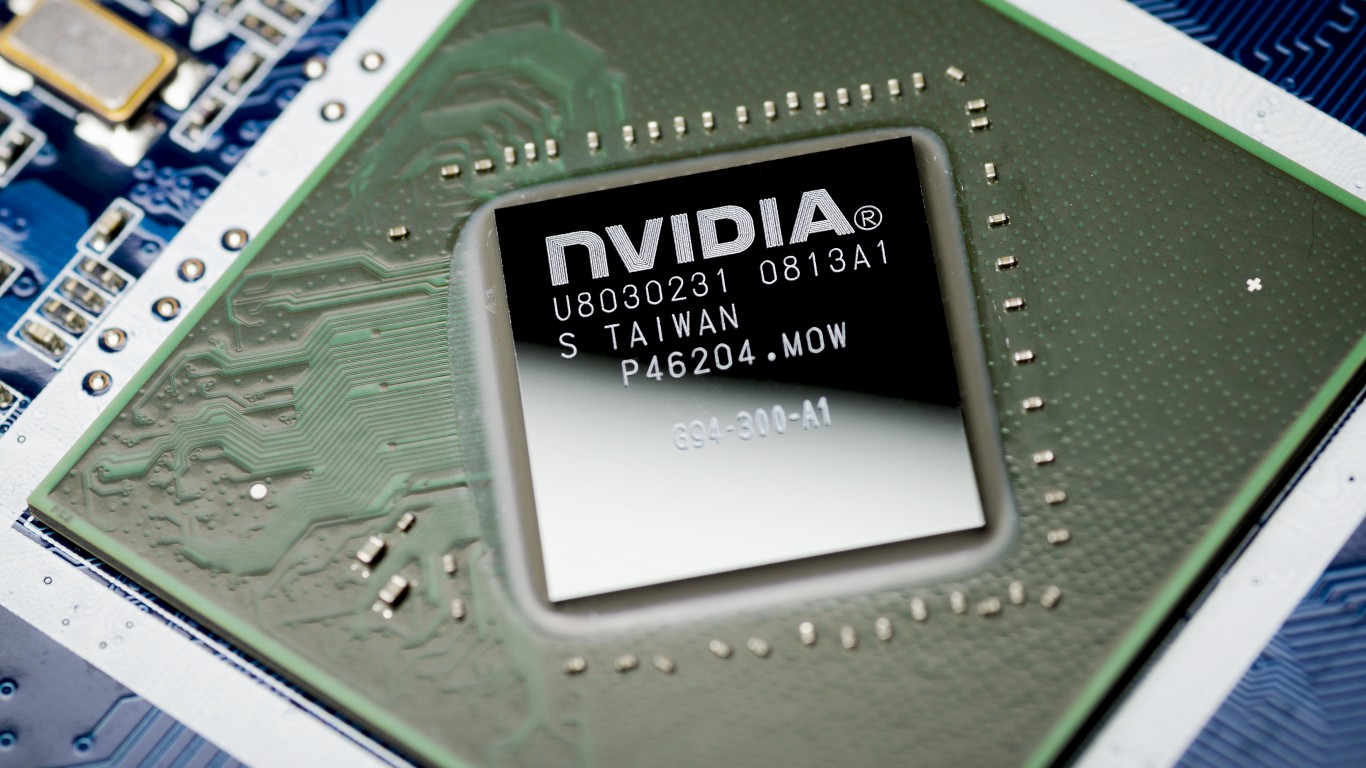
The math behind that number is almost entirely a function of a handful of names, led by NVIDIA (NASDAQ:NVDA | NVDA Price Prediction). At a $5.46 trillion market capitalization on a trailing P/E of 46 and forward P/E of 27, NVIDIA alone moves the index. The stock is up 65.53% over the past year against SPY’s 24.26% gain. Fiscal Q4 revenue hit $68.13 billion, up 73.2% year over year, with Data Center alone contributing $62.31 billion, per the company’s SEC filing.
The Diversification Problem
Dawson’s deeper point is that there is nowhere obvious to hide. “In the value index, the largest weight is Google, and the third largest weight is Micron,” she noted. Micron Technology (NASDAQ:MU) is up 625.69% over the past year and 126.96% year to date, lifted by HBM demand. The chip is in “value” classifications only because backward-looking screens have not caught up to the earnings explosion.
Internationally, the story is the same. “Almost 30%, about 27% of the emerging markets index is from SK Hynix, Samsung, and TSMC,” Dawson said. Taiwan Semiconductor (NYSE:TSM) sits at a $2.1 trillion market cap with a 108.21% one-year gain. AI/HPC accounted for 61% of Q1 2026 revenue.
The Mid-Cap Absurdity
The most striking distortion shows up further down the cap stack. Dawson pointed out that SanDisk “has a $240 billion market cap for an index that’s supposed to cap out at $1.2 trillion.” SanDisk (NASDAQ:SNDK) carries a $208 billion market cap after a 3,460.95% one-year run, with the most recent quarter showing $5.95 billion in revenue and EPS of $23.41.
AMD (NASDAQ:AMD) rounds out the cohort at a $691 billion market cap and 266.29% one-year gain. Data Center revenue reached $5.78 billion last quarter, up 57% year over year.
What to Watch
Dawson’s warning is direct: the standard diversification playbook from the dot-com era will not work this time, even as the underlying AI thesis remains intact. “Semiconductors are the river, the tide here,” she said, and “your ability to diversify away from this dominant trend is much harder today than it was coming out of the tech bubble.”
When 18% of the S&P 500, the top of the value index, 27% of emerging markets, and a chunk of mid caps all rhyme on the same AI capex thesis, allocation decisions become correlation decisions. Investors who think they are diversified across style boxes may want to actually pull up the holdings.
Contact [email protected] for any questions or corrections.
I've been writing about stocks and personal finance for 20+ years. I believe all great companies are tech companies in the long run, and I invest accordingly.