NVIDIA Could 10X Sales If It Weren’t for This One Bottleneck
Hedge fund manager Gavin Baker, founder and CIO of Atreides Management, offered a counterintuitive framing of the AI trade on a recent appearance on Patrick O’Shaughnessy’s Invest Like the Best program. Baker’s central paradox is that the very supply constraint…

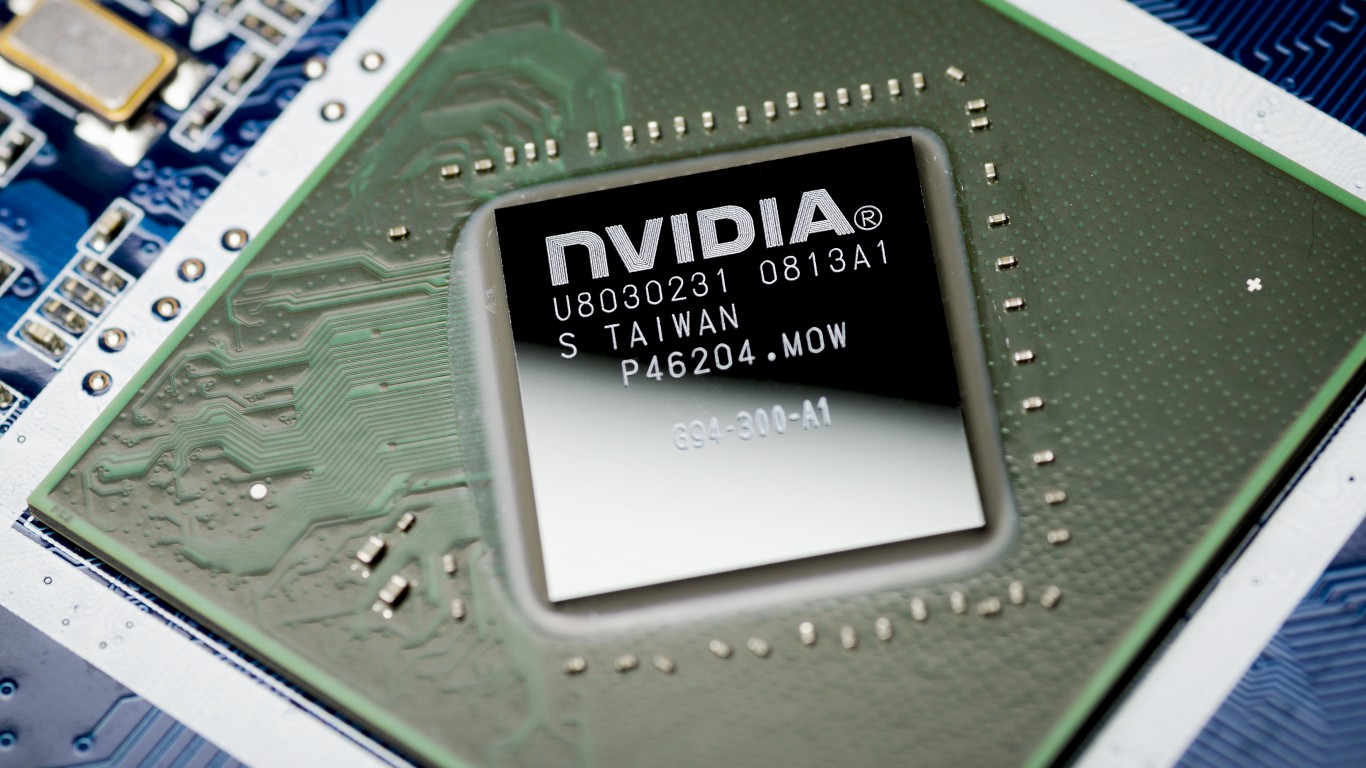
Hedge fund manager Gavin Baker, founder and CIO of Atreides Management, offered a counterintuitive framing of the AI trade on a recent appearance on Patrick O’Shaughnessy’s Invest Like the Best program. Baker’s central paradox is that the very supply constraint holding NVIDIA (NASDAQ:NVDA | NVDA Price Prediction) back is keeping AI infrastructure spending from tipping into a classic capex bubble.
At the center of the bottleneck issue is Taiwan Semiconductor Manufacturing (NYSE:TSM) (also known as TSMC), which fabricates essentially every leading-edge GPU that NVIDIA designs. Baker’s argument is that TSMC’s measured capacity expansion is helping the AI buildout, even as it caps NVIDIA’s near-term revenue ceiling.
For investors sizing the gap between the current demand and the supply, Baker offered a striking idea. “If Taiwan Semi did what Jensen wanted, Nvidia could sell $2 trillion of GPUs in 2026 or 2027,” he stated. NVIDIA generated $215.94 billion in revenue in fiscal 2026, which puts that hypothetical roughly an order of magnitude above the current run rate.
The Bottleneck as a Feature
Baker’s bull case rests on a paradox that cyclicals investors will recognize. “I’ve been optimistic that the fundamental shortage of wafers, which is really controlled by Taiwan Semi, will prevent a bubble,” he asserted. Scarcity preserves pricing power and disciplines customer behavior, protecting NVIDIA’s gross margins and cycle durability.
NVIDIA’s most recent quarter underscores how tight the supply picture remains. The company reported Q4 FY2026 revenue of $68.13 billion, with data center revenue of $62.31 billion and non-GAAP gross margin of 75%. NVIDIA CEO Jensen Huang described an environment where “Blackwell sales are off the charts, and cloud GPUs are sold out,” language pointing directly at supply rationing.
If that supply spigot opens fully, Baker warned, the picture changes. “But there is a limit where consumers would consume so much that you’d probably be in an overbuild,” he warned. An overbuild scenario converts a secular trend into a boom-and-bust chart, the outcome NVIDIA bulls should arguably fear most.
The Goldilocks Zone for TSMC
The competitive subplot is that the wafer shortage has begun pushing customers toward alternative foundries. “And you are starting to see companies go to Intel and Samsung,” Baker observed. Taiwan Semiconductor commands 72% foundry market share in advanced nodes, and the company has guided to revenue growth of more than 30% for full-year 2026.
That market position gives Taiwan Semiconductor a delicate balancing act. “A lot of this may come down to the degree to which Taiwan Semi can maintain a lead over Intel and Samsung and the pace at which they expand capacity,” Baker clarified. He framed it as a Goldilocks problem: “There’s a Goldilocks zone where they expand enough to make it hard for Intel or Samsung to emerge as a second source, but they also keep the fundamental constraint on wafers that helps us avoid a bubble.”
Taiwan Semiconductor stock has reflected that scarcity premium, gaining 108% over the past year. TSMC’s valuation sits at a trailing P/E ratio of 34x against an operating margin of 58%, suggesting the market already prices in the foundry’s structural advantage.
What to Watch
Baker’s most actionable takeaway is a single-variable framework for monitoring the AI cycle. “If I were to watch one thing to understand whether there’s a bubble, it’s Taiwan Semi’s capacity decisions,” he revealed. NVIDIA’s disclosures reinforce why: the company carries $95.2 billion in total supply-related commitments and flags reliance on third parties to manufacture, assemble, package and test products as a key risk in its Q4 FY2026 filing.
For NVIDIA shareholders, the implication is counterintuitive. A sudden flood of Chip on Wafer on Substrate (CoWoS) packaging capacity might unlock a near-term revenue surge, yet it could also pull forward the overbuild Baker warns about. The current setup, wherein NVIDIA prints $96.58 billion in free cash flow against constrained supply, may be the healthier long-run equilibrium.
The $2 trillion figure represents a sizing exercise rather than a forecast, and Baker did not recommend buying or selling NVDA or TSM stock. Watchful investors weighing exposure to the AI infrastructure trade should treat Taiwan Semiconductor’s quarterly capex commentary and CoWoS expansion cadence as the leading indicator governing both NVIDIA’s growth ceiling and the cycle’s risk of overheating.
Contact [email protected] for any questions or corrections.
David Moadel is financial writer specializing in stocks, ETFs, options, precious metals, and Bitcoin. David has written well over 1,000 articles for leading online publications, helping investors understand markets, income strategies, and risk.His work has appeared in The Motley Fool, InvestorPlace, U.S. News & World Report, TipRanks, ValueWalk, Benzinga, Market Realist, TalkMarkets, Finmasters, 24/7 Wall St., and others.With a master’s degree in education, David has taught at the elementary, high school, and college levels. That teaching background shapes his writing style: clear, educational, and practical. David has also built a loyal social-media audience by providing trustworthy financial content on YouTube, X/Twitter, and StockTwits.