CDL’s $2.29 annual dividend beats Treasury yields despite rising interest rates
Income investors holding the VictoryShares US Large Cap High Div Volatility Wtd ETF (NYSEARCA:CDL) own a fund built around one premise: large American companies with stable share prices tend to pay reliable dividends. CDL distributes cash monthly and paid $2.29…

Income investors holding the VictoryShares US Large Cap High Div Volatility Wtd ETF (NYSEARCA:CDL) own a fund built around one premise: large American companies with stable share prices tend to pay reliable dividends. CDL distributes cash monthly and paid $2.29 per share in 2025 against a current share price of roughly $76. With Treasury yields now competing aggressively for income dollars, the relevant question is whether CDL’s distribution stream is structurally sound or quietly weakening.
How CDL Actually Generates Its Income
CDL uses an inverse volatility weighting approach applied to large-cap U.S. dividend payers. Stocks with lower trailing volatility get heavier weights, which tilts the portfolio toward regulated utilities, mega-cap tech, and consumer staples. Crucially, the fund uses no leverage and no options. Every dollar paid out to shareholders comes from dividends collected on the underlying stocks, then passed through monthly after expenses. That structure matters because it eliminates the structural decay risk that plagues options-income and leveraged products.
The variable monthly amounts can look alarming at first glance. May 2026 paid $0.112 per share while April paid $0.219 and March paid $0.256. This is a pass-through pattern. Underlying companies pay on staggered quarterly schedules, and CDL distributes whatever it collected that month. The year-end December payment is consistently the largest, hitting $0.456 in 2025 and $0.429 in 2024.
The Holdings That Actually Drive the Payout
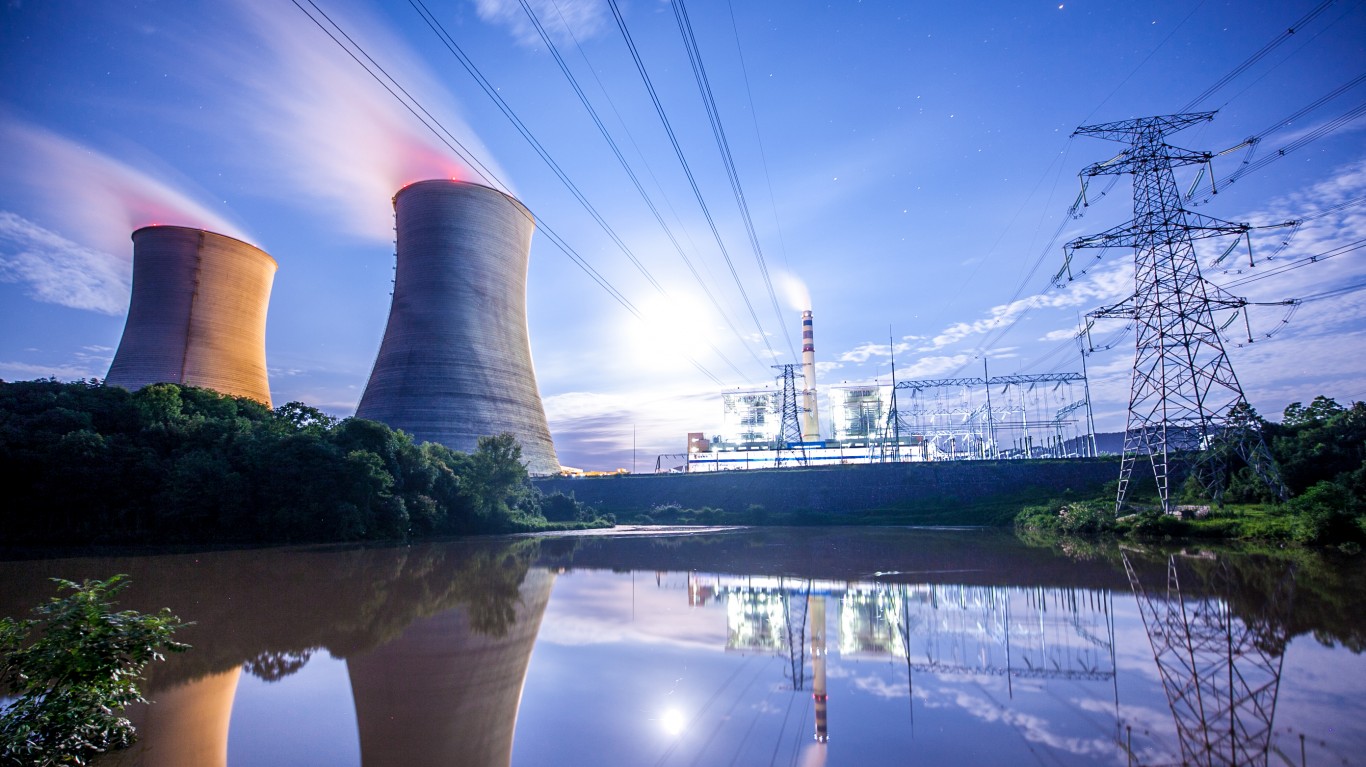
The income engine is concentrated in regulated utilities: WEC Energy, Duke Energy, FirstEnergy, American Electric Power, Evergy, and Xcel. Regulated utilities earn returns approved by state commissions, which produces the predictable cash flow that supports decades-long dividend track records at names like Duke and AEP. The current AI and data-center buildout is also expanding their regulated rate bases, which supports earnings growth that feeds future dividend increases.
The non-utility ballast comes from Microsoft, Apple, Johnson & Johnson, and Coca-Cola. These companies carry payout ratios well below 60% of earnings and generate free cash flow that dwarfs their dividend obligations. A Microsoft dividend cut is not a 2026 risk scenario. Concentration is moderate: the top 25 holdings represent 35% of the fund, so no single dividend cut can meaningfully damage the distribution.
The Rate Pressure Investors Should Acknowledge
The competitive setup has tightened. The 10-year Treasury yields 4.61%, sitting near a 12-month high, while CDL’s trailing yield runs closer to the 3.6% range cited in prior coverage. Risk-free government paper now out-yields the fund. That matters for two reasons: utility valuations get pressured when long rates rise, and marginal income buyers face a real choice between CDL and Treasuries. The Fed has already cut its target rate to 3.75%, but long yields have continued drifting higher.
Total return has held up despite that pressure. CDL is up 18% over the past year, 54% over five years, and 190% over ten years. Investors collected the dividend without sacrificing capital, which is the entire point of this kind of fund.
The Verdict
CDL’s distribution is safe in any reasonable sense of the word. The fund passes through dividends from financially sturdy regulated utilities, fortress-balance-sheet tech, and consumer staples giants, with no leverage or derivative exposure to break the chain. The realistic constraint is slow growth: the inverse-volatility tilt and utility concentration cap how fast distributions can rise, and rising Treasury yields will keep a lid on share-price upside. Investors who want predictable monthly income from durable American businesses are getting exactly that. Those chasing a higher headline yield should look elsewhere, since CDL was never designed to deliver one.
Contact [email protected] for any questions or corrections.
Austin Smith is a financial publisher with over two decades of experience as an investor, analyst, and advisor. He covers stocks, ETFs, Artificial intelligence and personal finance for 24/7 Wall St. Previously, he spent over a decade at The Motley Fool as a senior editor for Fool.com, portfolio advisor for Millionacres, and launched The Ascent to help reader take control of their personal finances.
His work has been featured on Fool.com, NPR, CNBC, USA Today, Yahoo Finance, MSN, AOL, Marketwatch, and many other publications. He is as an advisor to private companies, and co-hosts The AI Investor Podcast with Eric Bleeker.
When not looking for investment opportunities, he can be found skiing, running, or playing soccer with his children. Learn more about Austin's investment approach here.