Bitcoin vs. Ethereum in 2026: Which Crypto Wins?
The debate between Bitcoin (CRYPTO: BTC) and Ethereum (CRYPTO: ETH) never really ends. Both cryptos are down from their 2025 peaks. Bitcoin trades near $77,000 right now, backed heavily by institutional money and clear government rules, while Ethereum hovers around…

This post may contain links from our sponsors and affiliates, and Flywheel Publishing may receive compensation for actions taken through them.

The debate between Bitcoin (CRYPTO: BTC) and Ethereum (CRYPTO: ETH) never really ends. Both cryptos are down from their 2025 peaks. Bitcoin trades near $77,000 right now, backed heavily by institutional money and clear government rules, while Ethereum hovers around $2,100.
Bitcoin works as a digital safe haven, but Ethereum, on the other hand, is turning into a settlement layer for big companies. Deciding which one is better depends entirely on whether you want a digital store of value or a piece of the future banking system.
Bitcoin Has A $1.3 Trillion Head Start And Wall Street Is Still Buying

Bitcoin’s institutional run has moved faster than most people expected. Spot Bitcoin ETFs have pulled in nearly $59 billion since they launched in January 2024—faster than gold ETFs reached the same mark after their 2004 debut. Gold ETFs eventually changed how pensions and big funds held gold, and Bitcoin is doing the same thing, just quicker.
Corporate treasuries are also backing that up. Strategy now holds more than 843,000 BTC, and it kept buying rigorously through early 2026 while most other public companies barely added at all. Even with short-term fears that Bitcoin could crash to $50,000, the long-term buying from corporate treasuries shows no sign of slowing.
Then there’s the size gap between Bitcoin and Ethereum. BTC is worth roughly $1.5 trillion, while Ethereum is worth around $255 billion. That difference is why big money goes to Bitcoin first. It has deeper liquidity, it’s simpler to hold, and that makes sense to larger investors.
Ethereum Has Started Paying Its Investors, Bitcoin Still Can’t
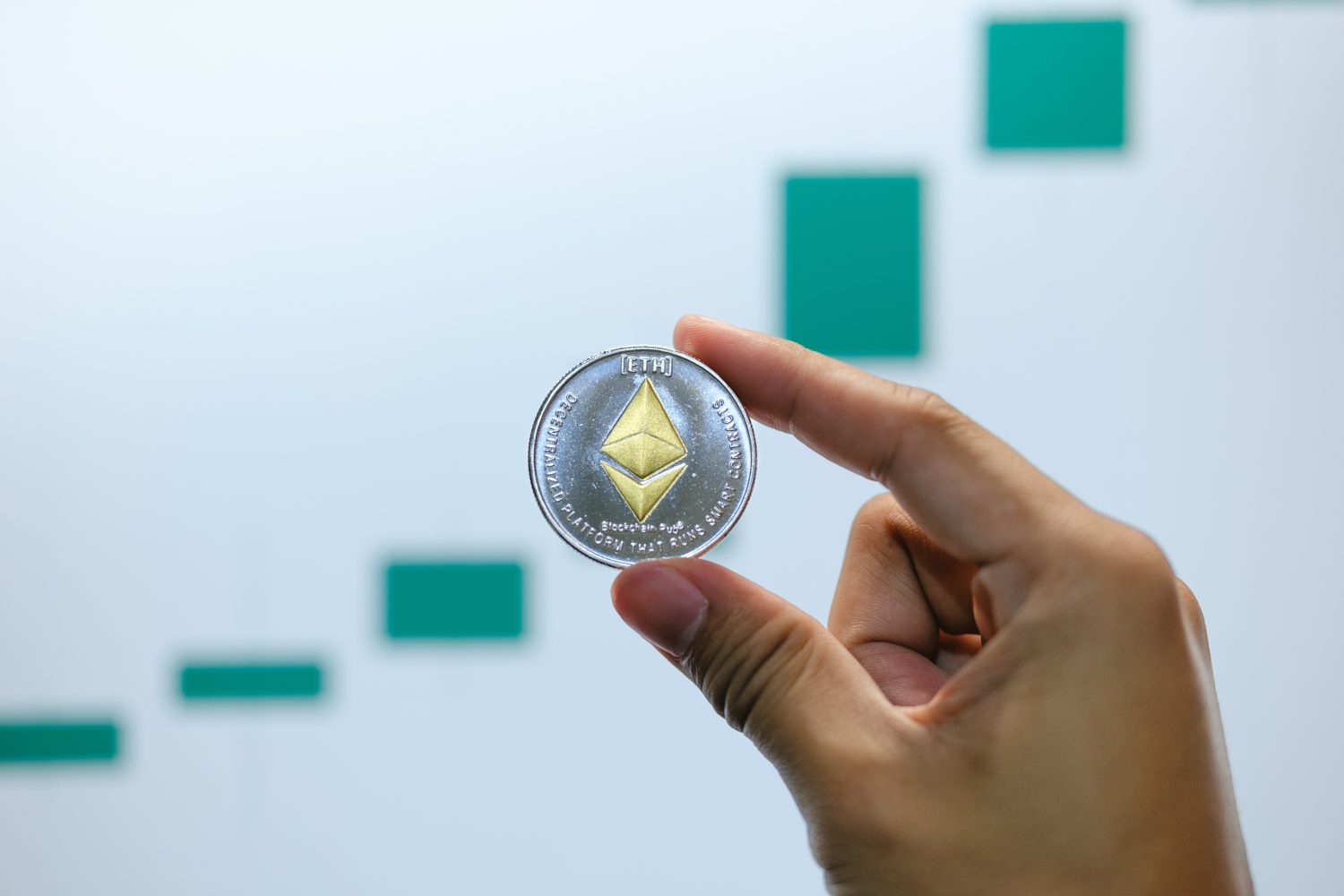
The bigger development for Ethereum in 2026 isn’t the price, but the yield. In January, Grayscale paid out roughly $9.4 million in staking rewards to holders of its Ethereum Staking ETF.
That was the first time a U.S. crypto ETF ever passed staking rewards to investors. Bitcoin ETF holders own BTC and hold, but Ethereum staking ETF holders now earn roughly 2–3% a year on top of price exposure—and Bitcoin has no way to offer that.
On March 17, 2026, the SEC and CFTC issued long-awaited guidance classifying ETH as a digital commodity, clearing a major cloud that had hung over staking products. That gave firms like BlackRock a much clearer route to expand staked ETH offerings. Bitcoin went through a similar access shift after spot ETFs launched in early 2024, and billions of dollars followed. Ethereum is in that same spot now, except with a yield attached.
U.S. spot Ethereum ETFs now manage roughly $13 billion in assets—still far below the more than $100 billion sitting in Bitcoin ETFs. Between April 9 and April 22, 2026, Ethereum ETFs posted 10 straight trading days of net inflows, their longest streak since the funds launched in July 2024. And big money usually positions before the price moves.
Ethereum’s Biggest Upgrade In Years Is Close, But Not Certain

Ethereum keeps building. After shipping both the Pectra and Fusaka upgrades on time in 2025, the network is now aiming for Glamsterdam in the first half of 2026.
The goal is to push Ethereum’s base layer toward 10,000 transactions per second through parallel execution. Layer 2 networks built on Ethereum already run fees as low as $0.001 during quiet periods, thanks to the 2024 Dencun upgrade. Glamsterdam is meant to bring that kind of speed straight to the base layer.
Moreover, Glamsterdam is more complex than the upgrades before it, and June is the team’s best guess of launching, not a firm date. A delayed launch to later in 2026 is possible—Ethereum has pushed back big upgrades before. Some buyers have already priced the upgrade into their ETH positions. So if the timeline slips, the price will likely dip with it.
Conversely, Bitcoin has none of that to worry about. There are no testnets to watch, no delayed delivery dates, no drama over code changes. For a lot of investors, that stability is exactly what they want.
Which Crypto Is Worth Buying Right Now?
Neither Bitcoin nor Ethereum is the wrong answer, as both cater to diverse investors. Bitcoin is for the investor who wants institutional depth, a fixed supply, and nothing to track. Ethereum is for the investor who wants yield on top of price exposure and believes the financial activity being built on the network keeps compounding over time.
That said, Bitcoin makes more sense right now if your main concern is safety and stability. The ETF money keeps coming in, more companies keep adding it to their balance sheets, and nothing about its core pitch has changed in years. You’re not betting on a product roadmap, but betting on scarcity and steady price appreciation.
Ethereum is the better pick if you want yield alongside price exposure and believe the financial activity building on top of it keeps growing. That covers everything from stablecoin settlement and real-world asset trading to on-chain lending.
The 2% staking yield is small on its own, but it changes the projection for long-term holders and retirement accounts that need income. That’s a new kind of buyer entering the Ethereum market, and they tend to stick around.
If you can only pick one, Bitcoin is the lower-risk position at current prices, but Ethereum would be harder to ignore once the Glamsterdam upgrade launch is confirmed.
Contact [email protected] for any questions or corrections.
Sam Daodu is a crypto analyst who's spent nearly a decade making blockchain understandable—no easy task when most whitepapers read like fever dreams. He writes for 24/7 Wall St., covering Bitcoin, altcoins, and crypto market analysis for investors. Before crypto, he was a tech writer (back when explaining "the cloud" was peak innovation). Since 2018, he's written for CoinTelegraph, Yahoo Finance, The Block, Cryptonews, Zypto, Rain, and more—basically anywhere people want crypto news without the headache. Sam runs MacLabs Marketing, a content agency for crypto brands tired of sounding like AI wrote their website. He also publishes free crypto education on his site for Web3 enthusiasts who think "gas fees" is a typo. When he's not writing or staring at charts, Sam's either: - Watching anime (currently convinced One Piece has better tokenomics than most altcoins) - At the gym sculpting himself into a Greek god - Listening to the music your mum warned you only bad boys listen to Connect: LinkedIn | Email | MacLabs Marketing