Best Cryptos to Buy Right Now for Conservative Investors
The crypto market remains volatile, with the major coins struggling to hold any bullish momentum. Bitcoin (CRYPTO: BTC) trades around $77,300, Ethereum (CRYPTO: ETH) near $2,100, while XRP (CRYPTO: XRP) hovers around $1.36 after taking the biggest hit of the…

This post may contain links from our sponsors and affiliates, and Flywheel Publishing may receive compensation for actions taken through them.

The crypto market remains volatile, with the major coins struggling to hold any bullish momentum. Bitcoin (CRYPTO: BTC) trades around $77,300, Ethereum (CRYPTO: ETH) near $2,100, while XRP (CRYPTO: XRP) hovers around $1.36 after taking the biggest hit of the three over the past 24 hours.
With that uncertainty hanging around, investors are leaning toward coins with lower speculation risk, stronger institutional backing, and a track record across multiple market cycles. We looked at current trends and future projections to find the best crypto options for conservative investors right now.
Why Institutional Investors Still Prefer Bitcoin

Bitcoin may not be the most exciting pick in 2026, but it’s still one of the safest, because institutional adoption has fundamentally changed the asset’s position in the market.
Spot Bitcoin ETFs have pulled in nearly $59 billion since launch and now manage well over $101 billion in assets. BlackRock’s iShares Bitcoin Trust (IBIT) alone holds roughly $66 billion, accounting for nearly 60% of the US spot Bitcoin ETF market. That level of concentration shows just how dominant institutional demand for Bitcoin has become.
Even during the bearish first quarter, institutional interest remained strong. Abu Dhabi’s Mubadala sovereign wealth fund raised its IBIT holding by 16% to about $566 million, and JPMorgan added to its position too. Not everyone was buying—some university endowments trimmed exposure—but the steady accumulation from large sovereign and long-term buyers through the weakness is an encouraging sign for conservative investors.
Moreover, Bitcoin’s reach now goes beyond ETFs and sovereign funds. By mid-2025, U.S. public pension funds had collectively put over $3.3 billion into crypto-related holdings, giving ordinary retirees indirect exposure.
Fidelity research has also found that adding even a 1% Bitcoin allocation to a standard 60/40 portfolio improved returns meaningfully while barely moving the risk, and its workplace Digital Assets Account lets employers offer Bitcoin inside 401(k) plans. As more retirement plans and institutional portfolios add Bitcoin, the asset increasingly looks like a long-term store of value.
Ethereum’s Institutional Staking is Drawing Investor Attention
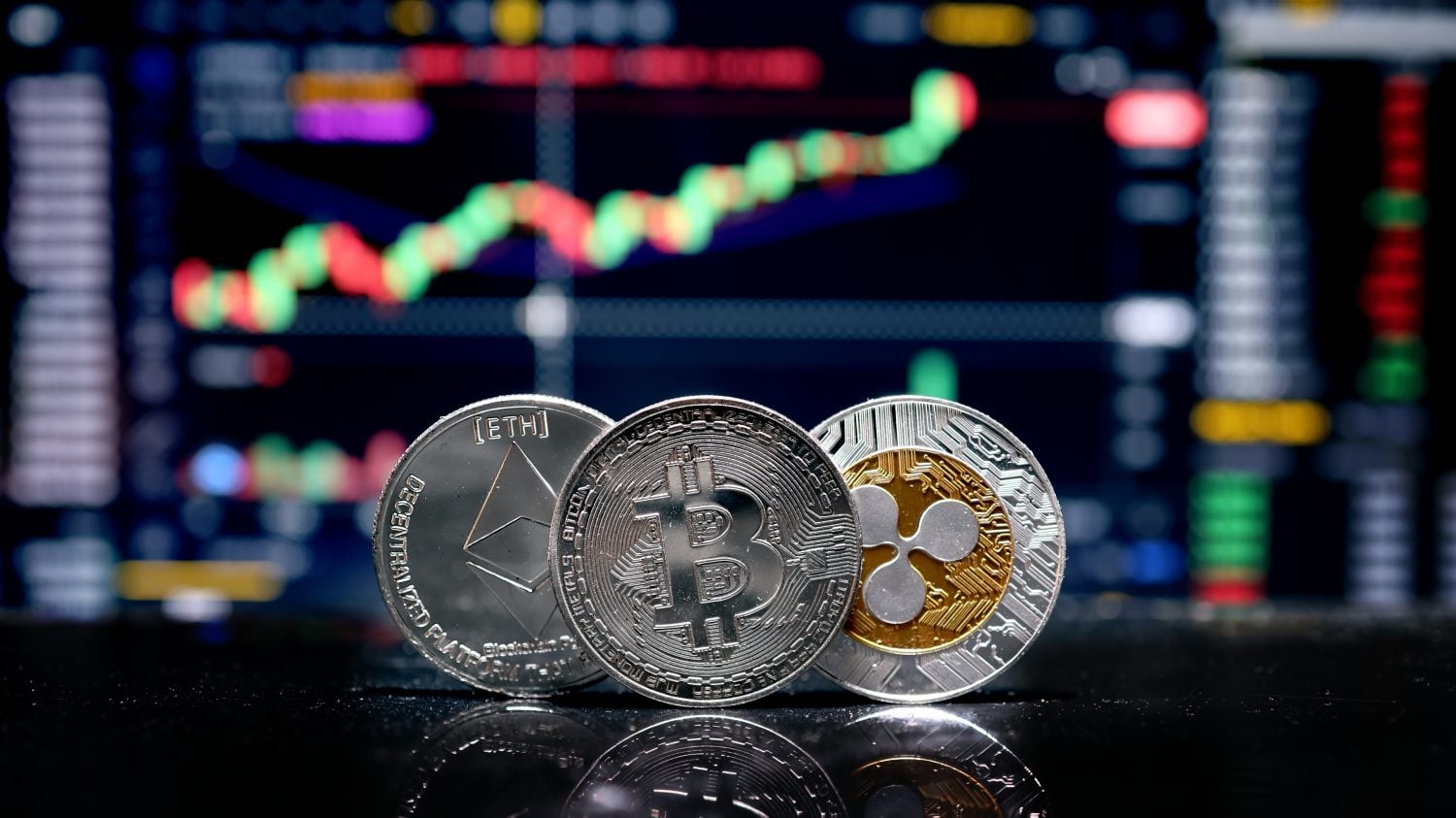
Ethereum trades around $2,100, well below its 2025 peak near $4,900, but its fundamentals remain strong. The disconnect between price action and ecosystem growth could either signal caution or present a long-term opportunity.
ETH’s biggest edge is that it can generate income. Around 35.8 million ETH, roughly 30% of the total supply, is currently staked across about 1.1 million validators. And spot Ethereum ETFs have pulled in over $11.6 billion in net inflows, aided by BlackRock’s ETHB product launched in March 2026. This staking mechanism currently yields roughly 2.8%-3.5% annually, thus drawing institutional interest.
Then again, regulatory clarity has added more momentum. In March, the SEC and CFTC jointly stated that protocol staking rewards aren’t securities, clearing a major obstacle for staking-based ETFs. BlackRock and Grayscale already have staking ETF products live, with more expected to follow.
Ethereum also controls roughly 80% of the real-world asset tokenization market. Because of this, analysts see ETH reclaiming $3,000 this year, with the more bullish projections reaching well higher.
A lot of that optimism centers on the Glamsterdam upgrade, expected in the first half of 2026, which could raise Ethereum’s processing capacity to 10,000 transactions per second and strengthen its position in institutional DeFi.
XRP’s Regulatory Momentum is Changing
XRP is the most forward-looking of the three cryptos, though it carries more regulatory risk than Bitcoin or Ethereum. During Q1, while Bitcoin and Ethereum ETFs saw some outflows, XRP ETFs kept posting consecutive inflows—a sign of growing institutional confidence even with the broader market weak.
Much of XRP’s outlook now hinges on regulation. Standard Chartered projects XRP could reach $8 by the end of 2026 if the CLARITY Act fully passes, which could unlock structural institutional demand and steady ETF inflows.
Meanwhile, Ripple’s On-Demand Liquidity network kept expanding in 2026, and tokenization activity on the XRP Ledger climbed to a record near $3.5 billion. As more institutions test faster cross-border settlement and blockchain-based asset transfers, XRP will keep strengthening its position in enterprise finance.
Which Crypto Looks Best For Conservative Investors?
Bitcoin still looks like the most straightforward option for conservative investors. Institutional adoption has already done most of the heavy lifting for BTC, with ETF inflows and pension-level exposure reinforcing its place as a long-term valuable asset.
Meanwhile, Ethereum offers more structural growth through staking yields, tokenization, and ongoing upgrades, but it still depends heavily on execution and delivery.
XRP has the most upside of the three, but it’s also the most dependent on outside catalysts. Regulatory clarity is improving and ETF inflows are coming in, yet its price stays more sensitive to policy headlines than Bitcoin or Ethereum.
So for conservative investors, Bitcoin is the most stable foundation, Ethereum falls between stability and growth, while XRP fits better as a higher-risk position.
Contact [email protected] for any questions or corrections.
Sam Daodu is a crypto analyst who's spent nearly a decade making blockchain understandable—no easy task when most whitepapers read like fever dreams. He writes for 24/7 Wall St., covering Bitcoin, altcoins, and crypto market analysis for investors. Before crypto, he was a tech writer (back when explaining "the cloud" was peak innovation). Since 2018, he's written for CoinTelegraph, Yahoo Finance, The Block, Cryptonews, Zypto, Rain, and more—basically anywhere people want crypto news without the headache. Sam runs MacLabs Marketing, a content agency for crypto brands tired of sounding like AI wrote their website. He also publishes free crypto education on his site for Web3 enthusiasts who think "gas fees" is a typo. When he's not writing or staring at charts, Sam's either: - Watching anime (currently convinced One Piece has better tokenomics than most altcoins) - At the gym sculpting himself into a Greek god - Listening to the music your mum warned you only bad boys listen to Connect: LinkedIn | Email | MacLabs Marketing